3 months ago
49
3 months ago
49
NSW’s new Personal Development, Health and Physical Education (PDHPE) school syllabus will be reviewed following concerns that it would encourage schools to run school swimming and lifesaving lessons in the dry of a classroom, without children entering the water.
The review of changes to the kindergarten to year 10 syllabus comes after protests by Royal Life Saving Australia chief executive Dr Justin Scarr, teachers and swim schools over the removal of explicit instructions for children to learn basic skills, such as swimming 25 metres.
“You can’t take the wet out of water safety, and you can’t remove swimming from water safety or lifesaving,” Scarr said.
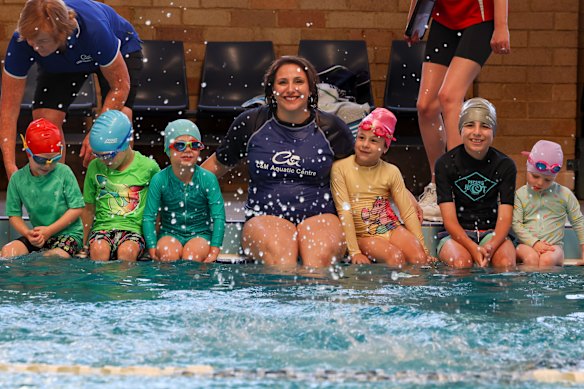
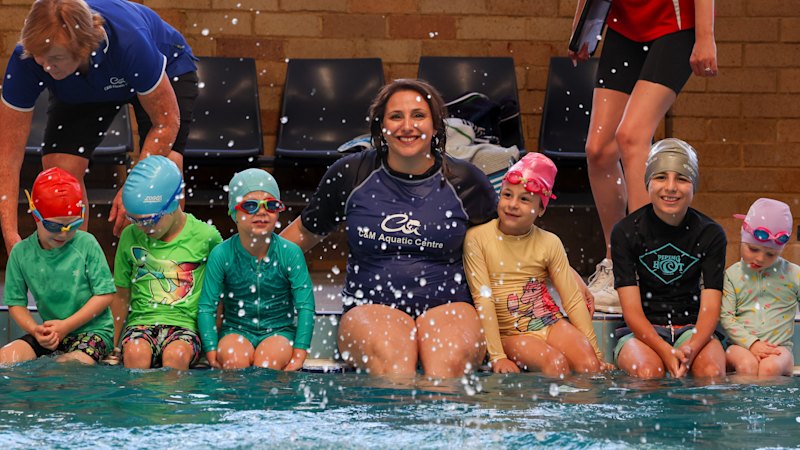
Clotilde Doxaras, swim school manager at C&M Aquatic Centre, teaching children to swim.Credit: Edwina Pickles
The removal of explicit instructions caused several schools to cancel, curtail or postpone bookings for swim classes next year, when the new PDHPE syllabus will be introduced and teachers will use it for planning, he said.
Scarr said school swimming and lifesaving lessons had been a rite of passage for generations.
“It is how so many of us first learnt to swim, before moving to lifesaving lessons and the bronze medallion in high school – diving for bricks, swimming in pyjamas and learning CPR.”
At briefings on the new syllabus, teachers asked whether the removal of explicit instructions meant they could cancel school swimming lessons.
After meeting Scarr on Thursday, the NSW Education Standards Authority (NESA), which develops the school syllabus, said it would work with Royal Life Saving Australia to “ensure communications to teachers and school leaders make clear the benefits of swimming lessons as part of the NSW curriculum”.
“Swimming skills and water safety are an important requirement of the new PDHPE syllabuses,” NESA said in a statement.
The new syllabus begins in 2027, but some schools will implement it from 2026.
Loading
NESA said school swimming was not compulsory, but the authority would continue to support school swimming.
Many schools have been dropping out of swimming programs because of costs related to buses, pool entry fees, logistics, access to pools, beaches and rivers, and a crowded curriculum.
If the trend continued, Scarr said, generations of children, particularly those whose families could not afford private lessons or dropped out early, would not learn to swim or practise water safety, even though drownings in Australia are up 27 per cent on the 10-year average.
Half of all children who finished primary school this year cannot swim or float well enough to save their own lives.
The former 2018 curriculum required children to “perform” water safety and rescue skills, such as freestyle and backstroke, practise swimming survival skills and participate in lifesaving activities, including clothed rescues.
In contrast, the new course asks children to “demonstrate an awareness of safety behaviours”, such as the need to swim between the flags.
While the new syllabus contains explicit instructions on teaching children fundamental movement skills such as running, hopping, striking, catching and side galloping, teaching children to “swim” is omitted.
“How can a good side gallop be more essential than being able to swim?” Scarr asked.
In consultations on the draft syllabus, participants said it lacked content “explicitly addressing engagement in the outdoors”.
Loading
Clotilde Doxaras, swim school manager of C&M Aquatic Centre in Padstow, was alarmed when some schools cancelled or reduced lessons and postponed booking them.
“One said they may not be going swimming at all because it is no longer in the syllabus,” Doxaras said.
“A lot of kids can’t swim. We see kids coming in from year 6, and some can barely dog-paddle.”
Many parents couldn’t afford private lessons, she said. “The struggle is real for them, and they are finding it hard to finance anything. Swimming lessons go to the bottom of their list of priorities.”
In a seminar held by the Australian Council for Health, Physical Education and Recreation (ACHPER), a participant who asked whether the requirement for school swimming lessons had been removed was praised for their “good detective work”.
The instructor replied: “There isn’t explicit mention of aquatics or swimming in any of the stages. There’s explicit mention of water safety.”
The syllabus was building in flexibility, the instructor said.
“Those schools who want to run aquatics and swimming programs can do, but those who don’t have the facilities or resources to run it, it’s no longer mandated.”
Kelly Bell, who runs The Learning Network, an organisation supporting PDHPE teachers, said there was “a moral obligation” to make teaching water safety skills a priority because so many children fatally drowned.
That meant finding money and resources to help parents and schools fund lessons, buses and pool fees, she said.
The Morning Edition newsletter is our guide to the day’s most important and interesting stories, analysis and insights. Sign up here.
Most Viewed in National
Loading