2 months ago
14
2 months ago
14
WA faces gas supply cliff amid warning rising energy prices could kill off businesses
A gas supply gap looming for Western Australia in three years’ time is lower than previously forecast thanks to the shutdown of nickel smelters and Alcoa’s Kwinana refinery – but big consumers will start to feel the pinch from the 2030s.
The supply cliff prompted a warning from the Australian Energy Market Operator that if the price of the commodity continues to rise it may result in gas-reliant WA businesses shutting up shop.
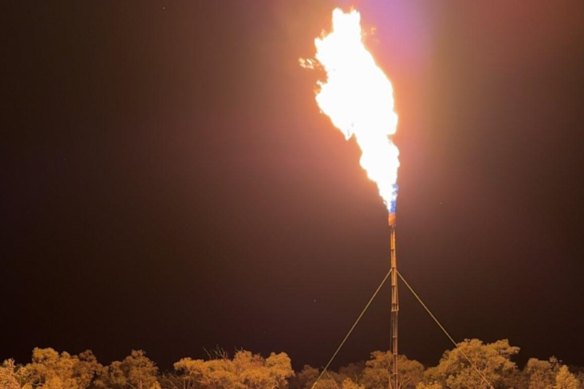
WA is heading toward a gas supply cliff.
It has also drawn opposing warnings from both sides of the fossil fuel debate, with environmental groups saying it proves the need for more investment in renewables and better policy settings, while gas lobby groups arguing the cliff proves gas will be vital to the grid for decades to come.
AEMO’s 20-year outlook on WA’s gas system, released Friday, predicts the state will be well served with gas for energy production until 2030, when the state will be short 11 terajoules of gas daily.
That supply gap will grow to 82 terajoules a day in 2035, and to 478 terajoules daily by 2045, which AEMO said was driven by “declining production from existing, committed and anticipated gas fields”.
The combined amount of gas provided to the WA network from Gorgon and Wheatstone’s domestic gas plants is 530 terajoules a day.
Under WA’s gas reservation policy all offshore producers of gas like Chevron and Woodside must reserve 15 per cent of their production for use in the domestic market.
Conservation Council of WA executive director Matt Roberts said the shortage was avoidable with renewables and a strengthened domestic gas reservation policy.
“These predictions aren’t inevitable – they show what will happen if our government fails to prioritise renewables and address the gas export crisis,” Roberts said.
“WA has no shortage of sunshine and wind; we’re perfectly placed to lead the world in the transition to clean, cheap renewable energy. Instead, we’re doubling down on fossil gas and falling behind on the rollout of large-scale renewable projects.
Loading
“The gas lobby will tell you that AEMO’s projections mean we need more gas projects in WA, but they fail to mention that around 90 per cent of gas produced in WA is exported.
“WA produces a huge amount of the world’s gas, and yet big companies are allowed to ship most of it overseas. It’s clear we have a gas export problem, not a gas supply problem.”
But Australian Energy Producers WA director Richard Ellis said the study confirmed gas remained critical to the state’s energy mix.
“The only way to avoid those shortfalls is to bring new gas supply online sooner and maintain a stable regulatory environment that supports long-term investment in gas exploration and development,” he said.
“The message from AEMO is clear: continued investment in new gas supply and infrastructure is essential to maintain system adequacy beyond 2030.”
Total gas consumption is expected to reach 1085 terajoules a day by next year, growing to a peak of 1295 terajoules in 2030 before tapering off to 1044 terajoules by 2045.
AEMO, which surveyed industry players to inform the report, warned that if gas prices reached $10 per gigajoule, businesses could start shutting their doors and demand would be “destroyed”.
“Gas price-sensitive industries could choose to reduce or cease operations if gas or alternatives are not available at competitive prices,” it said.
The current price of gas sits under $8 per gigajoule, but according to AEMO figures, it has more than doubled since 2020, from a low of $3 per gigajoule.
Loading
It is this warning that keeps the DomGas alliance – which represents big customers like Alcoa, Wesfarmers and Yara – up at night.
DomGas spokeswoman Mia Davies said the government needed to ensure big energy producers like Woodside were adhering to their 15 per cent domestic gas reservation obligations to ensure the market was well supplied.
“The starting point for action is ensuring the social contract at the heart of WA’s domestic gas reservation policy – in its most basic form, that the big multinational LNG producers are obliged to reserve the equivalent of 15 per cent of their overseas exports for WA’s own domestic market – is met,” she said.
“We know that Woodside has not fulfilled this obligation with its Pluto LNG Project, having delivered less than three per cent of production into the domestic market.
“That needs to change before it is too late and the Pluto reservoirs are exhausted.”
Woodside was approached for comment.
Start the day with a summary of the day’s most important and interesting stories, analysis and insights. Sign up for our Morning Edition newsletter.
Most Viewed in Politics
Loading