3 months ago
23
3 months ago
23
A wildlife carer who was convicted of animal cruelty for nursing an injured kangaroo was “treated unfairly”, and her case raises a “grey area” about the role of all volunteers in the animal rescue sector, a court has heard.
Former WIRES volunteer Tracy Clare Dods, 55, of Kanimbla in the Blue Mountains was found guilty in March of aggravated animal cruelty for not taking Dolores, a female eastern grey kangaroo with injuries from a barbed wire fence, to a veterinarian between February 20 and March 8, 2021.
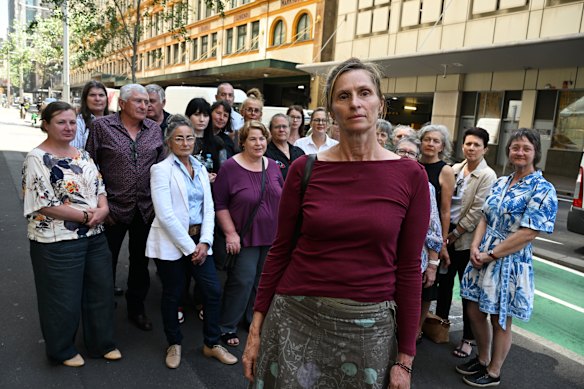
Tracy Dods with some of her supporters outside the Downing Centre during a court break on Thursday.Credit: Louise Kennerley
The animal entered Dods’ care in October 2020 and was euthanised in March 2021 when WIRES veterinarian Dr David Phalen and RSPCA inspector Anthony Croker raided her property.
The guilty verdict sent shockwaves through the wildlife rescue community, with many carers rattled by the prospect of personal legal risk. Dods, who had looked after hundreds of kangaroos over several years as a WIRES volunteer, provided daily care to Dolores for nearly five months and the magistrate in Katoomba Local Court did not find she had been deliberately cruel.
In the appeal hearing before Judge Nanette Williams in the District Court over two days last week, wildlife carer and trainer Dr Rosemary Austen said under cross-examination that she did not know Dods well but had used the Possumwood Wildlife social media accounts to advocate for Dods because she thought the criminal case was “unfair and unfounded”.
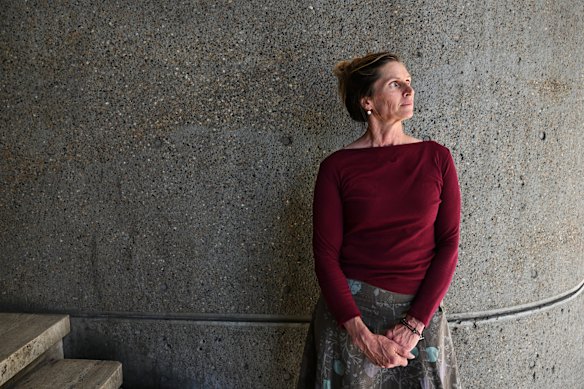
Tracy Dods was found guilty of aggravated animal cruelty and is appealing the verdict.Credit: Louise Kennerley
“I believe she was unfairly treated,” Austen said. “I stand up for things I believe are wrong.”
In evidence the lower court found “reliable and persuasive”, Phalen had testified that the animal was “unable to stand, walk or hop”, had muscle wastage and impaired nerve function. The post-mortem revealed parasites, pressure sores and a previously undiagnosed fracture.
Austen told the appeal hearing she had taught Dods in a 2019 course that most “fence hangers” could be rehabilitated, but those with fractures would require euthanasia. She testified the course content included guidance that progress can be slow and “severe muscle wastage is to be expected” until the animal can move.
Austen was disallowed as an expert witness in the initial case, but Dods was given leave to call her for the appeal if the evidence was restricted to what was taught in the 2019 course.

Dolores the kangaroo and a close-up of her original injuries (bottom) and after healing (top).
The lower court found Dods had an honest but mistaken belief that Dolores did not need to see a vet during the charge period, but it was not reasonably held because she overestimated her own abilities. The court banned Dods from owning any animals for five years.
Dods is represented in her appeal by barrister Rory Pettit and solicitor Cliff Savala of Rubicon Law, who are arguing that Dods’ belief was reasonable. Pettit said there were “many points of consistency” between what Austen taught and Dods’ actions.
“Over and over and over again they match up,” Pettit said. “The appellant’s belief in how she was treating Dolores was reasonable, given it’s how she was taught by Dr Austen.”
When Dods took charge of Dolores, the kangaroo had already been checked by a vet at Nepean Animal Hospital, and Dods was told that X-rays confirmed there were no fractures. It was reasonable for Dods to accept this information, Pettit said.
Loading
Dods took Dolores to her local vet at the end of January because she was concerned about swelling near the wound and wanted medication. The vet also performed a “body check”, but did not raise concerns, Pettit said, which reinforced the reasonableness of Dods’ belief that she was caring well for the animal.
The vet told Dods to return if there was no improvement, but the infection subsequently cleared up. Dolores also started to stand independently soon after the vet visit, according to video evidence Dods provided, Pettit said.
In February, within the charge period, Dods attended a Zoom call with two employees from WIRES and Phalen the veterinarian.
Dods thought the call was a routine check-in and was not warned it was an investigation, Pettit said. Williams noted it was possible it should have been ruled inadmissible in the lower court as a result.
During the call, which was played to the court, the WIRES trio did not raise specific concerns about the animal’s condition, tell her to see a vet, nor provide advice on care even when Dods asked Phalen a question. There was no follow-up after the call except about Dods providing photos and video, Pettit said, which reinforced the reasonableness of Dods’ belief in her care.
Loading
Ian Fraser, barrister for the RSPCA, said Dods’ testimony about Dolores’ improvement was inconsistent, and noted the lower court found her an unreliable witness.
“The appropriate question is not whether the appellant should have known there was fracture, only whether the appellant should have known the animal needed to be seen by a vet,” Fraser said.
Fraser said the local vet advised Dods to return if the animal did not improve, after which point Dolores remained unable to stand on her own or hop and her body condition deteriorated.
Williams noted the practical challenge for wildlife carers.
“It occurs to me that it’s hard enough to get a 30kg dog into a car … let alone a kangaroo with its claws … unless it’s sedated,” Williams said.
“I don’t live in a bubble. If you live in the back of the mountains in a remote area, and you’re not flash with cash … it’s self-evident that it’s difficult to get to the vet,” she added.
Fraser said some veterinarians visit properties, some do not charge to treat wildlife, and Dods was reimbursed for the January vet visit.
Loading
Williams observed that the law reserved certain practices for veterinary practitioners, but wildlife carers had to make daily decisions and carry out treatment. ”I hope the law does not leave its common sense outside the court room,” she said.
Pettit said there was “always going to be some grey area when it comes to wildlife volunteers” and further guidance might be required from parliament.
Williams will deliver her judgment on March 13 next year.
Get to the heart of what’s happening with climate change and the environment. Sign up for our fortnightly Environment newsletter.
Most Viewed in Environment
Loading