3 months ago
28
3 months ago
28
What in the World, a free weekly newsletter from our foreign correspondents, is sent every Thursday. Below is an excerpt. Sign up to get the whole newsletter delivered to your inbox.
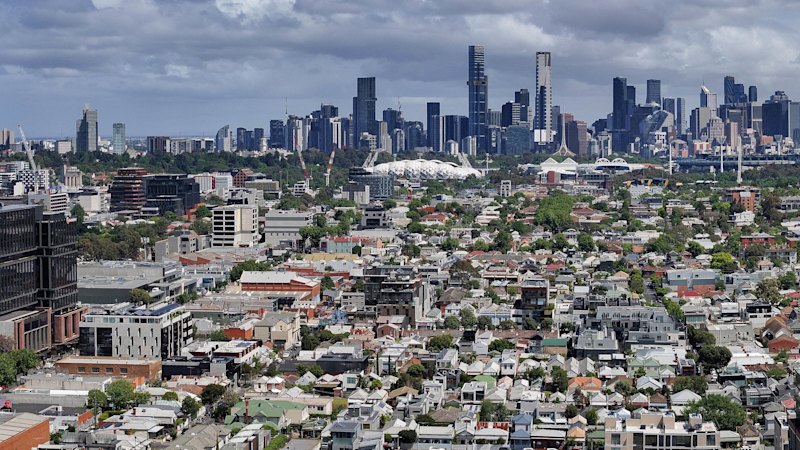
Singapore: From the observation deck on the 47th floor of his apartment building, Remy Osman can peer out over Singapore’s southern skyline and into one of the world’s busiest shipping lanes.
It’s a captivating view by any means. But for more than three years, it has given the British expat a premium vantage point to monitor a shadow fleet of Russian oil tankers transiting through the Singapore Strait, often concealing their identity while they work to finance Vladimir Putin’s war in Ukraine.
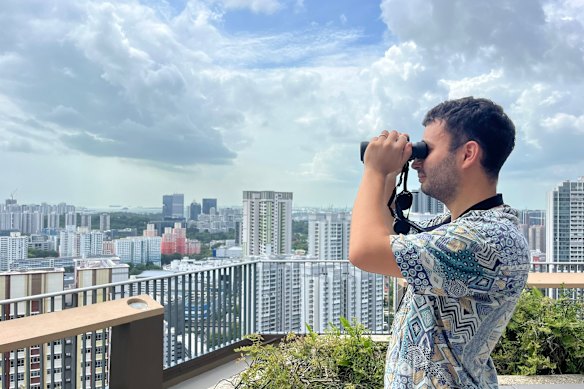
Remy Osman, a British expat in Singapore, spots sanctioned Russian oil tankers from his apartment building.Credit: Lisa Visentin
Osman has scaled up his ship-spotting hobby with binoculars and a Nikon P950 camera to zoom in on the ghost tankers, which lurk low in the water when laden with sanctioned oil, making an amateur art out of what research institutes have finessed with more rigorous and detailed tracking.
The 32-year-old brings an added social media flair, exposing suspected Russian and Iranian shadow fleet on his “sgshipspotting” Instagram and TikTok accounts.
In one video posted in November, he spotted four sanctioned vessels – three Russian tankers, each operating under a false flag, and one Iranian tanker – within 15 minutes.
Many of these vessels have set sail from ports in the Baltic Sea or Black Sea en route via the straits of Malacca and Singapore (through which they are permitted to transit under international law) to China and India – the largest buyers of Russian oil.
As our Blood Oil series revealed, some of these tankers have carried Russian oil that, despite Western sanctions, has found its way to petrol bowsers in Australia, via refineries in India and Malaysia. By fuelling up, Australian motorists have unwittingly helped generate $2 billion in tax revenue for the Kremlin.
“I come up here most days, and I’m often looking for shadow fleet tankers,” says 32-year-old Osman from the observation deck during a weekday lunch break from his day job in sales in Singapore’s food and beverage industry.
Loading
“I have noticed them becoming more frequent. Every month, more and more vessels are put onto sanctioned lists, so there are more to spot nowadays, and that’s why some days I see multiple in one day.”
The Centre for Research on Energy and Clean Air (CREA), a Finland-based think tank that has been tracking the Kremlin’s sanctioned oil export revenues, estimates at least 163 shadow vessels transporting Russian oil have transited the Singapore Strait this year – about 15 vessels a month.
“These vessels have transported about $US6.3 billion [$9.5 billion] of Russian oil through the Strait, and over two-thirds of them are sanctioned,” analyst Vaibhav Raghunandan says.
“In addition, we’ve also found that 19 of these vessels ran a false flag when going through the Strait, which has become a very popular and very common tactic used by Russian shadow vessels, especially ones that are sanctioned.”
The flag of Malawi, a landlocked country in south-eastern Africa, is one of the most commonly appropriated flags used by the shadow fleet to hide their intentions, Raghunandan says. The government of Malawi confirmed this year that it does not operate an international ship registry.
Another giveaway is that shadow fleet vessels are typically rickety old tankers and often uninsured, making them a huge liability should an accident occur. More than 40 per cent of those transiting the Strait this year were over 20 years old, according to CREA’s analysis.
More than 100,000 vessels transit through the Singapore Strait every year, and even on a cloudy day, massive container ships carrying cargo destined for all over the world can be seen easily with the naked eye off the city-state’s coast.
An unusual flag is the first sign Osman looks for when tracking shadow vessels, which he does using open-source data, including a marine traffic app that provides ships’ locations in real time.
Loading
He crosschecks this data against the Automatic Identification System (AIS), a radio broadcast tracking system that cargo ships are required to use to transmit the vessel’s name, its destination and origin, route, speed and registration details.
Shadow ships are notorious for manipulating the AIS data, either by falsifying it, spoofing their location details or switching it off entirely.
“For example, they say they are coming from China, but they’re heading towards China, or they say that they have left a port six months ago, but you know it only takes about three or four days to get here,” Osman says.
Using satellite imagery, he pinpoints when shadow vessels are likely to sail within view of his apartment, then films their passage, and posts it online to an audience of thousands of viewers, and growing.
As for Australia’s role in buying Russian oil laundered through Asian refineries? Last month, Reliance Industries, the largest Indian supplier of fuel to Australia, said it would end the use of Russian oil at its export refinery in Jamnagar from December 1.
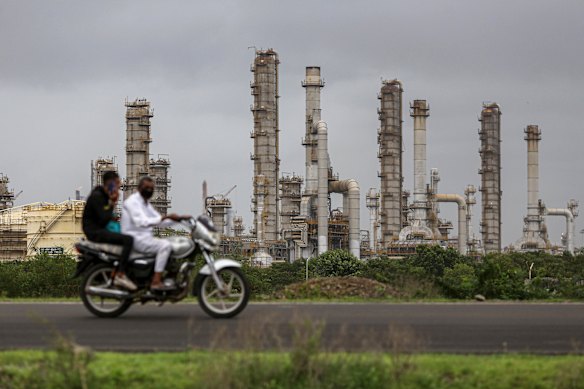
The Reliance refinery at Jamnagar said it would end the use of Russian oil on December 1.Credit: Bloomberg
But CREA’s Raghunandan says there are still 15 shipments of Russian oil purchased before December 1 that are en route for delivery to Jamnagar, on India’s western coast. Another refinery in Brunei, which exports diesel to Australia, has also become heavily reliant on Russian crude oil this year, he says.
“This is something we’ve emphasised to Australian policymakers – you’re essentially working on trust that the third-country supplier is going to clean up their process to satisfy your needs,” Raghunandan says.
“The reality is that what you should be doing is cleaning up the supply chain at your end and doing due diligence at your end.”
Get a note directly from our foreign correspondents on what’s making headlines around the world. Sign up for our weekly What in the World newsletter.
Most Viewed in World
Loading