2 months ago
31
2 months ago
31
But what started as an organisation designed to help veterans, emergency workers and first responders reintegrate into society is now facing its own revolt, threatening the leadership of two of Australia’s most decorated military commanders, Major General Andrew Freeman and Brigadier David Smith.
Graeme-Drury and half a dozen others say the taxpayer-funded organisation has lost its way, including claims of inflated membership numbers, opaque recruitment practices, prioritising marketing over missions, and a culture that is pushing out whistleblowers who raise concerns.
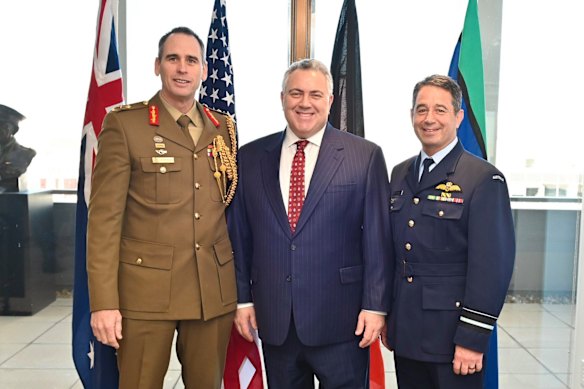
Major General Andrew Freeman (L) with former Australian ambassador to the US Joe Hockey and the head of Australian Defence Staff in Washington Alan Clements.
The charity boasts that it has 6700 volunteers registered to assist. Internal documents reveal that only 2503 are ready to deploy.
The National Emergency Management Agency gave the organisation $38 million in taxpayer funding in 2022 to help deploy volunteers to disaster zones around the country.
But whistleblowers say that after they raised the alarm about thousands of missing volunteers, they were ignored.
A NEMA spokesman said it had immediately begun an assessment of the “serious allegations”.
“Once the independent review and internal assessments have concluded, NEMA will consider all findings and take appropriate action,” he said.
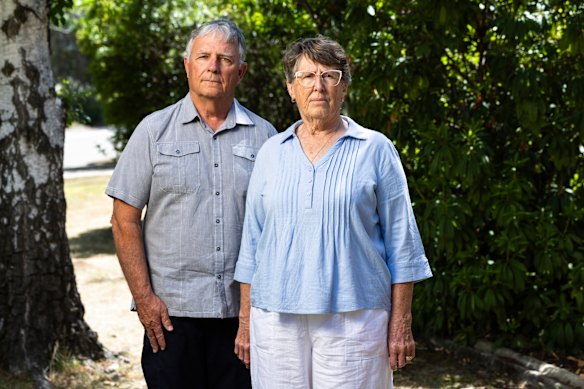
Rhonda and John Sheil say DRA has lost its way. Credit: Alex Ellinghausen
Rhonda Sheil, a former emergency nurse who volunteered with DRA after she retired, says she was told not to remove the names of volunteers who had chosen not to continue working with the organisation “because we needed the numbers”.
“I was just bloody angry,” she said. “It was dishonest. It’s really, really not good to be inflating your numbers, because then when you have a disaster, you don’t have those numbers to be boots on the ground.”
Sheil, who is based in Canberra with her husband John, an air force veteran and a fellow DRA volunteer, said in Canberra alone, there were 400 people on the books, but only 150 would be able to deploy.
Freeman denied Sheil’s allegations.
“No staff member has been instructed to retain inaccurate records, and DRA has an established plan to support volunteer engagement and retention,” he said.
“DRA has always met operational taskings assigned by government agencies, has never been unable to deliver disaster recovery when requested, nor cancelled a deployed wave because of volunteer availability.”
Sheil and Graeme-Drury are part of a group of eight volunteers who say the $40 million in government funding has become a curse for an organisation that was started as a small volunteer veteran-led team known as Team Rubicon Australia in 2016.
Loading
They say the Disaster Relief Australia rebranding and government funding have pushed the organisation away from its veteran-led mission, while bloating the executive and prioritising its marketing departments over emergency response. They have accused DRA of making 19 senior and executive-level appointments without transparent or merit-based selection processes.
“Don’t even get me started on the waste of money with uniforms and the cars,” Sheil said.
Freeman said all senior appointments were merit-based, that they followed strict governance processes and were overseen by the DRA board’s nominations and remuneration committee.
“Uniforms and vehicle branding are essential for safety, clear identification and effective co-ordination with emergency services organisations in disaster recovery operations, and when interacting with communities,” he said.
Tensions have blown out on several missions, including during flood recovery work in Victoria, known as Operation Mactier, which was the “subject of disquiet from rank and file members” according to an internal report, after some volunteers had been chastised for taking unofficial photos of the recovery work, while others were left stranded in transport chaos.
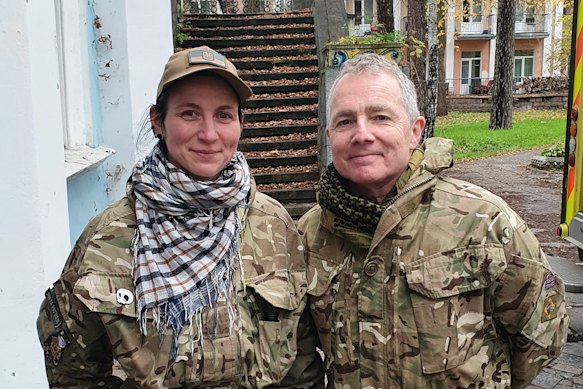
Chris Graeme-Drury in Ukraine.
“It is increasingly apparent that DRA’s senior leadership has lost sight of our core mission and humanitarian purpose,” said Graeme-Drury. “Organisational prestige and public image now appear to outweigh operational effectiveness and volunteer welfare.”
Sheil, who began working with Team Rubicon Australia in 2018 after the Tathra bushfires, said a good organisation had become problematic.
“We were helping the communities. Those people had lost everything in a lot of circumstances, and what we did was give them hope,” she said.
“It’s not that we dislike change. It’s that we feel that it has lost its way. My biggest concern has been with the mental health of our members.”
DRA has attempted to fill volunteer gaps by recruiting civilian volunteers, including backpackers and working holidaymakers, creating tension within an organisation that was once staffed by veterans damaged by their experience of war or trauma.
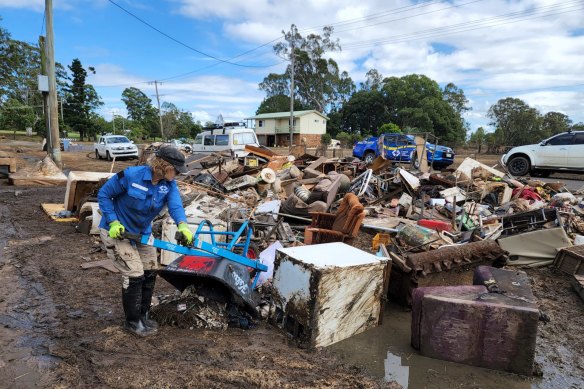
A Disaster Relief Australia volunteer helps clear debris after the Lismore floods in 2022. Credit: Disaster Relief Australia
“We’ve got our own ways. We’ve got our own talk. We’ve got our own things. We work and operate on a completely different scale from civilians,” said Gavin Lee, a DRA volunteer who served with the Australian army in Cambodia in the 1990s.
“The whole system was to look after veterans, to get veterans back into society. Now they are just employing young civilian kids because they haven’t got the numbers for the money they’ve got from the government.”
Freeman said DRA’s workforce included volunteers who wanted to uphold DRA’s values of service, respect and courage.
“More than 99 per cent of DRA volunteers are Australian citizens, permanent residents or New Zealand citizens,” he said.
“DRA is in a period of exponential growth and necessary professionalisation. We acknowledge that evolution is not without its challenges and accept that not everyone is comfortable with change.”
But the cultural clash has led to what Lee says are spurious claims of inappropriate behaviour, including one against him that was later dismissed as “vexatious” and another against another volunteer, Gavin Holden, which was also not substantiated.
Both were suddenly pulled from missions without explanation, leaving them holed up in motel rooms in disaster zones, feeling suicidal.
“We are broken people,” said Holden, a former firefighter and a British military veteran who volunteered with DRA on several missions, including Cyclone Jasper, which tore through Queensland in 2023.
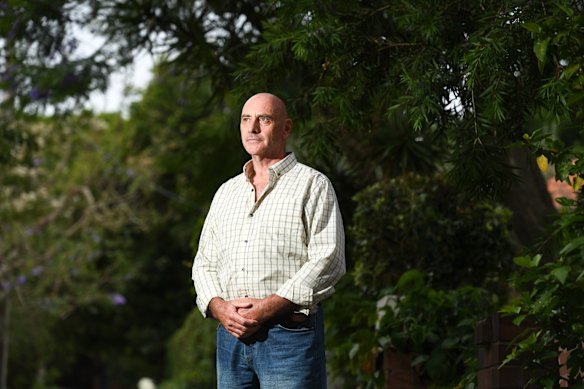
DRA whistleblower Gavin Holden.Credit: Peter Rae
“I trusted them to look after me, and they didn’t look after me.”
The claims of whistleblowers and allegations of censorship and retribution have now become a crisis for the organisation.
DRA chief executive David Smith, a retired army brigadier, told volunteers in October that “implementing change takes time, patience and perseverance”.
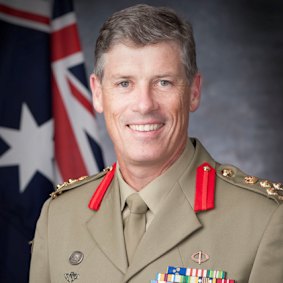
Disaster Relief Australia CEO brigadier David Smith.
“Any negativity toward our pathway to improvement is disappointing,” he said.
“If you are aware of any groups or forums that engage in inappropriate, harmful or defamatory commentary about our people, leadership or the organisation, please advise the senior leadership team immediately.
“If you or anyone you know are involved in such groups or activities, please disconnect and cease participation immediately.”
Graeme-Drury, who as a chaplain is acting as a liaison with DRA on behalf of the whistleblowers, said the letter was seen as a warning to many staff and volunteers.
“CEO Dave Smith continually acknowledges that ‘culture eats strategy for breakfast’, yet his actions speak very differently,” he said.
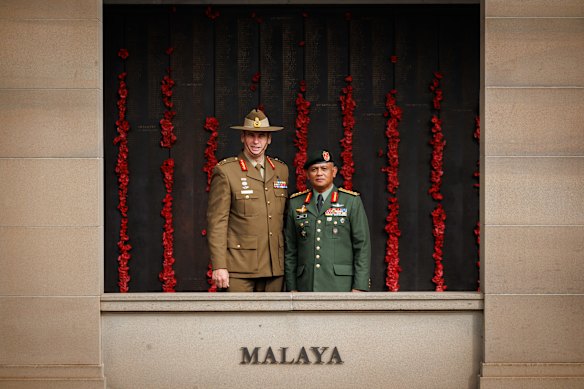
Major General Andrew Freeman with Malaysian Army Major General Dato’ Azhan bin Hj Md Othman in Canberra last year.
Freeman said Smith had the DRA board’s full support. The retired major general said he had ordered an independent investigation of the allegations, including several complaints received, which “relate to the actions of management”.
Freeman told whistleblowers to maintain strict confidentiality and said they must “not discuss any aspect of the investigation, other than as approved by the board”.
“The board takes all feedback and complaints with the utmost seriousness and is fully committed to maintaining a safe, respectful, and effective working environment for all employees and volunteers,” he said.
Graeme-Drury said the organisation had been founded on a clear mission: to harness the experience and discipline of Australian military veterans to serve communities in crisis.
“That mission is now at risk,” he said.
If you or anyone you know needs support, call Lifeline on 131 114 or Beyond Blue on 1300 224 636.