3 months ago
23
3 months ago
23
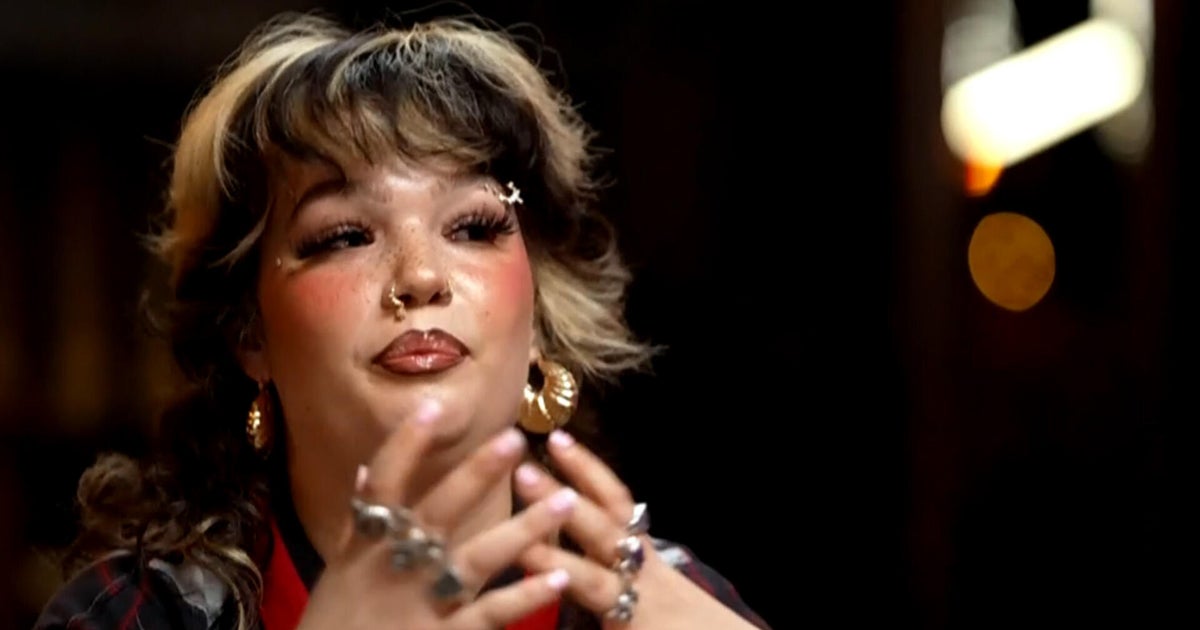
In 2022, Charlie Collins released her second solo album, Undone. The album was in part about rediscovering herself after the dissolution of her nine-year marriage to her former Tigertown bandmate, Chris Collins.
At the time, diving headfirst into the freedom of single life felt like healing. But as the ARIA-nominated and AIR award-winning musician repaired one seam’s stitches, others were coming apart.
Following a major surgery in September 2021, Collins was prescribed the opioid-based painkiller Palexia. As the post-op pain dissipated, her reliance on the medication increased and a pliant, irresponsible doctor enabled her escalating use. As 2023 commenced, Collins’ dependence had tipped over into addiction.
With confronting honesty, her new album Nightwriter tells the story of the year that nearly destroyed her. It’s a before-and-after document, begun under addiction and completed in recovery.
“When I was making Undone, I was really embracing this wild side. I think it was because there were still things I hadn’t dealt with. I was drowning it out and putting this mask over it, like I was just having fun. But behind the mask, I think I was in a lot of pain,” says Collins.
There was her divorce, but other traumas collected over her life, too: her cousin taking their own life, walking in on a friend trying to hang themself, two uncles dying from alcoholism, and another event she discussed but chose not to reveal publicly.
“I developed depression in my mid-20s and got help for it. I sought therapy, but then I would drop off. [The depression] would creep up and I would think if I went to therapy a couple of times to talk about it, then it would go away,” says Collins. “As life went on, more traumatic events started to pile up and pile up and I felt like there was too much to deal with. And that’s when I found comfort in substances. Opioids made me feel happy for a brief moment.”
Her addiction became entwined with her partying and her art. She was using it to manage social situations and indulged in tortured artist tropes.
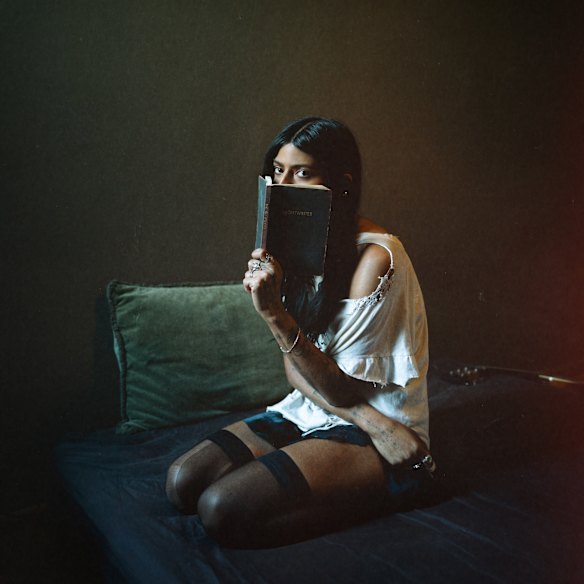
Charlie Collins’ Nightwriter was partly written during her stay at a rehab facility.
“I used to romanticise the tortured artist. I would feed into that darkness and the darker side of me that liked that. It was comforting,” says Collins. “I felt people wouldn’t listen to me if I wasn’t always tortured or talking about painful stuff or being f---ed up. I was so far gone that I didn’t know how to get out. But I dug my own hole, I tortured myself, no one else. I actually really loved it at the time.”
She would use the medication with alcohol, forget how much she’d taken and, on a couple of occasions, was admitted to hospital for accidental overdoses. After one such incident, Collins’ doctors, with her consent, placed her in a psychiatric ward.
“I didn’t care if I lived or died, that was where my head was at,” says Collins. “I woke up in hospital and had a doctor say, ‘You should be dead’.”
After leaving the ward, Collins began a methadone program and thought she’d never be able to write music again, but lying on her bed and admitting to herself she needed help let the words and melodies return: the product was I’m Alright, which appears at the album’s midpoint, after a clutch of tracks decrying online dating and toxic relationships.
“I didn’t think I would be able to write if I wasn’t this tortured artist, if I wasn’t f---ed up, because I relied on being high, or having all this darkness to cling to,” says Collins. “[I’m Alright] was a reassurance to myself: this is really hard right now, you need help, but you’re alive, and you’re going to be OK.”
She points to a line in the song that sums up the moment’s priorities: ’Cause no one really gives a shit if I’m sober or I’m lit/ Right now they’re just relieved that I’m not dead.
After a two-month wait, she entered a rehab facility. “I’d never been to rehab before. I didn’t know what to expect and the first few days I wanted to run, I wanted to leave. [Someone said], ‘Trust me, you’re in the right place’,” remembers Collins. “I went to my room, I had my guitar, which I was allowed to bring, and I started writing down lyrics and singing this melody to I’m In the Right Place, which ends the record, and then I realised I didn’t have anything to record it on.”
On being admitted to rehab, Collins and her 50-odd co-patients were asked to hand over their phones. She made do with writing notes to help her remember what key the songs were in, but as many artists will tell you, limitations and their resulting resourcefulness often produce good work. She used her daily 10-minute payphone call to contact a friend, who recorded the first lines down the phone as a voice memo. You can listen to that very moment on the album. She recorded other ideas on a contraband phone another patient had snuck in.
‘I always used to say music is my therapy, but also I need actual therapy as well.’
While Collins admits to falling for the tortured artist cliche, it’s also easy as a listener or interviewer to let our own thoughts be overrun by well-trodden rock narratives. One can imagine Collins in monastic concentration, using her songs to work through her demons, in a lush facility of the kind depicted in film and TV.
“I always used to say music is my therapy, but also I need actual therapy as well,” says Collins, with the wisdom of hindsight. “I’m writing about it, getting it out and that is amazing, and it’s really important, but also you’re pulling out all this really raw, emotional stuff. Are you equipped to deal with that on your own as well?”
In reality, she describes rehab as part-way between a school and a hospital, rather than a Byron Bay retreat: single bed, plastic pillows, doctors and nurses. Her counsellors had to remind her of her true purpose for being there.
“She said we want you to have your time to write, but also don’t isolate when things are really hard. When we have to talk about hard topics, face them with everyone. You’ve got this as a support, you don’t have to be alone in your sadness,” says Collins. “That was when I learnt I didn’t have to suffer in silence.”
In April this year, out of rehab and armed with a phone full of demos, Collins took that collaborative spirit to heart and decamped to Auckland to work with Crowded House’s Neil Finn and the producer Steven Schram. Recorded in a three-week burst at Finn’s Roundhead Studios, the finished compositions on Nightwriter, which Collins and Finn played almost entirely themselves, contain a hard-to-pin-down poise. Collins’ strongest writing on the album communicates her feelings and experiences with little adornment to her phrasing, and the songs find their power in that directness.
Loading
“I don’t really know how to fully embellish something. I have the story, it’s my story to tell, it doesn’t need to be dressed up, it just is what it is,” she says. “Three chords and nothing but the truth is what my dad would always say.”
Nightwriter is painted in the palette of indie rock. It is Collins’ best album. Despite its subject matter and her old predilections for anguished writing, the overwhelming emotions for the listener are of acceptance, resolve and strength that come after sinking so low that you realise the first person of consequence you have to prove anything to is yourself.
“I’m really proud of myself. The hardest thing about overcoming addiction is admitting you have one. To do the work I did to admit that, to want to dive through the really painful things and confront them, to face all those demons that terrify you. I’m stronger and more capable,” says Collins. “Honestly, the biggest thing is it’s a really f---ing hard thing to love yourself, flaws and all. I look in the mirror and I like who I am. I love who I’ve become.”
If you or anyone you know needs support, call Lifeline on 131 114, beyondblue on 1800 512 348, or Kids Helpline on 1800 55 1800.
Nightwriter is out now. Charlie Collins’ national tour starts at Sydney’s Metro Theatre on September 30.