3 months ago
23
3 months ago
23
December 28, 2025 — 9.08pm
Brigitte Bardot, the French 1960s sex symbol who became one of the greatest screen sirens of the 20th century and later a militant animal rights activist, has died. She was 91.
Bruno Jacquelin, of the Brigitte Bardot Foundation for the protection of animals, said the former actor died at her home in southern France. No cause of death was provided. Bardot had been hospitalised in November.
Bardot became an international celebrity as a sexualised teen bride in the 1956 movie And God Created Woman. Directed by her then-husband, Roger Vadim, it triggered a scandal with scenes of the long-legged beauty dancing on tables naked.
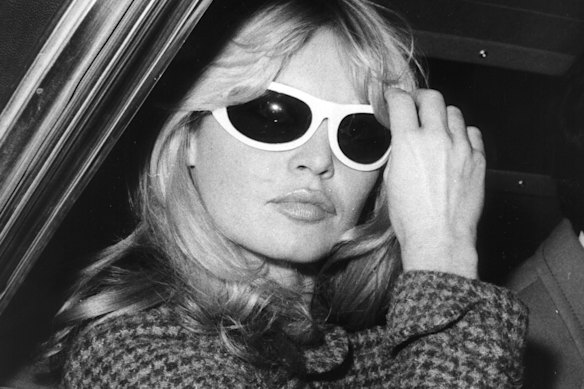
Brigitte Bardot, pictured in New York in 1965.Credit: AP
At the height of a cinema career that spanned some 28 films and three marriages, Bardot came to symbolise a nation bursting out of bourgeois respectability. Her tousled, blond hair, voluptuous figure and pouty irreverence made her one of France’s best-known stars.
Such was her widespread appeal that in 1969 her features were chosen to be the model for Marianne, the national emblem of France and the official Gallic seal. Bardot’s face appeared on statues, postage stamps and even on coins.
Bardot’s second career as an animal rights activist was equally sensational. She travelled to the Arctic to blow the whistle on the slaughter of baby seals; she condemned the use of animals in laboratory experiments; and she opposed sending monkeys into space.
“Man is an insatiable predator,” Bardot said on her 73rd birthday, in 2007. “I don’t care about my past glory. That means nothing in the face of an animal that suffers, since it has no power, no words to defend itself.”
Her activism earned her compatriots’ respect and, in 1985, she was awarded the Legion of Honour, the nation’s highest accolade.
A turn to the far right
Later, however, she fell from public grace as her animal protection diatribes took on a decidedly extremist tone and her far-right political views sounded racist as she frequently decried the influx of immigrants into France, especially Muslims.
She was convicted five times in French courts of inciting racial hatred. Notably, she criticised the Muslim practice of slaughtering sheep during annual religious holidays like Eid al-Adha.
Bardot’s 1992 marriage to fourth husband Bernard d’Ormale, a one-time adviser to former National Front leader Jean-Marie Le Pen, contributed to her political shift.
In 2012, she caused controversy again when she wrote a letter in support of Marine Le Pen, the current leader of the party – now rebranded National Rally – in her failed bid for the French presidency.
In 2018, at the height of the #MeToo movement, Bardot said in an interview that most actors protesting sexual harassment in the film industry were “hypocritical” and “ridiculous” because many played “the teases” with producers to land parts.
A privileged, but ‘difficult’ upbringing
Brigitte Anne-Marie Bardot was born September 28, 1934, to a wealthy industrialist. A shy, secretive child, she studied classical ballet and was discovered by a family friend who put her on the cover of Elle magazine at age 14.
Bardot once described her childhood as “difficult” and said her father was a strict disciplinarian who would sometimes punish her with a horse whip.
But it was French movie producer Vadim, whom she married in 1952, who saw her potential and wrote And God Created Woman to showcase her provocative sensuality, an explosive cocktail of childlike innocence and raw sexuality.
The film, which portrayed Bardot as a bored newlywed who beds her brother-in-law, had a decisive influence on New Wave directors Jean-Luc Godard and Francois Truffaut, and came to embody the hedonism and sexual freedom of the 1960s.
The film was a box office hit, and it made Bardot a superstar. Her girlish pout, tiny waist and generous bust were often more appreciated than her talent.
“It’s an embarrassment to have acted so badly,” Bardot said of her early films. “I suffered a lot in the beginning. I was really treated like someone less than nothing.”
Bardot’s unabashed, off-screen love affair with co-star Jean-Louis Trintignant further shocked the nation. It eradicated the boundaries between her public and private life and turned her into a hot prize for paparazzi.
Bardot never adjusted to the limelight. She blamed the constant press attention for the suicide attempt that followed 10 months after the birth of her only child, Nicolas. Photographers had broken into her house only two weeks before she gave birth to snap a picture of her pregnant.
Nicolas’ father was Jacques Charrier, a handsome French actor whom she married in 1959 but who never felt comfortable in his role as Monsieur Bardot. Bardot soon gave up her son to his father, and later said she had been chronically depressed and unready to be a mother.
In her 1996 autobiography Initiales B.B, she likened her pregnancy to “a tumour growing inside me,” and described Charrier as “temperamental and abusive.”
Bardot married her third husband, West German millionaire playboy Gunther Sachs, in 1966, but the relationship again ended in divorce three years later.
Among her films were A Parisian (1957); In Case of Misfortune, in which she starred in 1958 with screen legend Jean Gabin; The Truth (1960); Private Life (1962); A Ravishing Idiot (1964); Shalako (1968); Women (1969); The Bear And The Doll (1970); Rum Boulevard (1971); and Don Juan (1973).
With the exception of 1963’s critically acclaimed Contempt, directed by Godard, Bardot’s films were rarely complicated by plots. Often they were vehicles to display Bardot’s curves and legs in scanty dresses or frolicking nude in the sun. “It was never a great passion of mine,” she said of filmmaking. “And it can be deadly sometimes. Marilyn (Monroe) perished because of it.”
Bardot retired to her Riviera villa in St Tropez at the age of 39 in 1973 after The Woman Grabber.
AP
Most Viewed in Culture
Loading