3 months ago
32
3 months ago
32
Snowboarding sensation Val Guseli can trace his love of the slopes back two generations.
His paternal grandfather, Guido Guseli, was an Italian immigrant who moved to Australia as a teenager in 1958 and learned to ski on a shovel.
His maternal grandfather, John Sanders, was a ski patroller at Perisher.
“Nonno [granddad] tells me the story of when he used to go to the snow with my dad, and they would ride down on shovels, like square-mouth shovels,” Guseli says. “You hold on to the handle and put your feet sideways, and you could ride down the snow.
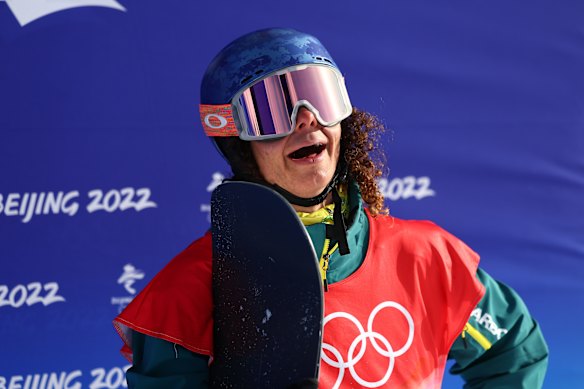
Valentino Guseli at the 2022 Olympics in Beijing.Credit: Getty Images
Guseli has had good cause to reflect on his Italian heritage.
The 2026 Winter Olympics will be staged across Italy, and the 20-year-old aims to be there, competing in three disciplines – half-pipe, slope style and big air – although he is yet to qualify.
The Guselis started migrating to Cooma in Australia during the 1950s. Two brothers worked on the Snowy Mountains Hydro Scheme, and the third as a shoemaker in town.
They were tough times. Pubs and brothels lined the streets, and an influx of migrant workers swelled the population.
In April 1958, one of the Guseli brothers, Antonio, died at 27.
The story goes that multiple workers were standing on a lift platform, hovering above the deepest shaft in the southern hemisphere, when a winch snapped, and they fell to their deaths.
He did not live to see his family – parents and four more siblings – migrate to Australia six months later. One of them was Guseli’s grandfather, Guido, who was 13.
The Guseli family relocated from Cooma to Shepparton in 1961, and it was there Guido met and married Glenda Carrafa, the daughter of Italian immigrants.
The couple returned to NSW in the late 1980s, started a swimming pool building business and opened a nursery in Kianga on the south coast. It was here that Val Guseli’s father, Ric, learned to navigate the slopes.
“We used to go up and do a bit of fishing at Kiandra (a gold rush town in Kosciuszko National Park),” Ric recalls.
“I remember jumping on a square-mouth shovel because they were attached to the work truck, and sliding down the hill on it.
“My dad actually showed us that long before I even knew what snowboarding was. I’m not even sure it was invented at that stage.”
By the time he was 13, Ric was alternating between surfing at Kianga and snowboarding in the mountains.
He then met his wife-to-be, Kristen Sanders, and started spending winters with her family at Perisher.
“Every year of his life, Val’s been to the snow – from pulling him around in a toboggan when he’s one and two years old to putting him on a board at three years old,” Ric says. “He took to it pretty easily.”
Guseli quickly became a boy wonder and by the age of seven, the family were advised to test his talents overseas.
“I actually didn’t know he was world-class until I took him to America, and then I was like, ‘oh shit, I’m gonna have to take on less work and travel with him’,” recalls Ric, who runs the family’s pool building business.
Father and son would spend two-and-a-half months a year abroad, while Kristen and their daughter, Ali, would stay at home in Dalmeny.
But they also came up with a remarkable way to optimise their son’s time in Australia. They built a home-made jump – a 50-metre run-in and a 50-metre airbag on a 36-degree slope.
“The jump’s on dad’s property,” Ric says. “I designed it, engineered it and got it made in China.
“By the time you take into account all the materials and labour – there were a lot of volunteers – I worked out it cost us about $180,000.
“I started off with something much smaller. But when I built the latest one, it was the biggest airbag snowboard jump in the world.”
The jump, modelled on similar set-ups in Japan and Korea, has helped Guseli excel in big air events.
“Everyone thought he was a half-pipe rider, but he’s winning World Cups in three disciplines that are all very different,” his father says.
The home-made jump not only allowed Guseli to reach greater heights – he holds the snowboard world record of 11.53 metres – but also spend more time with his family.
“It meant that we weren’t spending like 10 grand to go to Japan for two weeks to use that sort of facility,” Ric says.
Guseli says the airbag provided a softer landing and safer environment than trying new manoeuvres on snow.
After making his debut as a 16-year-old at the 2022 Olympics in Beijing – the youngest member of the Australian team – Guseli still has to qualify for the 2026 Olympics.
He has until the end of January to make the cut. Competitors need to be ranked in the top 30, judged on their best six results.
But he will have to overcome the odds. Guseli suffered a major setback in December last year when he blew his ACL during a big air event in Beijing.
Loading
The injury meant he was sidelined during last year’s qualifying season.
“He’s basically got half the time as the rest of the athletes in the world to qualify,” Ric says. “It’s a big job, and I think there are people out there who don’t think it can be done.”
But Guseli made an impressive return to the half-pipe arena, securing a bronze medal at Copper Mountain, in the United States, on Friday.
“It’s my first half-pipe comp of the season, I’m going to have some time to train now and put some time into getting these bigger tricks, so by the time the Olympics come around I’m ready to take it,” he said.
Guseli says he has been able to overcome any mental barriers associated with his injury.
“I’m fine,” he says. “It sucks when your season gets taken away, and it’s going to make the qualification a little bit more difficult, but I’m still going to do everything that I can to ensure it goes smoothly.”
The Winter Olympic Games will be broadcast on the 9Network, 9Now and Stan Sport.
News, results and expert analysis from the weekend of sport are sent every Monday. Sign up for our Sport newsletter.