2 months ago
16
2 months ago
16
The day I arrive at Zali Steggall’s northern beaches home, she is bright-eyed when she answers the door.
I’m a little surprised if I’m honest, given that only days earlier, she finished running for 34 hours straight through the Snowy Mountains.
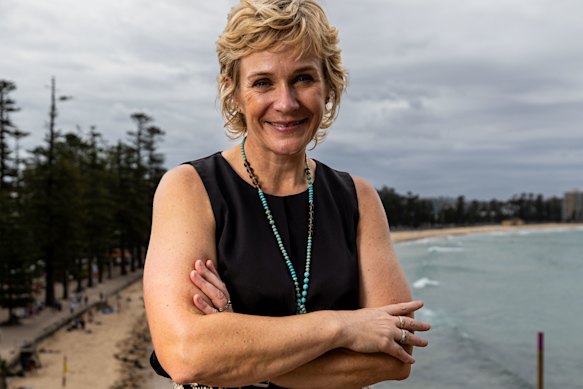
Zali Steggall.Credit: Sam Mooy
During the 160-kilometre ultra trail race, howling 100-kilometre winds blew some participants off the track into rocks. And while summiting Australia’s highest peak, Mount Kosciusko, and traversing 4710 metres of elevation, Steggall 51, battled blizzards, flowing mud and icy sludge, hail, snowdrifts, lightning storms and the delirium of sleep deprivation.
I was expecting a hobbling shell of a human, toenail-less and toothless. Instead, while making me a peppermint tea, she casually tells me she is in fine condition, a bit of wind burn and the lancing of one red-polished toenail aside.
“I’ve recovered really well … maybe I didn’t go hard enough,” says the federal MP, who has completed a handful of hundred-kilometre races over the last decade.
A classic high achiever, after winning Australia’s first medal in the Winter Olympics (bronze in slalom at the 1998 Winter Olympics in Nagano), Steggall had a successful law career, before bumping Tony Abbott off his seat of Warringah, one he’d held for 25 years.
Abbott himself was not averse to a gruelling challenge, having become the self-styled “ironman” of Australian politics after competing in the Ironman Australia Triathlon in 2010.
Steggall and Abbott join the ranks of former federal Liberal MP Pat Farmer, who ran 14,000-plus kilometres around Australia in 2023; President of Finland Alexander Stubb, who won his age group at the European Championship triathlon in 2022; US senator Kyrsten Sinema, who has competed in both ultramarathons and Ironman events; and various pollies, including former vice president Al Gore, who have run marathons.
It’s not just politicians. Endurance racing has become so popular among executives that the Ironman Group began an “executive challenge,” in 2009 catering to high-achieving, time-strapped business executives who still want to participate in the race, which involves a 180-kilometre bike ride, a four-kilometre swim and a full marathon.
Where the phrase was once to work hard and play hard, today a more appropriate one among leaders is work hard – and work out even harder.
Loading
Thrashing the body has taken on new meaning, and recovery is a serious pursuit, not from hangovers but from pushing it to its physical limits.
“A lack of sleep used to be a badge of toughness among high-performing people,” one Ironman executive challenge trainer told The New York Times. “Now it’s a badge of stupidity.”
While mindful activities such as yoga or meditation might be healthier for someone whose work chronically evokes a “fight or flight” response, for many leaders it is only offset by pursuits of commensurate intensity.
“I go from highly stressful work situations where you are under pressure, there’s a lot of adrenaline pumping, and then you do these kinds of events where it’s also a lot of adrenaline strain on the body,” Steggall admits.
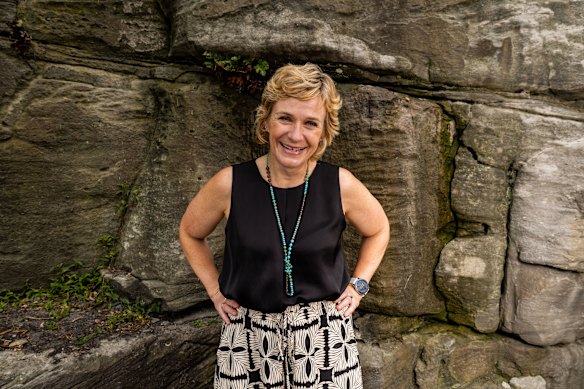
Already planning her next race: Zali Steggall. Credit: Sam Mooy
The irony of time-poor people pursuing events that require such a time commitment is also not lost on Steggall.
But, when work becomes intense, if she doesn’t have a commitment to a big race, training is the first thing to go, says the mum of two adult sons and three stepdaughters. She says the training required for a gruelling race keeps her accountable.
“You have to respect it,” she says. “If I’m sitting in parliament and I’ve got a big day ahead, but I’ve got to get a 10-kilometre run done, I’ve got to get up at 5am and off I go and find the hills. There’s a pleasure in being true to a commitment.”
In a public job where she rarely switches off, training is also time for reflection: “It gives me time to think about strategy and problems and policy. It’s not unusual during training sessions, I’m workshopping my questions for question time or [thinking about] how we could progress an issue.”
Loading
And, it has helped her manage the symptoms she experienced being “smashed with perimenopause”.
“There’s nothing like standing in parliament, doing a press conference while sweat’s trickling down,” she says chuckling. “You go through fluctuations of energy and sleep. I don’t sleep well at all. I need the exercise to help me sleep.”
There are also lessons to be found in the trails. Where her skiing career was fixated on a quick outcome, preparing for an ultra is about appreciating the process and is as much a game of mental chess as it is about physical fitness.
The race itself is something else entirely: “It’s a weird sense of, I don’t know, is it sadistic pleasure? It’s uncomfortable.”
Trail racing also requires a detailed level of planning – she shows me her spreadsheet with prompts to brush her teeth and notes for husband and race support, Tim Irving, including when to give her food or pickle juice and to remind her that bad section doesn’t mean a bad race – and adapting when things don’t go to plan.
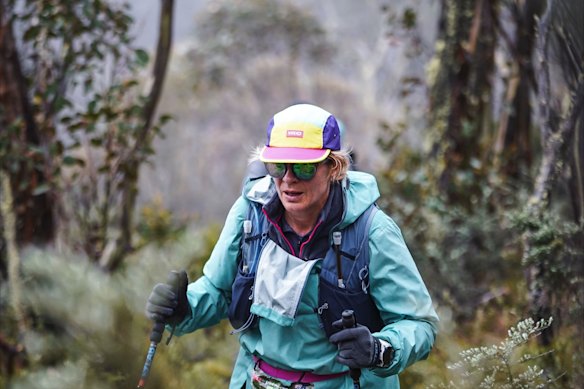
Zali Steggall during the 160-kilometre ultra race through the Snowy Mountains in November.Credit: Sportograf/KosciMiler
She has applied these learnings to her professional life, she says: “It helps you get more resilient to situations and changes of plan and setbacks.”
The Ironman Group, which also runs triathlons, ultramarathons and endurance cycling races, doesn’t track demographic information about participants beyond age and location, while the ABS only notes that the most advantaged are more likely to engage in physical activity compared with the least advantaged.
Honorary Professor Kieran Fallon, the former medical director of the Sydney to Melbourne ultramarathon, says participants “come from all walks of life” but that high achievers often enjoy testing themselves.
Loading
“There’s always another hill to climb,” Fallon says. “When you turn 60, you don’t just get the cardigan and rocking chair out and wait to die.”
This idea rings true to Steggall, who is already planning her next race in France in 2026. She tells me about a press conference she held in 2002 announcing that she was retiring from ski racing.
“A journalist said to me: ‘What do you think was the highlight of your life?’ I was 27 at the time and I said, ‘I certainly hope I haven’t had it yet’.”
When people get older she fears they tend to stop having dreams and ambitions.
“I feel that has a huge impact on people’s mental health and outlook on life. I think you should never stop setting goals for yourself or challenges for yourself, no matter your age.”
Turning 50 last year and becoming an empty-nester this year has been a transition period where setting big challenges has helped her to feel excited about the next chapter of life.
“As an MP, I write a lot of congratulatory cards to people turning 100. Six years ago, only a couple [in my electorate] would reach 100. Now it’s significantly more than I would have thought,” she says.
“If I think about that, how do I keep setting goals to keep feeling inspired and motivated? Part of that is not wanting to have peaked yet.”
Make the most of your health, relationships, fitness and nutrition with our Live Well newsletter. Get it in your inbox every Monday.
Most Viewed in Lifestyle
Loading