3 months ago
27
3 months ago
27
Opinion
December 21, 2025 — 1.30pm
December 21, 2025 — 1.30pm
As the year ends in sorrow, it’s important to remember the good as well as the bad. Here are 10 things – an unapologetically random and idiosyncratic selection – of the best, the worst and most embarrassing moments I’ll remember about 2025.
Best performance by a minister: Murray Watt
The Queensland senator, promoted after the election to the difficult environment portfolio, emerged this year as cabinet’s best fixer. His success in landing a last-minute deal with the Greens to secure the government’s environment legislation was the latest of several tricky issues he has handled with skill. With the reputations of the other two Left faction ministers in the Senate, Penny Wong and Katy Gallagher, so diminished by revelations of their ugly role in falsely maligning former Liberal minister Linda Reynolds (about which more is likely to be revealed next year in Reynolds’ action against the Commonwealth), Watt’s future looks bright.
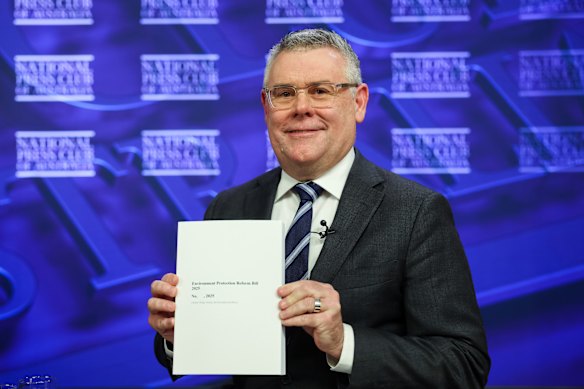
Murray Watt is cabinet’s “best fixer”. Credit: Alex Ellinghausen
Best performance by an opposition minister: James Paterson
Yet again this year, Paterson was the Coalition’s most effective voice. Alone among his colleagues, he emerged from the catastrophic Liberal campaign with his standing enhanced. In the months of mayhem that followed, he remained calm, reasoned and resolutely on-message. His Tom Hughes Oration – which was bracingly candid about the Liberal Party’s obligation to learn the lessons from its electoral calamity – was the best Coalition speech of the year. Paterson’s wise counsel that the party cannot succeed by trying to be “Farage lite” will be heeded by every Liberal with a brain.
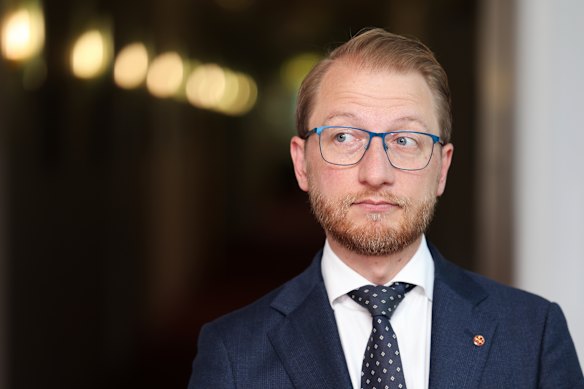
James Paterson is the Coalition’s most effective voice. Credit: Alex Ellinghausen
Best performance by a crossbencher: Sarah Hanson-Young
Hanson-Young achieved something I never thought possible for a Green: she managed to sound sensible. Her critique of the Optus Triple Zero debacle was measured and forensic. Her pragmatism (a very un-Green virtue) landed the deal with Labor on environment laws. And she had the most brutal cut-through line on the Coalition’s decision to abandon net zero: “They’re nutters.” Perhaps it’s the fact that she has served in the Senate for longer than any of her Greens colleagues that has made Sarah a political grown-up. No wonder they won’t make her leader.
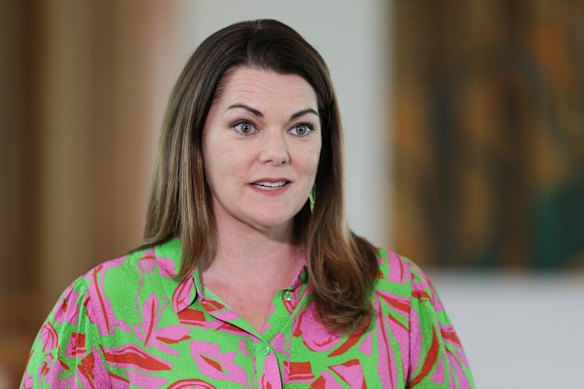
Sarah Hanson-Young managed to sound sensible. Credit: Alex Ellinghausen
Best performance by a backbencher: Matt Canavan, by a country mile
The net zero debate was undeniably the most vexed issue for the opposition this year. Canavan effected a policy change first within the National Party, and then strong-armed the Liberal Party into following suit. Whether or not you agree with him, there’s no doubt that he shaped the politics and led the debate. As a result of relentless tenacity and effective advocacy, he ended up getting everything he wanted. And all from the backbench.
Fastest falling star: Jacinta Nampijinpa Price
From her disastrous performance during the election campaign, when she gave Labor its best line tying Peter Dutton to Donald Trump, to her embarrassing run at the Liberal deputy leadership which saw her fall flat on her face (and rat on the National Party in the process), to her insults to Indian Australians at the very time Liberals needed to rebuild trust with multicultural communities, the star of the “No” case in 2023 spent 2025 proving just how bad she is at politics.
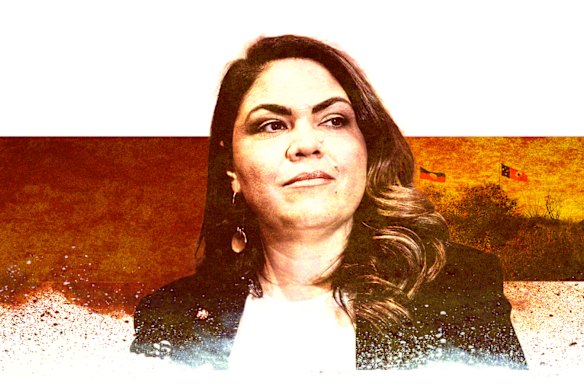
Jacinta Nampijinpa Price: The fastest-falling star. Credit: Fairfax Media
Most shameful day: December 14
Why did it take the slaughter of 15 innocent souls to awaken the government to the magnitude of the danger about which Jewish Australians have been warning, with ever-greater urgency, ever since the pogrom of October 7, 2023? Real leadership required more from Anthony Albanese than formulaic condemnations of antisemitism and words of sorrow for the victims. At least, in the prime minister’s dithering, anaemic response, we heard no more mention of “Islamophobia”. The calumny of that false moral equivalence – now apparently dropped from ministerial talking points – is emblematic of his government’s utter failure to grasp the unique nature of the ancient evil that now, shockingly, stalks modern Australia.
Loading
Most important new face on the world stage: Sanae Takaichi
Japan’s first female prime minister quickly showed that her reputation as the Japanese Margaret Thatcher was more than just caricature. Amping up her rhetoric towards China, she declared that a naval blockade of Taiwan could be considered “a survival-threatening situation” which, under Japan’s pacifist constitution, might justify its military response. The fury of China’s reaction was a measure of its concern that the new PM meant what she said; the cost to China of invading Taiwan just got significantly higher. Deterrence only works as a diplomatic strategy when the threats are credible – as Takaichi no doubt learnt from Thatcher.
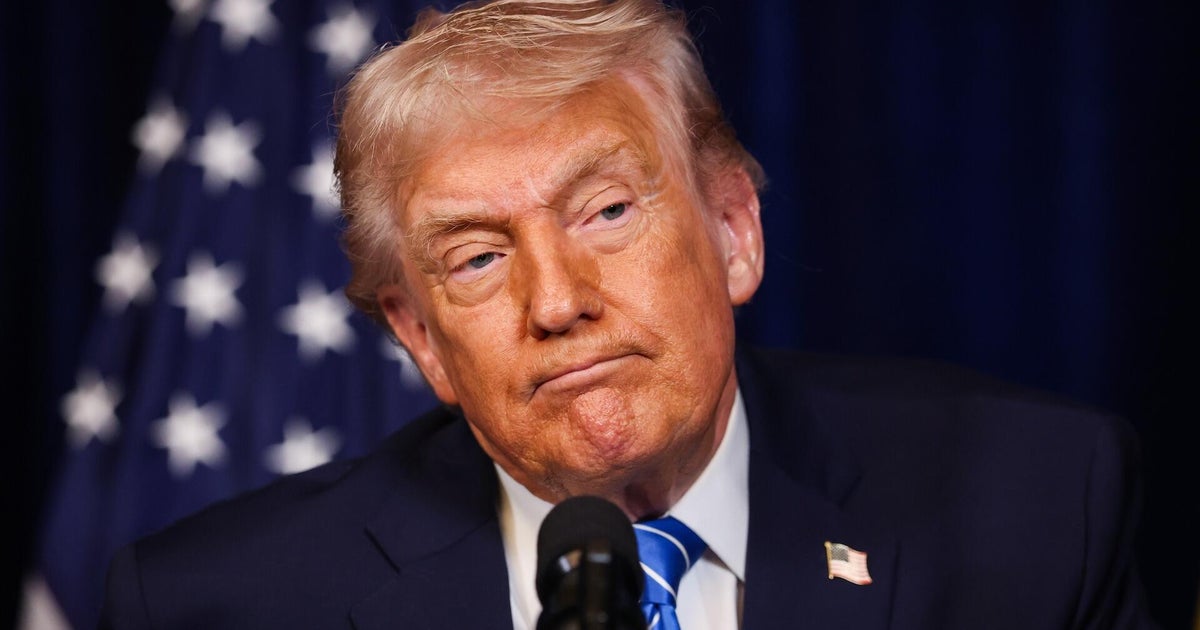
Most cringeworthy moment in global politics: Donald Trump greeting Vladimir Putin in Alaska
As the president rolled out the red carpet for the world’s most dangerous autocrat, Russia’s attack on Ukraine accelerated. Trump got precisely nothing out of the meeting, except for the chance to hang out with a gangster he so obviously admires and of whom he is embarrassingly in awe. At an event designed more for photo opportunities than diplomacy, the image that captured the moment best was that of Putin, gazing through the window of Trump’s limousine looking like the cat that swallowed the canary. Although normally as inscrutable as the KGB officer he once was, that bemused smirk left no one in any doubt what he was thinking. As Kerry Packer said of Alan Bond, you only get one Donald Trump in your lifetime.
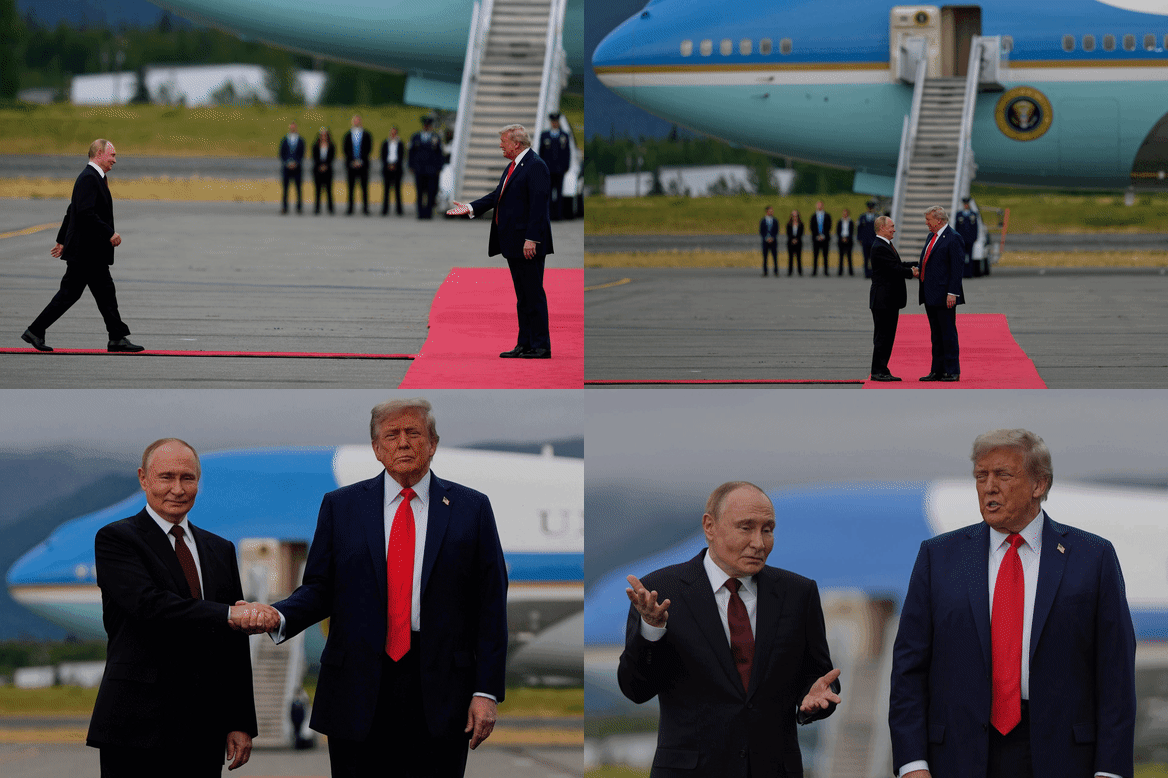
“You only get one Donald Trump in your lifetime”. Credit: AP
Best political book: Troy Bramston’s Gough Whitlam: The Vista of the New
While clearly sympathetic to his subject, Bramston avoids the hagiography in which so many of Whitlam’s biographers have indulged, with measured and sometimes scathing assessments. His account of the Khemlani loans affair made me laugh out loud: did Australia really once have senior ministers, like Rex Connor and Jim Cairns, who were such clueless suckers? In the chapters on the blocking of supply and the dismissal, Bramston is as unsparing of Whitlam’s tactical obtuseness as he is of Sir John Kerr’s lack of candour, while comprehensively demolishing the conspiracy theory, based on a tortured reading of the “palace letters”, promoted by less forensic Whitlam biographers.
Most embarrassing commemoration: Fiftieth anniversary of the Dismissal conference
This gathering brought together most of the luminaries of the left, with a token sprinkling of Liberals, at the superbly atmospheric Old Parliament House. It could have been a serious opportunity to discuss still-unresolved constitutional issues while marking a defining historical event. Instead, it degenerated into a festival of Gough, as true believers of a certain age hugely enjoyed themselves reliving those long-ago days of wine and rage (as Frank Moorhouse called them). Sadly, the wine had been cellared for far too long; the rage – aside from the customary ritualistic denunciations of Sir John Kerr – was that so few people cared any more. The conference dinner ended in sublime self-parody, as that songstress of the 1970s, Little Pattie, led the thinning ranks of Whitlam warriors in a croaking rendition of their tribal anthem It’s Time with all the gusto of a nursing home singalong. It was time – for bed.
I wish all of my readers a restful holiday and a better year ahead.
George Brandis is a former high commissioner to the UK, and a former Liberal senator and federal attorney-general. He is now a professor at the ANU’s National Security College.
Get a weekly wrap of views that will challenge, champion and inform your own. Sign up for our Opinion newsletter.
Most Viewed in Politics
Loading