2 months ago
5
2 months ago
5
If you’re wondering what happened to forecasts for a wet and cool spring and why the nation is being hit with hot, dry and windy weather with rising bushfire risk, climate scientists have named and shamed the likely culprit.
Heading into summer, NSW and Victoria were told to expect a La Nina weather pattern to bring lower than average temperatures and higher than average rainfall.
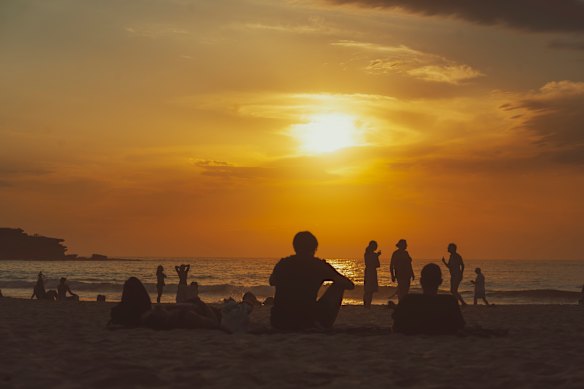
The hot, dry spring that persisted across eastern Australia was probably spurred by a freak weather event in Antarctica. Credit: Dion Georgopoulos
But since then, there have been heatwaves in south-eastern Australia and a spate of early season bushfires in NSW, including blazes on the Central Coast and Mid North Coast. Scientists said the shift in fortunes might be down to the freak weather event that kicked off in September, when temperatures in the stratosphere high above the South Pole shot up 50 degrees.
The Antarctic phenomenon has been recorded only twice before, in 2002 and 2019, and in each instance months of warmer, dry conditions preceded some of Australia’s worst bushfire seasons.
A dry spring could exacerbate risks this summer, but as yet there are no warnings for widespread heightened bushfire risk in eastern Australia. This is due to two years of above-average rainfall and increased soil moisture levels, which reduces the chance of high-risk fire days with extremely low humidity.
Loading
However, rainfall deficiencies have emerged in large pockets of the country, and the Australasian Fire and Emergency Service Authorities Council, the peak body for fire, land management, and emergency services, is warning of increased bushfire risk, including in parts of Victoria. It also notes that there are high fuel loads in central northern NSW that are also contributing to bushfire danger.
In what is known as a sudden stratospheric warming, the heat spike caused the polar vortex to weaken.
The polar vortex is made up of bands of wind that spin around the Earth’s poles and in the southern hemisphere. This means strong westerlies that form a tight circle around Antarctica from autumn until the start of summer.
The stratospheric heat spike has a knock-on effect on the polar vortex, causing the circle of winds above the South Pole to weaken and fan out, and the westerlies to spread northwards.
These winds have been blowing across the southern end of Australia and have brought hot, dry air from the arid interior to the eastern seaboard.
“Leading into summer, in NSW and Victoria the odds were tilted towards higher than average rainfall and cooler than recent temperatures by a combination of a La Nina in the Pacific and by conditions in the Indian Ocean,” said Emeritus Professor Mark Howden of the Australian National University, who serves as a vice chair of the United Nations’ chief climate body, the Intergovernmental Panel on Climate Change.
“The prevailing conditions indicated a good chance of a wetter than average spring across eastern Australia, and it was probably the sudden stratospheric warming that helped disrupt that.
“The Antarctic sudden stratospheric warming disrupts the polar vortex and that allows the westerly winds, which typically travel south of the South Island of New Zealand, move further north, which meant that NSW and northern Victoria got quite a significantly drier spring than forecast. On the other hand, Tasmania was wetter than expected.”
Martin Jucker, a senior lecturer at the University of NSW Climate Change Research Centre, said he was surprised by the pronounced change in weather patterns since the stratospheric heat spike hit Antarctica in September.
“I was actually pretty cautious at the time in saying it might have an impact. But now I’m quite surprised how much of an effect there probably has been,” Jucker said.
“Linking a particular heatwave to the breakdown in the vortex is very difficult. But if we measure several months in a row that are drier than usual, then we can start saying, yes, this is probably because of the polar vortex.”
Cut through the noise of federal politics with news, views and expert analysis. Subscribers can sign up to our weekly Inside Politics newsletter.
Most Viewed in Politics
Loading