
 2 months ago
67
2 months ago
67
To the teenage fans of Poppy King’s groundbreaking lipsticks in the 1990s, myself included, their creator was larger than life – alabaster skin, big eyes, platinum blonde hair that fell in waves around her shoulders, and a red pout. Always red.
The Poppy King before me today, now 54, looks totally different. She arrives, head shrouded in a red scarf, her petite frame wrapped in an animal-print cardigan, red leggings and tan suede fringed boots. Her hair is short. But the pout – that unmistakable calling card – is still there. If I didn’t know better, I’d think she’d stepped straight off the pages of a storybook.
But every fairy tale has its dark chapter, and the story of the younger King’s rise and fall is largely known. In 1992, after struggling to find a suitable matt red lipstick for herself, the then 19-year-old started her own brand. Her lipsticks, in colours named after the seven deadly sins – indolence, avarice, envy, vanity etc – celebrated a darker, less stereotypical vision of beauty and became an overnight hit. By 1995, the Poppy brand was turning over $6 million and available in New York’s Barneys department store. That same year, King was named Young Australian of the Year.
The success, while stratospheric, did not last. An investor dispute precipitated Poppy Industries’ slide into receivership, before it was ultimately bought by the Estée Lauder corporation and closed in 2002. The headlines at the time were unkind – “Tall Poppy”, “King loses her crown”, and so on. But one label stuck more than most: failed lipstick queen.
“That early success was a double-edged sword,” King says. “It meant I also learnt very quickly what it’s like to lose status – to be exalted and then pulled down – because I didn’t fit the standard corporate mould. But the crucial thing was knowing inside myself that I hadn’t failed on my terms.”
Chastened and broke, King left for New York City, where beauty baron Leonard Lauder, of the Estée Lauder empire, hand-picked her for several senior creative roles before the company helped finance her comeback brand, Lipstick Queen, which launched in 2006. (King left the brand in 2017, after it was sold to new owners.)
“I’ve spent a lot of time over the last few years reflecting on how we define a successful life,” she says. “The traditional markers are a big house, luxury – and I don’t have those things [now]. But to me, the most important thing is that I have kept my integrity intact.”
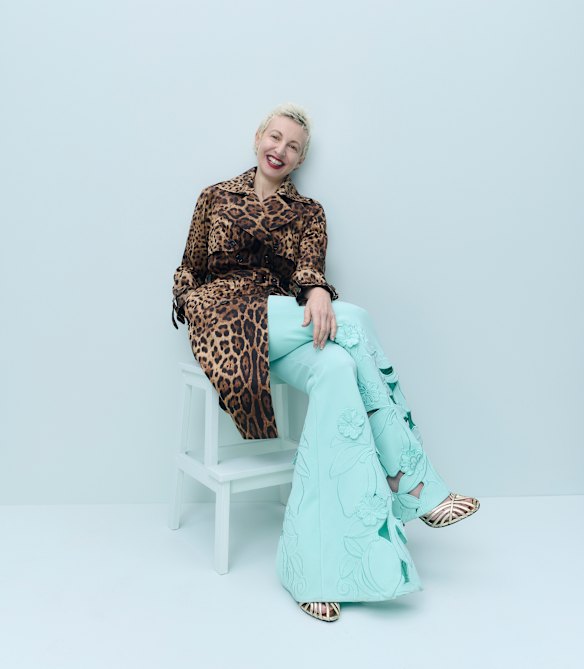
After Lipstick Queen, King spent a few years out of the beauty business, consulting to brands including Disney and J.Crew. In 2019, she was set to launch a new lipstick range with Barneys, Femme de Poppy, when the department store suddenly collapsed.
In 2020, holed up in her Manhattan apartment recovering from long COVID and on a self-imposed career break, King turned all those excess Barneys lipsticks, now sitting in boxes in her living room, into paintings and sculptures. She says art helped her to explore whether lipstick was still her passion.
“My connection to lipstick wasn’t over, but my relationship with lipstick in big business was,” she says without a hint of an American accent, despite living there for 23 years. “I didn’t want to go back to the corporate world. I wanted to go deeper into the craft.”
Now back living in Australia, King is once again poised to shake up the beauty industry. For the past two years, she has been quietly manufacturing small runs of lipsticks in the same outer-Melbourne factory that made Poppy in the 1990s and selling them online, often appearing in Instagram videos sans make-up, not even lipstick.
On this crisp May morning, King is wearing her latest release, Divine Intervention, which goes from a shocking mauve in the tube to the colour of smashed raspberries when applied. “Poppy lipsticks meant so much to so many people [in the 1990s], but I had no idea whether I’d have to reintroduce myself,” she says of relaunching under the Poppy King name.
Her bigger – and bolder – mission, she explains, is to shift her business to a pre-order model to reduce the amount of waste produced, specifically single-use plastic. And if she can prove it works, she wants the rest of the industry to follow her. (The current wait time is up to five weeks, King says.) “If somebody desires something, will they wait to get it? That’s a gamble very few beauty brands want to take.”
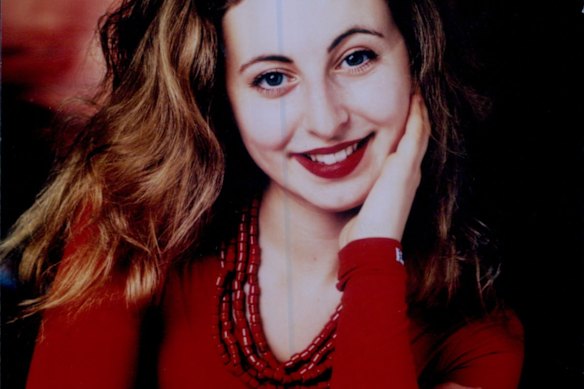
King is no stranger to taking risks, including never using models to sell her products. As a teenager, her 1940s look – pale skin, prominent features and a strong nose – made her feel like an outcast. “I never want anyone to feel the way I felt as a teenager looking at models – that absolute sense of inability to ever reach that level of perfection,” she says.
As a child, King and her brother Justin, 57, were largely raised by their fashion designer mother, Rachelle, after their father, Graham, a Freudian analyst, died when Poppy was seven. In early 2025, King rushed back to Melbourne to be with Rachelle after she was diagnosed with terminal cancer. Before her death last December, Rachelle had two wishes: for King to re-grow her hair – she’s started, slowly – and to finish her novel, a “mem-noir” based on her time working in corporate beauty, told through a re-imagining of the female characters in famous fairytales.
Neither of her mother’s wishes concerned King’s love life, a topic she has rarely spoken about. She admits she’s come close to marrying three times – “we all dodged a bullet” – and remains friends with most of her exes. “I do everything backwards, so I actually went through my wildest periods in my late 40s,” she says, laughing.
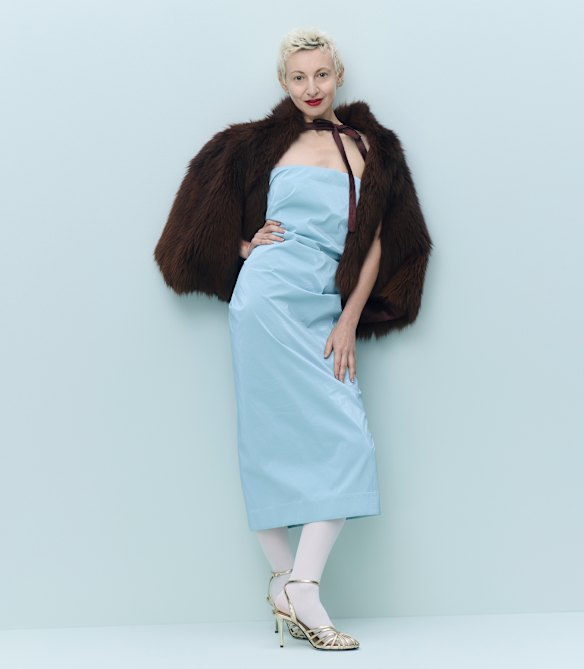
She begins telling me about being “stuck in an intense and unconventional relationship” for a decade with a man more than 10 years her junior. “We both got incredibly trapped and dependent. It became an obsessional relationship on both sides that didn’t leave either of us better people.
“Nobody says this, but when you’re an older woman dating a younger man, it’s very confusing as to what you will or won’t put up with. It was a very disorienting relationship to have in my 40s, and I suffered for it.”
Today, King is single and self-assured. When I ask what her early life taught her about love, she talks about her mother, who never remarried. “I witnessed the struggle, the loneliness but also the freedom that, to me, felt more important than ‘solving’ loneliness,” says King. “I learnt that you don’t need a partner. You can want one, but you don’t need one to be a self-actualised woman.”
Being single has helped King stay connected with her friendship groups in Australia and New York, and focus on her first, truest love: lipstick. “To me, lipstick is a portal to the psyche of the female – a conversation between your inner and outer worlds,” she says.
“I never, ever wanted to be in the beauty industry; I wanted to be an alternative to it.”
POPPY KINGShe also remains motivated by words spoken to her by Leonard Lauder years ago that “changed the direction of my whole career. He said, ‘Everyone else is a marketer, and Poppy, you’re a storyteller.’” (She and Lauder, who died last year aged 92, remained in contact until a few months before his death.)
At the start of her latest chapter, King is older and wiser, still tenacious, and content with not being the richest person in the room. “I never, ever wanted to be in the beauty industry; I wanted to be an alternative to it,” she says.
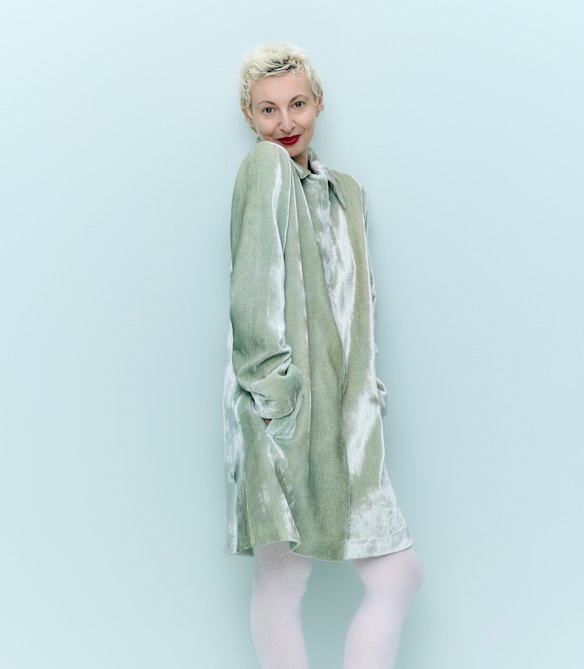
“I’ve watched peers like Lisa Eldridge, Charlotte Tilbury and Emily Weiss [Glossier] raise private equity and shoot past me. Of course, being human, there was a point I wondered, ‘Wow, did they get it right? What’s wrong with me?’ But then she reminds herself that corporate beauty isn’t her goal and in some cases can “end up becoming soulless for the customer, at least compared to what is soulful to me. I don’t need mega-wealth; I don’t see it making anyone happy.”
But King, forever the entrepreneur, won’t rest on lipstick alone; there are plans for hair products and sleepwear, even a range of adult colouring books. All of it, she stresses, will be anchored in small business. Slow. Intentional. Sustainable. One day, she will relaunch her company in the US. Having learnt the hard way, King is determined to make her third act stick.
As we finish up, I offer that King has lived a big life. She responds: “I genuinely believe anyone can, given the right circumstances. It was just a strange mix of variables – the sadness of my childhood, my dad dying, the creative mother. It’s possible for all of us, that first ‘lemonade stand’. It doesn’t always take off, you know? Mine did.”
Talk about making something out of lemons. It could even be a good name for a lipstick.
Fashion editor, Penny McCarthy; Hair Keiren Street, using Wella Professional; Make-up, Peter Beard; Fashion assistant, Jade Myriam

















































