3 months ago
52
3 months ago
52
Updated March 19, 2026 — 5:55pm,first published 1:49pm
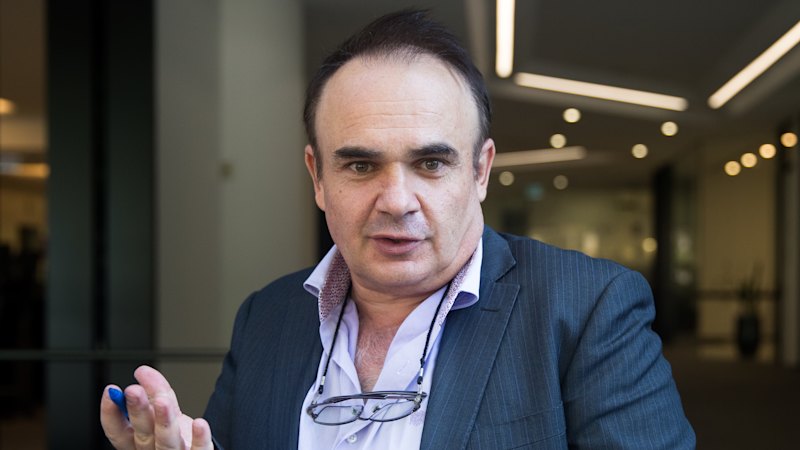
Treasurer Jim Chalmers believes Australians are ready for hard decisions that will form a central part of the May budget after revealing the economy will struggle for the rest of the decade without major reforms and cuts to government spending.
In a speech that revealed economic growth was likely to be between 0.25 per and 0.5 per cent lower than expected over coming years, and the nation’s productivity level will not return to its long-term average until the early 2030s, Chalmers said voters were looking for and would respect tough budget measures.
The May 12 budget, Chalmers’ fifth, was already shaping as a key moment for the Albanese government, which is under pressure over high inflation and a lift in official interest rates. But the war launched by Israel and the United States against Iran has made the budget situation even more difficult.
Chalmers said budget decisions would be later than normal because of the war, including parts of three reform packages tackling government spending, tax and productivity.
He told the Australian Business Economists organisation in Melbourne on Thursday that people understood the case for changes that would deal with intergenerational equity and pressures on the budget, even if those changes caused some financial discomfort.
“I feel there is a level and a layer of understanding in the community that some hard decisions are warranted,” he said.
“We will make hard decisions in May.”
Chalmers signalled a tax reform package would include an overhaul of business taxes, largely aimed at encouraging firms to sink cash into new equipment and machines to make them more productive.
Other expected elements of the tax package including winding back the concession on capital gains tax and restrictions on negative gearing.
Tax reform will be joined by separate packages aimed at spending cuts and productivity measures.
The budget will confirm that an assumed improvement in productivity has been trimmed. Instead of productivity returning to 1.2 per cent annual growth within the next two years, the budget will assume it getting to that level over five years.
Chalmers said the three reform packages would work together with the aim of increasing the supply capacity of the entire economy.
“If the main constraint we are collectively facing is capacity, these packages will help expand it. More savings to make even more room for the private sector to grow, while building fiscal buffers,” he said.
The Treasurer pushed back at suggestions the government would be timid due to the uncertainty around the Iran war.
“It’s an ambitious government, not just an ambitious treasurer,” he said.
The budget will also confirm that Treasury believes there is less spare capacity across the economy, suggesting more pressure on the Reserve Bank and interest rate settings. Jobs figures out on Thursday showed that while unemployment lifted in February to 4.3 per cent, almost 50,000 jobs were created.
A big lift in the participation rate – the proportion of people in work or looking for it – was the reason for the increase in unemployment.
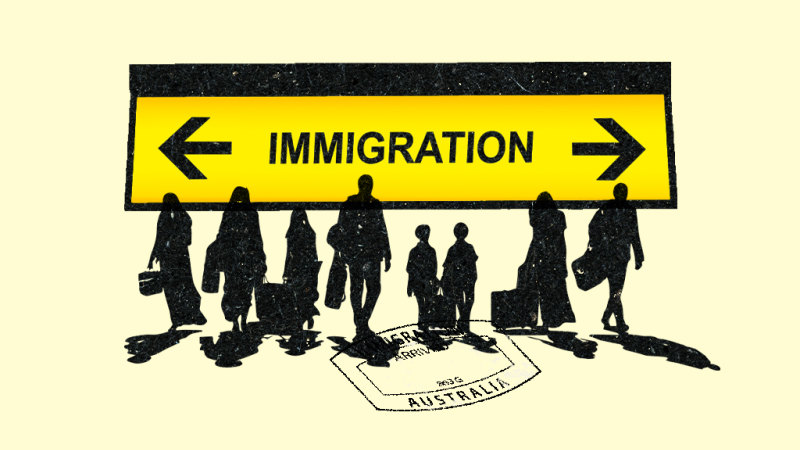
Chalmers said population dynamics were also evolving, with net overseas migration forecast to modestly fall over the next four years due to lower-than-expected departures, while the nation’s fertility rate - which in 2024 fell to an all-time low of 1.481 - is predicted to drop even further.
Figures from the Australian Bureau of Statistics released on Thursday showed Australia’s population had grown by 1.6 per cent in the 12 months to last September, to 27.7 million people.
Natural increase – meaning births minus deaths – added 112,600 people to the population, but a higher proportion came from immigration.
Net migration – which marks long-term arrivals minus departures – in the year to last September brought in 311,000 new people, a figure slightly higher than the 306,000 recorded for the 12 months to last June.
The 87,821 people added to the population through migration in the September 2025 quarter was also a higher figure than the year before, with 81,642 net arrivals in September 2024.
It suggests that migration levels could potentially bottom out at about 300,000 a year, after spiking at more than 500,000 in the year after borders reopened following the pandemic. In the five years before the pandemic, annual net arrivals trended closer to 250,000 a year.
Opposition leader Angus Taylor said Chalmers had simply admitted that living standards for all Australians were going backward, with the government having no plan to reverse the situation.
“This not an economic vision, this is an economic admission of failure,” he said.
“This is a treasurer lowering expectations again and locking Australians into a lost decade.
“After four years, productivity has gone backwards and now the Treasurer says it will take half a decade just to recover.”
Cut through the noise of federal politics with news, views and expert analysis. Subscribers can sign up to our weekly Inside Politics newsletter.