3 months ago
30
3 months ago
30
After speaking out, something inside me broke and was freed at the same time. Healing does not mean forgetting. It means learning to live with what happened without letting it define me,” says Xiomara.
In the central highlands of Peru, Australian humanitarian photographer Ben Adams recently documented life in two of the world’s most challenging places to be a woman – Peru and Uganda. He is sitting in 20-year-old Xiomara’s kitchen, taking photos of her doing what she loves most: cooking.
“My dream is to study gastronomy,” she says. “But I also dream of something bigger: combining cooking with psychology. Because for me, cooking is therapy. And I want others to find comfort in a dish made with love.”
Xiomara was only eight when a family member began abusing her. In rural Peruvian communities, families often don’t report crimes of family abuse to the police, guided by cultural pressure to protect their reputation. The result is that girls like Xiomara are left to bear the trauma on their own.
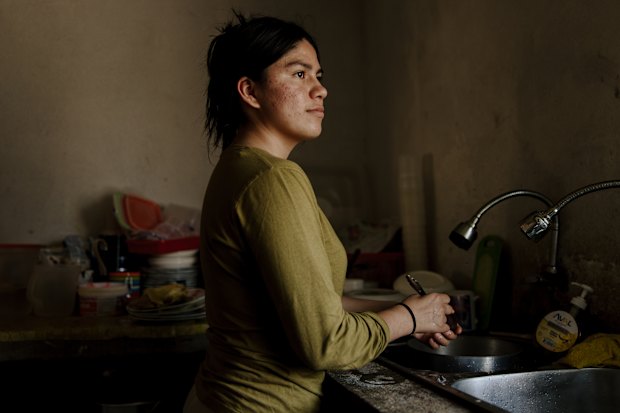
“For me, cooking is therapy. And I want others to find comfort in a dish made with love.” Xiomara, a survivor of sexual abuse, in her kitchen in Huánuco, Peru.Credit: Ben Adams
November 25, the International Day for the Elimination of Violence Against Women, marked the launch of the UNiTE campaign: an initiative of 16 days of activism concluding on International Human Rights Day on December 10.
This 2025 campaign UNiTE to End Digital Violence against Women and Girls, wants to mobilise governments to end impunity through laws that penalise it; it wants technology companies to ensure the safety of platforms and remove harmful content; donors to provide funding so that feminist organisations can work to eradicate violence; and that people must raise their voices to help survivors.
When the justice system fails
Around the world, one in three women and children experience violence and abuse. People in poverty are particularly vulnerable. When a man assaults his wife or partner, it’s seen as a “family matter” that is to be handled inside the home instead of being reported to authorities.
Sexual violence against children is frequent: according to UNICEF, one in five girls is sexually abused in their lifetime, half before their 16th birthday. In many countries, courts are ill-equipped to handle these cases, leaving victims to fend for themselves and perpetrators effectively living outside of the law.
In Peru, cultural norms collide with a justice system that is underfunded, fragmented and largely inaccessible. In parts of the Amazon, families wait days for police to arrive. In Ucayali, UNICEF reports that one in three teens has experienced sexual violence.
For Xiomara, years of silence and trauma led to deep depression, but one afternoon in 2023, hope arrived through Doris Godoy, a psychologist at Paz y Esperanza, a partner organisation of International Justice Mission. IJM is one of the world’s largest anti-slavery organisations. It has an office based in Sydney.
IJM works closely with local social workers, lawyers, psychologists, government agencies and police around the world to provide aftercare to survivors and to strengthen justice systems so they deter perpetrators and protect victims.
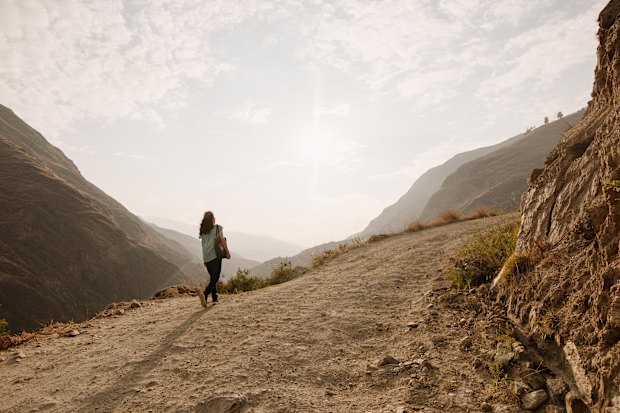
Doris Godoy, a psychologist at Paz y Esperanza (Peace and Hope) in Huánuco, Peru, walks to Xiomara’s home to visit her and her family.Credit: Ben Adams
A survivor movement rising in Peru
Amid this crisis, change is emerging. Supported by IJM and Paz y Esperanza, Xiomara is now a leader and an advocate in the Huánuco chapter of Peru’s national survivor network, Free to Serve, part of IJM’s wider Global Survivor Network.
“I felt, for the first time, that I was not alone,” she says. “Listening to other women, watching them stand tall and share their stories with dignity, gave me courage.”
Through these GSN groups, women share their lived experiences to influence government and to advocate for reform. Xiomara recalls her first government forum, earlier this year. “It was my first time in a decision-making space, where voices like mine are finally being heard by local authorities,” she says.
In 2024, IJM and its partner Kids Alive launched another GSN chapter, this time in Pucallpa.
What began with small activities, like baking workshops, became opportunities for survivors to talk about their lived experiences. Women travel miles by moto-taxi or on foot to attend meetings, their journeys a testament to their determination to rebuild their lives.
“We support each other like walking sticks. Today I’ll be your walking stick, so tomorrow, you can be mine.”
Xiomara“Girls have experienced violence at the hands of their own families — fathers, uncles, cousins,” says Godoy. “But when I see them start pursuing their dreams — finishing school, applying to university — I can see hope for a future many people don’t believe in.”
In August 2024, the Pucallpa group defined its mission: to promote a life free of violence and to create a safe, accessible environment where every woman is valued. Part of its goal is to break the cycles of impunity and stigma that coincide with sexual violence against women and girls. A few months later, they performed in the streets of Pucallpa, letting dance be their outcry and a challenge to the community to urgently confront the crisis.
Xiomara, like so many, has found a lifeline in Peru’s survivor network. “The group helps each of us become stronger. We support each other like walking sticks. Today I’ll be your walking stick, so tomorrow, you can be mine,” she says. “Justice can give more than freedoms. When justice exists, it restores hope.”
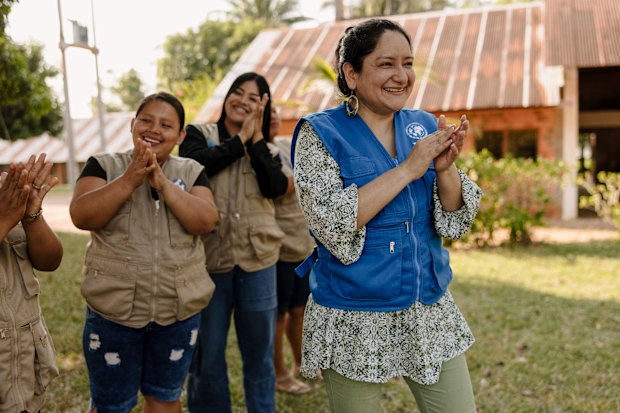
IJM staff member Jackelin Castillo with partners from Kids Alive and members of the survivor network in Pucallpa, Peru.Credit: Photo: Ben Adams
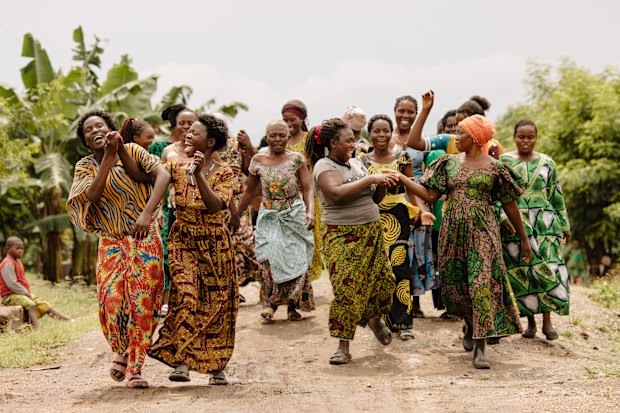
Members of the Mukunyu Women Survivor Network in Kasese, Uganda.Credit: Photo: Ben Adams
A parallel crisis across the ocean
Nearly 12,000 kilometres away in Uganda, survivors are leading movements of their own.
Beneath the trees of rural Kasese, the women of the Mukunyu Survivor Network dance as Adams photographs them. Babies rest on the women’s backs, the women’s skirts sweep the dust and laughter rises through the branches overhead. They move together as one, a sisterhood shaped by resilience that has grown into unmistakable joy. It is only when you remember what they have survived that the full weight of the moment settles in, the immense darkness they have walked through to reach this light.
Among them is Biira Jetrace, a survivor whose resilience echoes Xiomara’s.
“I got pregnant when I was still a child myself,” she says. “I saw my mother being tortured in front of me. I don’t want other women to pass through what my mother and I passed through.”
Today, she leads a survivor group in the Kasese district. “I never knew then how to speak up, but because of IJM, they have trained me through the power of story.”
Together, the women host house meetings, one-on-one conversations and community gatherings. “We are doing it together; we want to see the families happy,” Jetrace says. “People are reporting now. They are no longer keeping quiet.”
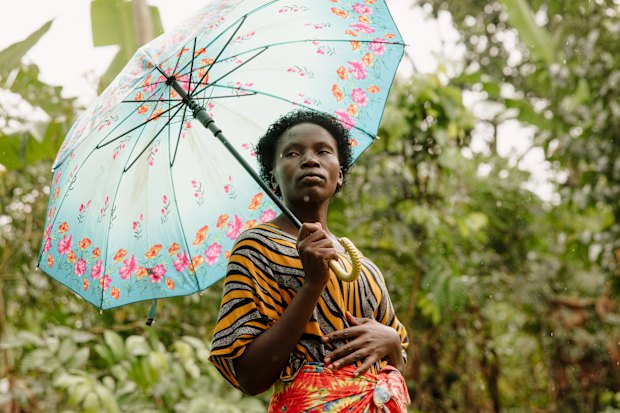
Survivor leader Biira Jetrace in Kasese, Uganda.Credit: Photo: Ben Adams
Jetrace says healing happens through these survivor network meetings, as well as through the physical movement of dancing side by side. “When we dance, sometimes we forget what is hitting us behind. We are in our new life. We are now free from violence,” she says.
Yet the scale of the crisis is immense. In August, IJM Uganda’s national baseline report found that 55 per cent of women have experienced intimate partner violence in their lifetime. And most incidents never enter the justice system. Almost three in four cases go unreported, and for those who do report, only a small fraction reach the police or courts.
For IJM Uganda director Wamaitha Kimani, the issue is deeply personal. In 2016, an IJM staff member named Dorothy was attacked and fatally wounded by her partner. “We know the cost of violence. We have seen how it can take away lives,” says Kimani.
She holds the tension between crisis and hope as she asks: “What is it we need to be doing? What are the lessons we are learning? And more importantly, how do we protect 500 million people?”
Why the justice systems matter
The stories of Xiomara and Jetrace reflect what happens when the systems meant to protect women and children cannot, or do not, respond.
In Peru, violence against women and children is a destabilising force that weakens public safety and institutions, Kimani says. A 2021 national survey found that more than half of women aged 15 to 49 had experienced violence by an intimate partner.
IJM’s work in Peru focuses on strengthening justice systems marked by limited technical capacity and insufficient infrastructure to receive and process reports of violence against women.
Uganda faces similar structural barriers. Survivors who report abuse may have no safe place to go, and some families defend perpetrators when they hold influence or provide financial support. Police investigations often struggle when victims or witnesses fear retaliation, economic hardship, or community stigma. Many children experience violence at the hands of close relatives, placing them at risk within their own households.
To confront these gaps, IJM partners with law enforcement, prosecutors and the judiciary to improve trauma-informed investigation and reporting pathways. Survivor networks reinforce this work at the community level.
Kimani says these networks are “creating a whole new movement that’s talking about violence … so that it would not just be a secret, silent experience of abuse, but something we’re able to talk about and solve collectively”.
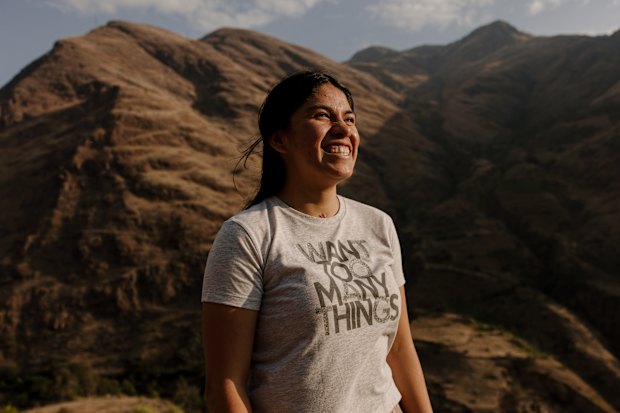
Xiomara has found a lifeline in Peru’s survivor network. “The group helps each of us become stronger.”Credit: Photo: Ben Adams
Returning to the women who lead
In Peru, women walk home together after each network meeting along the same roads they travelled that morning. Once walked in silence, these paths now echo with laughter and shared stories. “Being a girl in Peru,” Xiomara says, “is being a dreamer, growing up free … saying, ‘This is who I am, and nothing can change me’.”
Across the world, in Uganda, survivors are taking on leadership roles that are reshaping expectations of who can lead the fight against violence.
David Braga, the chief executive of IJM Australia, said together with the justice system reforms supported by IJM and its partners, survivor-led networks are ensuring that violence is no longer a private burden but a public issue to confront.
“Violence against women remains a significant and urgent global issue, particularly in developing nations like Uganda and Peru. But the work of organisations like IJM, along with the courage of survivors like Xiomara and Jetrace, shows breaking the cycle of abuse is possible,” Braga says.
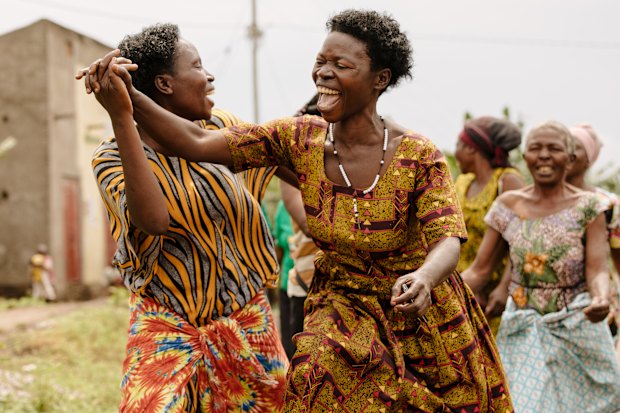
Group support: Biira Jetrace says healing happens too through physical movement, of dancing side by side. “When we dance, sometimes we forget what is hitting us behind. We are in our new life. We are now free from violence.” Credit: Photo: Ben Adams