3 months ago
46
3 months ago
46

Washington: Trump administration officials asked a visiting Australian Jewish leader whether Jews were seeking to be armed following the Bondi Beach terrorist attack, as the White House continues to take a significant interest in the spread of antisemitism in Australia.
Executive Council of Australian Jewry co-chief executive Alex Ryvchin met US officials, including President Donald Trump’s antisemitism envoy, Rabbi Yehuda Kaploun, during a visit last week, and briefed staff at the National Security Council, the State Department and Congress.
He said he received several questions in meetings about gun ownership in Australia and whether the Jewish community was proactively looking at taking up arms.
“I had to say to them, ‘Look, that’s just not part of our culture’,” he said in an interview in Washington. “Australians don’t think, ‘I better arm myself’. We’re not Second Amendment people; it’s not part of the mindset.”
However, the Minns Labor government in NSW is examining whether it should allow the Community Security Group, a non-profit Jewish security provider, to carry additional arms following the December 14 massacre, in which 15 people were killed at a Hanukkah celebration.
Under the group’s licence, personnel are allowed to carry pistols when protecting schools and synagogues, but not at public events.
Ryvchin said the Trump administration officials showed a lot of interest in whether the Bondi Beach event was sufficiently resourced and whether it had been “left vulnerable” by being unarmed.
“The American approach, being a very individualistic society, is: What are you guys doing? Rather than waiting for the police to protect you,” he said.
“But [it] makes you think: Are we still living in an old world, thinking that threats are contained and police and ASIO have everything under control when they clearly don’t?
“I’m not saying the solution is for Jews to arm themselves, but I think we need to modernise our thinking about the threats and how to meet those threats.”
Kaploun, who was confirmed as Trump’s antisemitism envoy just days after the Bondi massacre, says the US president is closely watching how Australia responds to the worst-ever terrorist attack on its soil.
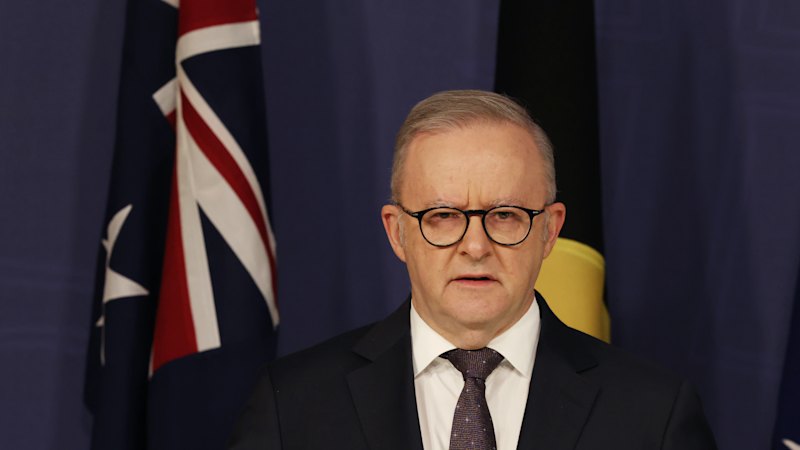
In January, he told The Australian there were concerns within the administration that Prime Minister Anthony Albanese had turned a blind eye to antisemitism. “There was a level of apathy and just no interest to deal with it until a tragedy occurred,” Kaploun told the newspaper.
Ryvchin said Kaploun continued to follow the issue intensely. “He’s extremely animated by what he perceived as failures on the part of the government to protect the Jewish community,” Ryvchin said.
The federal government has called a royal commission into antisemitism, as well as a review by retired public servant Dennis Richardson into potential failures by Australia’s intelligence and law enforcement bodies.
It also passed some of the most significant changes to Australian gun laws since the 1996 Port Arthur massacre, including enhanced background checks, tougher importation laws and a new national gun buyback scheme.
Another part of the government response enacted new laws against extremism, antisemitism and hate speech. Parts of the draft bill attracted criticism from the Trump administration; Under Secretary of State Sarah Rogers said it was “clumsy” and could have let extremists off the hook while banning legitimate criticism of Islam.
Ryvchin said that US officials did not raise concerns about free speech during their meetings, but the issue came up when he met with the United Nations in New York.
“Some of the missions to the UN were very curious about that question, about how you repress violent speech and incitement without limiting legitimate free speech,” he said.
“To me, it’s not complicated … Street chants about Zionists being terrorists is not a form of free speech, in my opinion. It’s a clear form of incitement and demonisation.”
Asked whether restricting speech – such as banning phrases like “globalise the intifada” – might lead to violence as an act of rebellion, Ryvchin said he didn’t believe that was how extremists thought.
“I think that they go as far as they’re allowed to go,” he said. “We’re not talking about legitimate gatherings to express a political position. We’re talking about gatherings to burn flags and threaten the Jewish community.
“If there’s a permissive attitude towards that, or if people say ‘it’s just a critique of Israeli policy, it’s just the expression of a political position’, they go further and further and further.”
Ryvchin, who was invited by the World Jewish Congress, said his mission in the US was not to criticise the Albanese government, but to relay that there were warning signs ahead of the attack.
“This wasn’t a spontaneous attack. This wasn’t isolated. This wasn’t two lone individuals. They came from an ideology. They were radicalised,” he said.