3 months ago
54
3 months ago
54
Maayan Lubell, Alexander Cornwell and Idrees Ali
March 22, 2026 — 5:45pm
Tel Aviv/Jerusalem/Washington: US President Donald Trump has threatened to “obliterate” Iran’s power plants if Tehran does not fully reopen the Strait of Hormuz within 48 hours, a significant escalation barely a day after he talked about “winding down” the war.
“If Iran doesn’t FULLY OPEN, WITHOUT THREAT, the Strait of Hormuz, within 48 HOURS from this exact point in time, the United States of America will hit and obliterate their various POWER PLANTS, STARTING WITH THE BIGGEST ONE FIRST!” Trump said on social media.
Iran warned that any strike on its energy facilities would prompt attacks on US energy and infrastructure assets in the region, while its representative to the UN’s maritime agency said the vital shipping lane remained open to all vessels except those linked to “Iran’s enemies”.
The threats to Gulf infrastructure came as the conflict entered dangerous new territory.
Iran on Saturday (Tehran time) targeted the joint British-US Diego Garcia military base in the Indian Ocean about 4000 kilometres away, suggesting it has missiles that can go farther than previously acknowledged – or that it had used its space program for an improvised launch.
Israeli military chief Eyal Zamir said these missiles were not intended to strike Israel. “Their range reaches European capitals – Berlin, Paris and Rome are all within direct threat range,” he said.
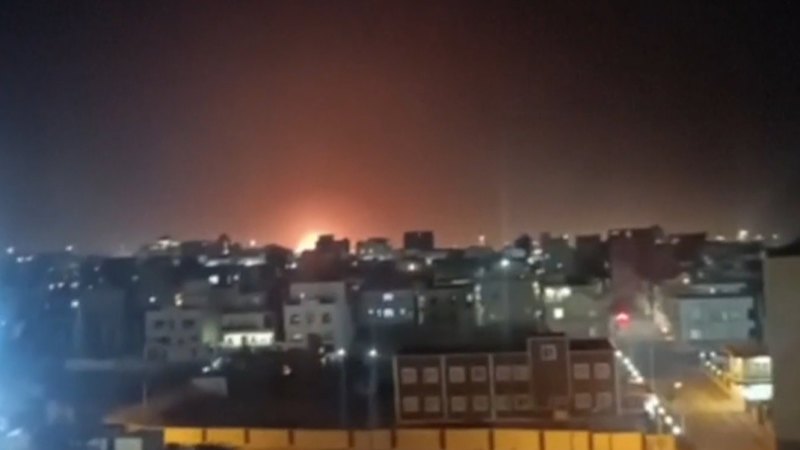
Tehran also struck two communities in southern Israel, injuring dozens of people not far from Israel’s main nuclear research centre.
The threat of Iranian attacks has kept most ships from getting through the Strait of Hormuz, a narrow waterway that serves as the conduit for about a fifth of global oil and liquefied natural gas supplies, threatening a global energy shock.
Energy prices spiked last week after Iran responded to an Israeli attack on its major gas field by hitting Qatar’s Ras Laffan Industrial City, which processes about a fifth of the world’s liquefied natural gas, causing damage that will take years to repair.
Trump and his administration have sent mixed messages about US goals throughout the war, now in its fourth week, leaving its allies struggling to respond.
Trump’s ultimatum on Saturday (Florida time) was the most abrupt shift yet. His rhetoric pivoted from a drawdown to an explicit 48-hour countdown to strike Iran’s power infrastructure, even as US marines and heavy landing craft continue heading to the region.
Iran’s largest power plants include the Damavand power plant near Tehran (2868 megawatts of capacity), the Kerman plant in southeastern Iran (1910 MW), and the Ramin steam power plant in Khuzestan province (1890 MW), according to industry and energy databases. The country’s sole nuclear plant at Bushehr on Iran’s southern coast produces about 1000 MW.
Earlier this month, Trump raised the idea of destroying Iran’s power grid even while downplaying the notion. “We could take apart their electric capacity within one hour, and it would take them 25 years to rebuild,” Trump told reporters on March 11. “So ideally, we’re not going to be doing that.”
US voters appear increasingly concerned that the war could expand. Energy price shocks are fuelling inflation, hitting consumers and businesses hard, a major political liability for Trump as he seeks to justify the war to the public before November elections in which control of Congress is at stake.
Trump had also accused NATO allies of cowardice over their reluctance to help open the strait. Some allies have said they will consider it, but most say they are reluctant to join a war that Trump started without consulting them.
Ali Mousavi, Iran’s permanent representative to the International Maritime Organisation, said on Sunday that Tehran was ready to co-operate with the UN agency to improve maritime safety and protect seafarers in the Gulf, adding that ships not linked to “Iran’s enemies” could pass the strait by co-ordinating security and safety arrangements with Tehran.
“Diplomacy remains Iran’s priority. However, a complete cessation of aggression as well as mutual trust and confidence are more important,” Mousavi said, adding that Israeli and US attacks against Iran were at the “root of [the] current situation in [the] Strait of Hormuz”.
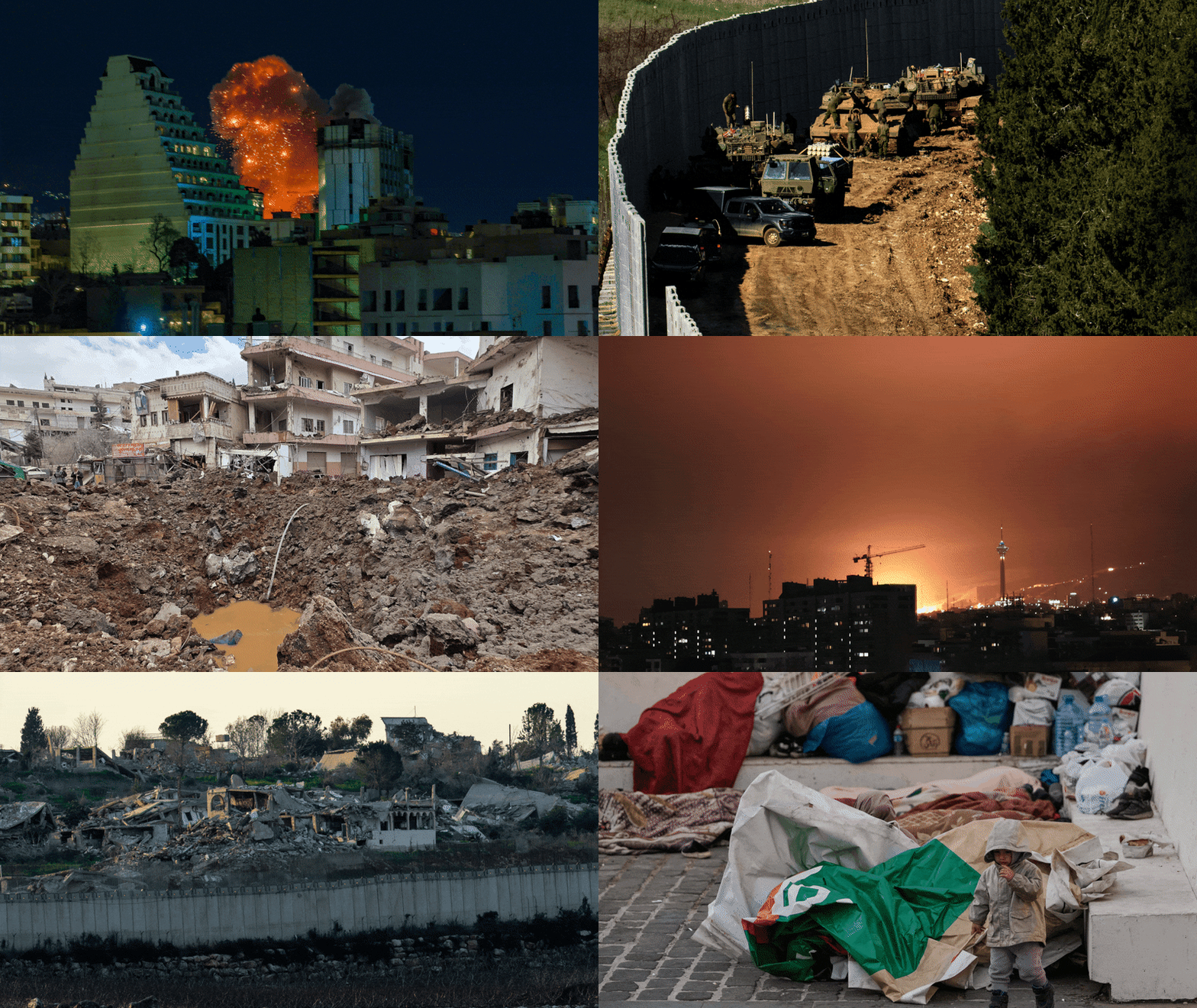
As the conflict enters its fourth week, Iran struck the southern Israeli cities of Dimona and Arad on Saturday (Jerusalem time), destroying buildings and injuring dozens of people, including children, hours after Israel had gone after Tehran’s main nuclear enrichment site at Natanz.
Iran’s Revolutionary Guards said it targeted “military installations” and security centres in southern Israel.
Israel’s secretive nuclear reactor is about 13km south-east of Dimona and both cities lie near several military sites, including Nevatim Air Base, one of the country’s largest.
Israel is believed to be the only Middle East nation with nuclear weapons, though its leaders refuse to confirm or deny their existence.
Israeli military spokesman Brigadier General Effie Defrin said in a post on X that the country’s air defences were functioning but that they had not intercepted the strikes. “We will investigate the incident and learn from it,” he said.
Israeli Prime Minister Benjamin Netanyahu said in a statement released by his office following the strike on Arad: “This has been a very difficult evening in the battle for our future. We are determined to continue striking our enemies on all fronts.”
Before word of the Arad strike spread, Iran’s parliament Speaker, Mohammad Bagher Ghalibaf, said on X: “If the Israeli regime is unable to intercept missiles in the heavily protected Dimona area, it is, operationally, a sign of entering a new phase of the battle.”
More than 2000 people have been killed during the war. In Israel, 15 people have been killed in Iranian strikes.
Reuters, AP
Get a note directly from our foreign correspondents on what’s making headlines around the world. Sign up for our weekly What in the World newsletter.