3 months ago
23
3 months ago
23
Anti-immigration marches held across the country last weekend are spurring debate about the rate of population growth in Australia. Organisers of the weekend’s “March for Australia” rallies cited concerns about unprecedented migration levels and a “Big Australia by stealth” as they took to the streets.
Politicians across the political spectrum have denounced the protests’ connection to far-right movements, and condemned racist elements. “They weren’t protesting immigration from white Western countries. They were very clearly protesting immigration from countries that have brown people,” Multicultural Affairs Minister Anne Aly told ABC Radio on Monday.
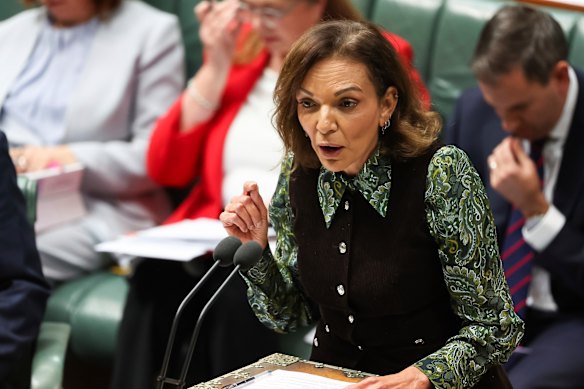
Multicultural Affairs Minister Anne Aly said marchers were not upset about white migration to Australia. Credit: Alex Ellinghausen
At the same time, there have been repeated calls for a sensible discussion about the number of people coming into the country, and the pressure that a larger population puts on existing infrastructure.
“There should be room for a sensible conversation amongst leaders so that, when people do raise these things, we can actually say, ‘Yes, we have a plan that takes into account infrastructure, skills, and all these things’,” Independent Senator David Pocock said.
Here, we explain population trends in Australia, the most reliable source of migration data, and how to interpret the numbers.
What have been the trends in Australia’s population growth?
For the past two decades, Australia’s population has generally grown between 1 and 2 per cent a year.
There have been three exceptions. The first was around the Global Financial Crisis of 2008-09, when Australian expats fled the US and Europe, as economies fell apart and unemployment soared. They brought population growth above 2 per cent. At the time, that meant a record 460,000 extra people in a 12-month period.
The other two major fluctuations were more recent. One was brought on by the COVID pandemic, when borders were shut and the population grew by just 0.1 per cent – the lowest rate since WWI. Australia’s total population added just 25,000 people.
The third outlier was after COVID, when borders re-opened and there was a population surge. This ushered in the highest rate of population growth since the 1960s’ boom – which was driven by the birth of the Baby Boomers as well as a lift in immigration. In real numbers, at the post-COVID peak, the population grew by 663,000 people in 12 months.
So when commentators say there has been unprecedented migration in recent years, that is supported by the data showing a migrant boom after Australia reopened its borders. However, that claim does not factor in the unprecedented dip in migration that immediately preceded it, in 2020 and 2021.
How significant is migration to Australia’s population growth?
There are two elements to population growth: natural increase (births and deaths) and immigration.
Natural increase is the number of people born minus those who die.
The natural increase in Australia’s population hovered between 100,000 and 200,000 per year over the past two decades. But since 2022, it has tended towards the lower end of that spectrum. That’s because birth rates are dipping, and more people are dying. The decline in Australia’s birth rate means natural increase plays a diminishing role in overall population growth.
Migration has been the main source of Australia’s population growth for the past 20 years.
One exception was during the COVID pandemic, when there was negative net overseas migration due to border closures (more on that shortly). Before that, the last time that births surpassed immigration as the leading source of population growth was in 2004.
Diving into the migration numbers
The figure that tells us how much migration contributes to population growth is called “net overseas migration”. You might also hear this being referred to as “the NOM”, which is calculated by the Australian Bureau of Statistics.
NOM is a measure of how many people arrived in Australia in a given period, minus how many people departed. To be counted in the NOM, a person must have spent 12 months of the last 16 months, in Australia. That’s to separate out tourists or people coming for short-term stays. The NOM counts foreign-born migrants, including people on temporary visas, as well as Australians who move overseas or return from abroad.
The federal government also estimates what the NOM will be in its annual budget. Its projections run four years into the future. NOM is influenced by factors the federal government controls, such as immigration policy. It is also influenced by factors it does not control, such as when Australians living abroad choose to come home.
Federal budget estimates have been consistently off the mark since 2019 because of the uncertainties brought on by the COVID pandemic.
As you can see in the chart above, in 2019-20, the former Morrison government expected the next year’s NOM to be 271,300. Instead, when the pandemic struck and borders shut, it ended up being -85,000.
Adjusting to the new normal, the former Morrison government, in its March 2021 budget, forecast the 2021-22 NOM would be -77,400. But by the time the end of June 2022 rolled around, borders had reopened, and NOM was in reality 207,900.
The newly elected Albanese government ran into similar troubles. In October 2022, it forecast NOM for the 2022-23 financial year would be 235,000. Instead, there was a migrant boom, and NOM hit a record 538,300.
Loading
These figures became a regular feature of political debate. The Albanese government came under sustained pressure last term as its NOM forecasts repeatedly blew out, with a higher than expected number of people arriving in the country, and a lower than expected number of people leaving it.
Population figures on par with long-term projections
A wider view of the budget forecasts can help put these numbers in perspective.
The anti-immigration protest movement frequently cites statistics showing 1 million people moved into the country in two years – facts which are verified in the ABS figures above.
But the other key claim of protesters – that the government has ushered in a huge group of migrants by stealth – is not. Again, that’s because of the pandemic.
Population forecasts moved around a lot during the pandemic. But if you return to the former Morrison government’s forecasts from 2019-20, and apply that rate of growth into the future, the population in 2024 (27.4 million) is lower than what had been anticipated (27.9 million).
A note on the data
The population and NOM figures referenced here come from the Australian Bureau of Statistics. They are the most reliable indication of population change.
Last month, the bureau put out a statement warning against using its other data sets, such as “overseas arrivals and departures” figures, to deduce population change.
“This data does not reflect the official ABS definition of migration and may lead to inaccurate conclusions on migration. Overseas Arrivals and Departures (OAD) data is a count of border crossings rather than migration,” it said.
“For example, this means a person who has been living in Australia for three years on a temporary visa, and travels overseas multiple times, can count as a long-term visitor arrival many times, even though they only migrated here once.”
Cut through the noise of federal politics with news, views and expert analysis. Subscribers can sign up to our weekly Inside Politics newsletter.
Most Viewed in Politics
Loading