3 months ago
17
3 months ago
17
This $8.5b Medicare promise was at the heart of Labor’s election pitch. How’s it working?
Almost 4 million extra GP visits were bulk-billed during the first month of the Albanese government’s new Medicare boost, but bed block in hospitals because of long aged care waitlists continues to stymie Labor’s efforts at broader health reform.
Health department officials told Senate estimates on Thursday that GPs claimed 10.8 million payments for bulk-billed appointments in November, compared to 7 million the previous month. The official bulk-billing rate for GP visits rose from 77.7 per cent to 81.2 per cent in that time.
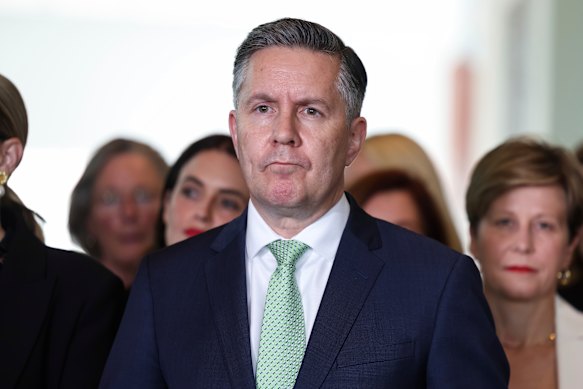
Health Minister Mark Butler.Credit: Alex Ellinghausen
The data is a positive reflection on the first month since the government’s $8.5 billion Medicare pledge – the cornerstone of its election platform – came into effect, tripling the bonus GPs receive when they bulk-bill their regular adult patients. Labor’s goal is for 90 per cent bulk-billing by 2030.
“We have seen a 4 percentage point increase in the bulk-billing rate from November this year, compared to November last year,” health department deputy secretary Penny Shakespeare said.
About 2900 of the country’s 7000 GP clinics have also signed up to receive additional benefits – a 12.5 per cent loading – for bulk-billing all their patients.
Loading
While 1675 of them were already bulk-billing everyone, a further 1092 clinics have indicated they will stop charging gap fees where they previously did.
But the positive steps towards improving access to primary care – a longstanding concern of state premiers who have complained of swamped emergency departments because it’s too expensive to see a GP – are being overshadowed by a worsening problem with bed block in state hospitals.
State treasurers whose budgets are struggling with the growing cost of running hospitals say most extra pressure on health spending is coming from patients stranded in hospital beds while they are waiting to go into nursing homes or disability care.
The treasurers are fighting over the issue as they negotiate a new hospital and disability funding deal with Health and Disability Minister Mark Butler which would allow the federal government to forge ahead with reforms to the National Disability Insurance Scheme.
Greens senator Penny Allman-Payne, prosecuting the issue in Senate estimates on Wednesday, said there were older people in hospital “who are not there because of their health needs, but because they can’t move into support at home or residential aged care”.
Wait times for aged care assessments are about 30 days on average, but this blows out to 53 days for hospital patients who aren’t in hospital, the department revealed. Allman-Payne said this created an incentive for older people to go to hospital.
“We’ve known that doctors are telling older people that the wait times for an aged care assessment are so long, that the only way to get assessed quickly is to go to hospital. This data now proves it,” Allman-Payne said.
Coalition health spokeswoman Anne Ruston said figures she combined from state and territory self-reporting suggested there were 2736 older Australians in hospital because they couldn’t access aged care support, and 945 in hospital waiting for NDIS support.
“This seems to me like a failure of federal policy and a failure of the department to actually be on top of an issue that has been publicly described for quite some time and has escalated massively in the last two years,” she said.
Loading
Health department secretary Blair Comley said the government did not use that data because the states and territories all had different definitions of long-stay patients that could not be compared.
But he said the department acknowledged it was a significant problem.
“We’ve been working actively on a case-by-case basis with states and territories on moving long-stay older patients forwards,” he said. “I don’t accept the characterisation that we are not taking this seriously and engaging seriously with the states and territories.”
With Butler’s end-of-year deadline for negotiations fast approaching, parties remain locked in a stalemate. The federal government has offered to lift its annual cap on hospital contributions to 8 per cent, Comley confirmed, but the states have not yet accepted a deal.
Butler said it was the states’ turn to serve up extra data on bed block. “We can add up the numbers that state governments are putting into the media relatively easy, but we’ve asked for a little bit more detail than that about the nature of each of those patients,” he said on Thursday.
“How many, for example, might have level six or level seven dementia, which means a particular response compared to people who would be able to go into a relatively standard residential aged care... To craft a good solution, we need access to the data and our ability to get that has varied across some jurisdictions.”
Cut through the noise of federal politics with news, views and expert analysis. Subscribers can sign up to our weekly Inside Politics newsletter.
Most Viewed in Politics
Loading