3 months ago
57
3 months ago
57
Opinion

March 15, 2026 — 1:30pm
March 15, 2026 — 1:30pm
When Matt Canavan was preselected before the 2013 election, there was astonishment in the Liberal Party room. The new National Party senator for Queensland was an economist from the Productivity Commission! It scarcely seemed possible. Then, as he took his early steps as a new senator, introducing himself at party branches around Queensland, Canavan astonished his audiences in a different way, confessing, with good-humoured mockery of his younger self, that as an undergraduate, he had been a communist.
The Matt Canavan the public has come to know is about as far away as possible from either a Hayekian neoliberal or a Marxist. We should be wary of trying to define him by some ideological straitjacket.
After his election as leader, one of his National Party colleagues (evidently not a fan) dismissed him as “a city intellectual who used to be a Liberal”. While Canavan no longer lives in a capital city – he is based in Rockhampton – the “intellectual” part is right. He is a policy wonk, who famously prefers to spend his Canberra evenings at home reading economic reports while his colleagues carouse in the restaurants of Manuka and Kingston. And – as I well remember from his contributions to cabinet discussions during the Turnbull government – he is very, very smart.
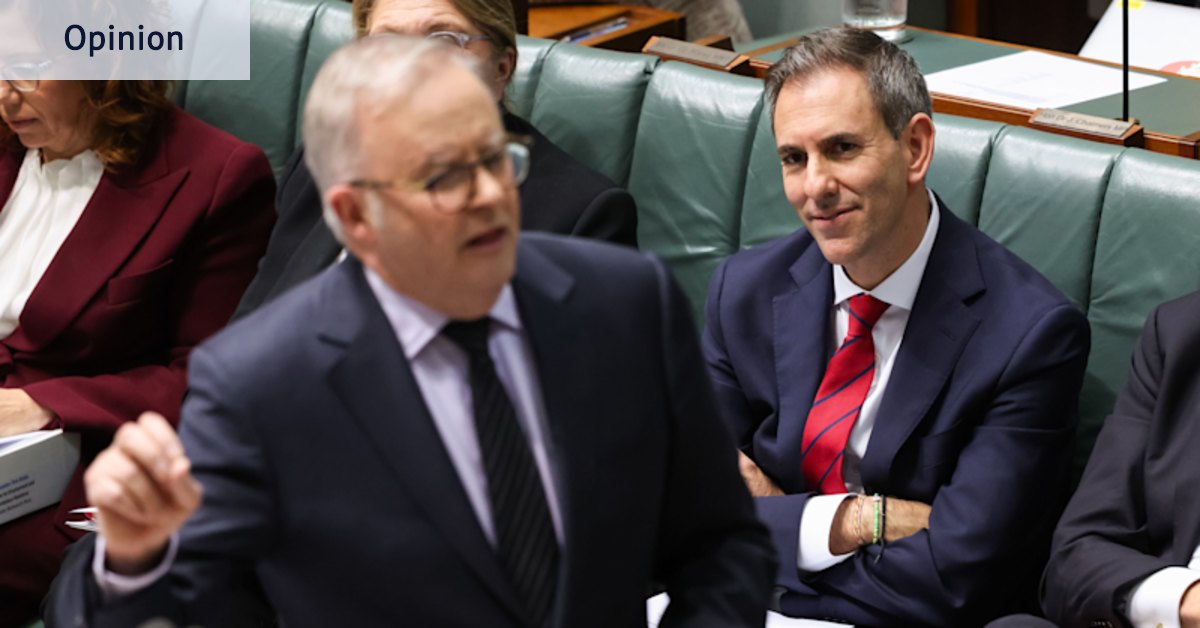
Canavan is also an obviously gifted communicator, with a talent for distilling complex messages into simple, penetrating words. It’s a vital political skill in which recent leaders of both Coalition parties have been somewhat deficient. Paul Keating and John Howard had it. So does Jim Chalmers. But unlike the treasurer – whose doctoral qualification was in political science, not economics as is commonly thought – Canavan is a real economist.
If the criterion is raw political talent – which, for a struggling opposition, it should be – he was undoubtedly the right choice to lead the National Party after David Littleproud threw in the towel.
Of Littleproud, the best that can be said is that, like the Thane of Cawdor in Macbeth, nothing in his political life so became him as the leaving of it. His candid reflection that “it would be wrong for me to say that I’m the right person to continue to lead” showed a self-awareness uncommon among politicians. But the vainglorious self-comparison with Sir John McEwen was ridiculous. Although Black Jack certainly knew how to get his way with the Liberal Party, he never lost sight of the fundamental importance of keeping the Coalition together. Littleproud broke it up twice. He then left the National Party in a weaker state than any leader in more than a century, facing the mortal risk of being supplanted in its heartland by One Nation. Overcoming that threat is Canavan’s greatest challenge.
Canavan’s spirited, full-throated denunciation of Pauline Hanson’s shameful “no good Muslims” remark was in sharp contrast to the mealy-mouthed response of Littleproud and other Coalition leaders. In calling out One Nation for the ugly, racist operation it is, he displayed the forthright, no-holds-barred political style he learnt from his mentor Ron Boswell, about whom I wrote in this column recently. It defies simpleminded attempts to define him as a figure of the far right.
There is no doubt that Canavan is a social conservative – but no more so than was Howard. Although some Liberal moderates were reportedly unhappy about his election, I am not one of them (even though we disagree on many issues). There is a decency and integrity about the new National Party leader that bespeaks his character. He is also extremely loyal; unlike Barnaby Joyce, it is unthinkable that he would ever betray his party. He will fight One Nation, not sell out to them.
The reaction to Canavan’s election from the Liberal moderates’ most senior frontbencher, Tim Wilson, was revealing. Wilson shrewdly observed that by electing Canavan, “the embodiment of a National”, the National Party had freed Liberals in the cities to be themselves. “The Nationals should be Nationals, so his elevation gives us permission to be the Liberals we need to be for urban Australia.”
If Wilson is right – and I think he is – Canavan’s elevation could represent liberation for the Liberal moderates – so long as they respect one another’s boundaries and can continue to share space in the Coalition’s big tent.
The caricature of people such as Wilson as “Labor lite” comes only from commentators who are either ignorant of the Liberal Party’s political traditions or are still fighting the Abbott-Turnbull wars that ended years ago. Wilson is, after all, an alumnus of the Institute of Public Affairs; his libertarian outlook places him, if anything, to the right of the firmly dirigiste Canavan. What such commentary actually shows is how fatuous analysis along a simple left/right spectrum is, and how misleading stereotypes can be. For instance, in the Abbott government, two senior ministers who were almost always on the same side in cabinet discussions were Warren Truss and Christopher Pyne.
Wilson is a typical mainstream Liberal, just as Canavan belongs squarely within the long Country Party/National Party tradition. Effective collaboration between the two has been the formula for the success of every non-Labor government since Stanley Melbourne Bruce and Earle Page formed the first Coalition in 1923.
Collaboration, not convergence. Coalition is not about two parties being as alike as possible. It is about two different parties, embodying distinctly different political cultures, appealing to different constituencies and bringing both of their traditions to the table. Differences are not the problem – they can actually be a strength, insofar as they widen the Coalition’s reach. The problem is when leaders fail to manage those differences.
That is where David Littleproud failed. It is where I expect Matt Canavan to succeed, just as I expect him to win the battle with Pauline Hanson for regional Australia’s conservative soul.
George Brandis is a former high commissioner to the UK, and a former Liberal senator and federal attorney-general. He is now a professor at the ANU’s National Security College.
The Opinion newsletter is a weekly wrap of views that will challenge, champion and inform your own. Sign up here.