3 months ago
19
3 months ago
19
POP CULTURE
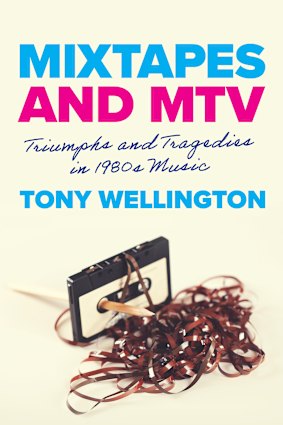
Mixtapes and MTV: Triumphs and Tragedies in 1980s Music
Tony Wellington
Monash University Publishing, $39.99
If you can remember the 1980s, condolences. Especially if you enjoyed the ’60s and ’70s as much as Tony Wellington did. Mixtapes and MTV: Triumphs and Tragedies in 1980s Music is the Australian writer’s third decade-long chronicle of the pop age as we know it, and this time, as the title says, the medium really is the message.
The triumph to tragedy ratio naturally depends on your taste and vintage, but a decade that begins with John Lennon, John Bonham, Ian Curtis and Bon Scott dying and Phil Collins stumbling over a cool new drum sound makes for an ominous opening chapter.
The year 1980 also birthed Prince, U2 and the new wave of British heavy metal. Rap and Rock Against Racism were kicking off in righteous style. Blondie, Split Enz and Queen were peaking. And whether you liked it or not, they were all right up in your face.
That’s because the MTV decade was the one in which media companies got a firm and seemingly terminal upper hand on those pesky artists. The video revolution, in which image superseded music and corporations groomed their charges accordingly, arrived in 1981: chapter two of Wellington’s neatly compartmentalised chronology.
Enter Spandau Ballet, Motley Crue, Adam and the Ants and a slightly queasy feeling that we’re in for 320 pages of one damn thing after another with as much logic and structure as channel-hopping between video hits shows or fast-forwarding a C90 mix cassette.

Cyndi Lauper in 1983, the year she released Girls Just Wanna Have Fun.Credit: Sony Music Archive via Getty Images
The timeline compression is dizzying. Within five pages of 1982, the first CDs are produced, Michael Jackson makes Thriller, Toto smash Africa, Springsteen puts out a home demo called Nebraska and Grandmaster Flash has the world’s first rap hit. And so on, and on, in paragraph or page-sized chunks of whatever the hell happened next.
It’s all loads of fun until someone gets hurt, which they do, thanks to crack cocaine and AIDS and Chernobyl and Ethiopian famine and Jane Fonda’s workout video and mantras about greed being good and CDs being better (yeah, right) than vinyl.
Just don’t confuse cause with effect. Metal bands, drugs and accidents appear to be linked, but not exclusively. Don’t blame Peter Gabriel and Kate Bush’s Fairlight sampling experiments for house music, although random breath-testing, new pub fire regulations and the demise of Cold Chisel do comprise an uncanny coincidence.

INXS’s 1984 hit Original Sin was banned from US playlists.
Here at the woke frontier, the temper of the times can be jaw-dropping. Nick Cave’s lyrics and Van Halen’s videos are both awfully keen on misogynistic violence. A bunch of UK marketing folks meet to monetise “world music”. INXS is struck from US playlists for suggesting white boys and black girls dream on in the same verse.
Wellington highlights strides made by women — Grace Jones, Cyndi Lauper, Madonna, Sade, Suzanne Vega, Whitney Houston. But mostly he remains enslaved to the rhythm of the decade, until his elite rock-critic voice jumps the REO Speedwagon with his end-of-chapter album picks (mmm, Joni Mitchell, King Crimson… Bill Morrissey?).
As a guide, he’s learned but irreverent, dropping himself into the factoid churn at random moments to deride the off-pitch singing of New Order’s Bernard Sumner or obsess over the Pet Shop Boys’ West End Girls. Like all opinions, his can purr like the Pretenders’ “genuinely sexy” Brass in Pocket and clang like that mean thing he says about The Clash.
Loading
Other critics’ voices, shrewd and laughable by turns, are part of the chaos. The same Melody Maker guy extols Duran Duran’s invention, then, two pages later, sneers at Eurythmics’ lack of ideas. Wellington tacitly revels in it all, the hubris and hysteria of pop journalism just another subgenre of performance art.
That self-awareness gives Mixtapes and MTV its sly centre. For every pronouncement of taste or authenticity, we’re left to wonder whose values and truth we’re sifting. In the end, the book is less a judgment than an invitation to join in the noise (Dude! You forgot Echo & the Bunnymen!). It’s fast, funny, terrible and gloriously fallible. Just like the 1980s.
The Booklist is a weekly newsletter for book lovers from Jason Steger. Get it delivered every Friday.
Most Viewed in Culture
Loading