3 months ago
28
3 months ago
28

The Albanese government overruled advice from its own environment department before the 2025 election that it should put the brake on salmon farming in Macquarie Harbour in Tasmania, documents released under freedom of information laws reveal.
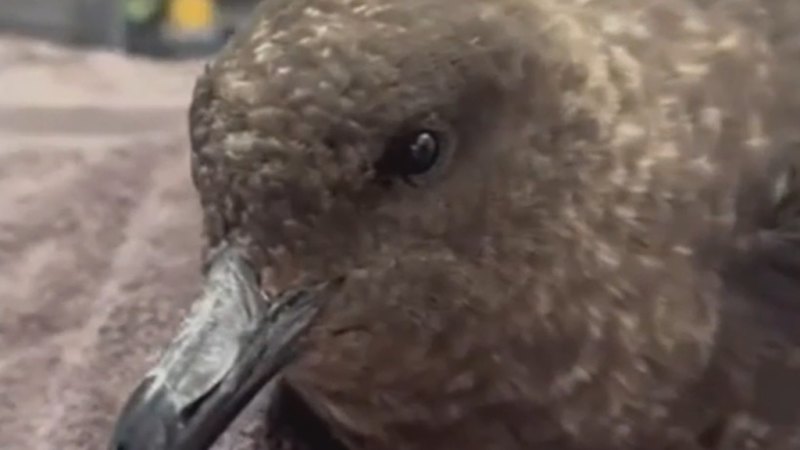
The formal advice to then environment minister Tanya Plibersek in early 2025 said the expansion of salmon farming since 2012 was damaging world heritage wilderness and threatening the survival of the ancient Maugean skate, an endangered species found only in that harbour.
The Department of Climate Change, Energy, Environment and Water briefing recommended that the minister should revoke a 2012 decision by the former Gillard Labor government that the expansion of salmon farming did not need an assessment under federal environmental laws.
The minister could substitute it with a new decision under the Environment Protection and Biodiversity Conservation (EPBC) Act, but this would require a full reassessment, and the advice made it clear that salmon farming would have to cease pending the new approval. The harbour produces 12 per cent of the state’s salmon at aquaculture farms owned by three companies – Huon Aquaculture, Tassal and Petuna.
Rather than have Plibersek make a decision either in accordance with or against the departmental advice, the Albanese government rushed through special legislation to protect the salmon industry in Macquarie Harbour, with the support of the Coalition.
Former South Australian senator Rex Patrick who made the FOI application and fought its refusal in the Administrative Review Tribunal said the findings were “explosive”.
“It’s a betrayal of the skate, it’s slap in the face for the department, and it’s risking extinction for political interests and to continue an operation that involves vested interests,” Patrick said.
“They brought in bad law to avoid making a decision that was in contrast to the department.”
Plibersek was forced to seek the departmental advice after three organisations – think-tank Australia Institute, and environmental groups Bob Brown Foundation and Australian Marine Conservation Society – formally requested a review of the 2012 decision on the basis of new evidence.
This included the Institute for Marine and Antarctic Studies (IMAS) at the University of Tasmania sounding the warning in 2023 on a calamitous decline in Maugean skate numbers in the harbour because of salmon farming decreasing oxygen to dangerously low levels.
Prime Minister Anthony Albanese personally wrote to the three salmon companies operating in the harbour to promise the special legislation in February 2025, after previously suggesting the legal process would run its course.
In the lead-up to the election, Albanese was highly visible at campaign events in western Tasmania and in the media pledging his support for Tasmania’s salmon industry. He pointed to updated research from the IMAS published in February 2025, reporting an uptick in skate numbers, and provided millions in public funding for oxygenation projects.
The salmon industry directly provides about 2000 jobs, many in rural and remote parts of the state, and produces nearly 75,000 tonnes of fish a year, Tasmanian state government figures show. The Albanese government promised “no new extinctions” on its watch in its first term.
A government spokesperson in the office of Environment Minister Murray Watt, who took over from Plibersek after the May 2025 election, said the departmental advice was no longer relevant.
“The Albanese Government wants to see a sustainable salmon industry that supports workers and their families, while protecting the environment,” the spokesperson said.
“The submission from the department provided in early 2025 was from a single point in time under a legislative framework that is no longer in place. Changes to the EPBC Act commenced in March 2025.”
Watt announced last August that salmon farming would be able to continue in Macquarie Harbour, ending the review without changing the 2012 decision. NWTAS for Clean Oceans is challenging that in the Federal Court, with the case expected to be heard in the second half of the year.
The environment group paved the way for the FOI release because it recently won access to the same document in its Federal Court case.
Patrick, who styles himself as the “transparency warrior”, won an earlier case in the tribunal when he challenged the government’s refusal of his FOI request for the 2023 initial departmental advice on Macquarie Harbour.
Despite his earlier win, Patrick said, the government refused the 2025 application on the same grounds. Patrick again went to the tribunal, but proceedings ended on Monday when the government finally agreed to release the document.
“I’m of the view that there was strategy in the refusal,” Patrick said. “Delay is the enemy of FOI. You end up with something that you’re looking for that’s contemporary in nature, and it ends up being delivered to you in an historical context. And that’s what we see here, although the brief is relatively explosive still.”
Get to the heart of what’s happening with climate change and the environment. Sign up for our fortnightly Environment newsletter.