3 months ago
18
3 months ago
18
New organisers wanted to make Brisbane’s film festival Olympic class. So how did they do?
How do you turn a struggling film festival into a major cultural event in time for the Brisbane Olympics in 2032? That was the challenge facing the new team behind the Brisbane International Film Festival, to – in the words of fictional comic rugby league knuckle-dragger Reg Reagan – “bring back the BIFF”.
For executive director Sophie Mathisen and head programmer Christian Pazzaglia, that job was all the more challenging with just 11 weeks to deliver it.
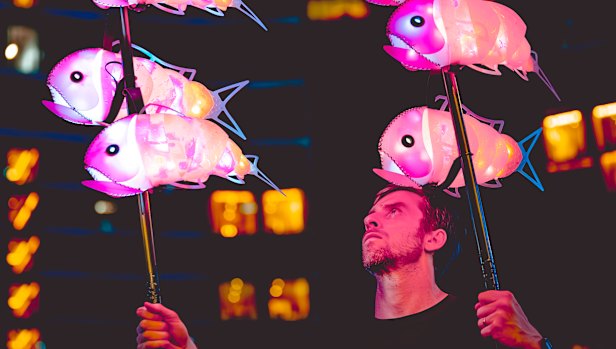
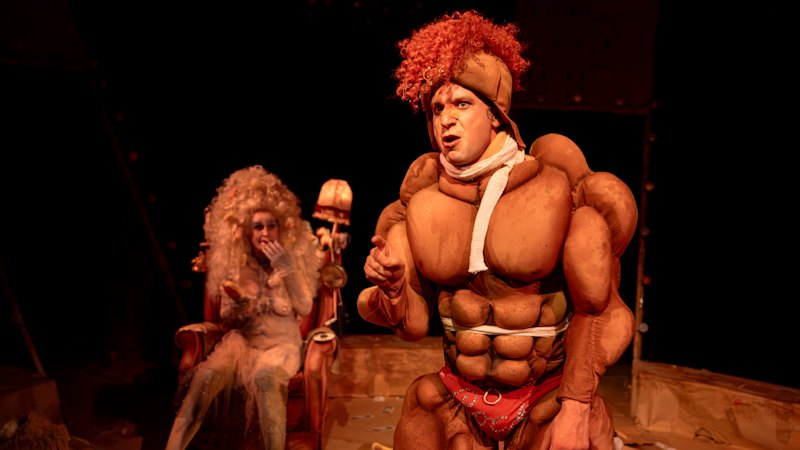
The aquatic puppetry show after a screening of A Life Illuminated at Brisbane International Film Festival.Credit: Brisbane International Film Festival
The plan was to reboot the poor cousin of the country’s leading film festivals into an event that contributes to the Cultural Olympiad leading into the 2032 Games.
“There’s a lot of momentum in the city, but it’s not extending to a lot of the cultural organisations and institutions,” Mathisen said. “In the tender, there was a pretty clear idea that [Screen Queensland] wanted a world-class festival.
“Obviously, that’s pretty challenging on a very limited budget. So you go ‘OK, champagne tastes on not even a juice budget’.”
Loading
After years of disruption, false starts and a perpetual struggle for audiences in a city sometimes overshadowed by all the film activity on the Gold Coast, the new team ran a four-day festival from last Thursday to Sunday on a budget of $350,000 as a pilot for future events.
That meant programming as many Australian premieres as possible, largely from Venice and Toronto festival debuts, alongside such acclaimed art-house films from earlier in the year as It Was Just An Accident, The Secret Agent and Sirat.
It also meant bringing in 18 international filmmakers led by American Peyton Reed (Bring It On, Ant-Man) and 10 Australian filmmakers to speak at Q&A sessions and panels.
And it meant creating special events every night, that were based on Brisbane’s love for sport and music, trialling new venues to see whether there were audiences for what Mathisen called “a subtropical outdoor version of the festival”.
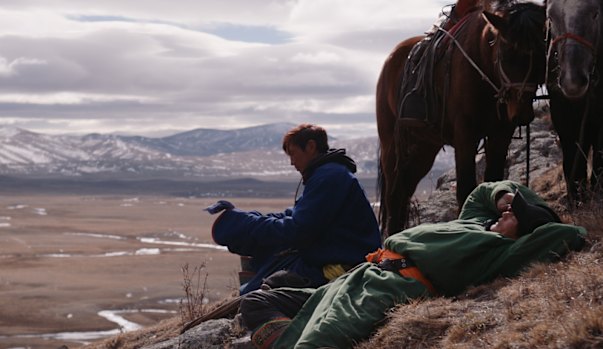
Iron Winter is the story of two young Mongolian friends battling extreme conditions as they herd 2000 horses through the steppes. Credit: Brisbane International Film Festival
While not everything worked, it was a promising start.
The festival opened with an Olympic-themed film, Giulio Bertelli’s Agon, in a wharf bar and brewery near the Story Bridge that was converted effectively into a cinema. It was an experimental drama about three sportswomen, competing in judo, fencing and shooting, preparing for a fictional Olympics called Ludoj.
The winner of the FIPRESCI prize for film art at Venice, Agon was a challenging fusion of documentary-style drama and edgy visual and sonic elements that played well as a festival opener. (It is heading soon to streaming service Mubi.)
There was extra value for ticket buyers in a Q&A with Queensland beach volleyball gold medallist Natalie Cook and Bertelli, a former professional sailor who is the son of fashion’s Miuccia Prada and Patrizio Bertelli, though it would have worked better after rather than before the film.
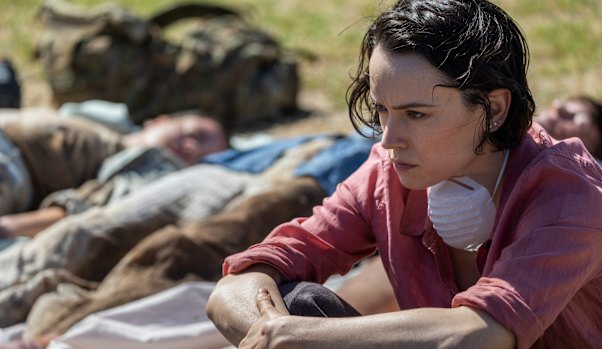
Daisy Ridley in Zak Hilditch’s We Bury The Dead.Credit: Brisbane International Film Festival
While storms were a risk, an outdoor deck at The Star casino worked well for events on the next two nights – a 25th anniversary screening of Bring It On that included a performance by local cheerleaders; and the oceanographic documentary A Life Illuminated, about marine biologist Edith Widder’s bioluminescence discoveries, followed by an aquatic puppetry performance.
Another planned event, a 50th anniversary screening of Jaws paired with the Queensland survival drama Beast of War at the artificial beach on the Brisbane River, was included in the official program but proved too logistically complicated and costly to run.
Closing night was a highlight: the music documentary It’s Never Over, Jeff Buckley followed by a stunning concert with Katie Noonan, Kate Ceberano, Jaguar Jonze and other mostly Brisbane musicians performing his album Grace at South Bank Piazza.
The festival programmed so many films over the four days and had such limited time to promote them that some overseas filmmakers were disappointed in audience numbers. Heatwave conditions did not help.
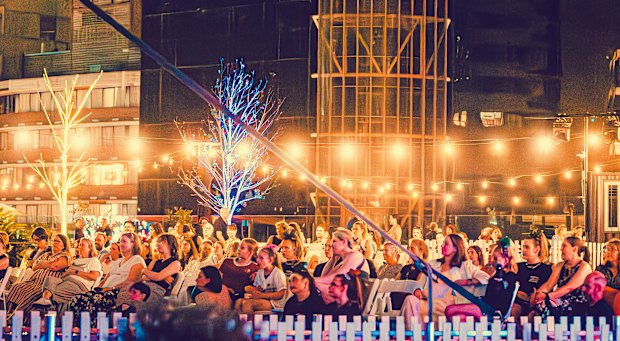
The audience at a 25th anniversary screening of Bring It On at an outdoor deck of the Star casino as part of the Brisbane International Film Festival.Credit: Brisbane International Film Festival
While there is work to do to get Brisbane to fully embrace the revamped festival, year one showed an admirable boldness and ambition. Mathisen pointed to a record for single-day sales and 74 per cent of ticket buyers being new customers.
“There feels like some real new blood and a new energy coursing through BIFF’s veins for the first time in a long time,” she said. “We definitely feel like we’ve shown a lot of partners what the capacity of the festival is.”
While the late November timing was to give the team as long as possible to prepare, the hope is the festival will run earlier and extend to 10 days next year.
“With more time, we can obviously spread out things in a different way,” Pazzaglia said.
For me, the standouts were the closing night screening and concert, the relaxed openness of so many visiting directors and two strong new Australian films that deserve an audience when they open in cinemas early next year.
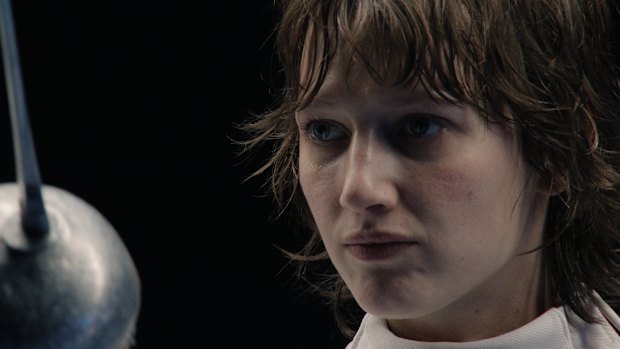
Giulio Bertelli’s Agon screened on opening night in a wharf bar and brewery converted into a cinema.Credit: Brisbane International Film Festival
Zak Hilditch’s We Bury The Dead is a zombie horror thriller with heart that has Daisy Ridley as a woman searching for her missing husband after an American military experiment wipes out the entire population of Tasmania, though some of the ‘dead’ are mysteriously coming back to life.
Kasimir Burgess’ Iron Winter is a visually stunning documentary about two young Mongolian friends battling extreme conditions as they herd 2000 horses through the steppes to keep alive an ancient nomadic tradition.
Most Viewed in Culture
Loading