3 months ago
6
3 months ago
6
Microplastics are in the air we breathe, the water we drink and the food we eat.
As awareness of, and research into microplastics grows, more parents are concerned about their impact on their children’s development.
On social media, often under the hashtags #lowtox or #notox, influencers and individuals coalesce to share their concerns around environmental pollutants and chemicals, offering alternatives and, often, promoting paid services or products.
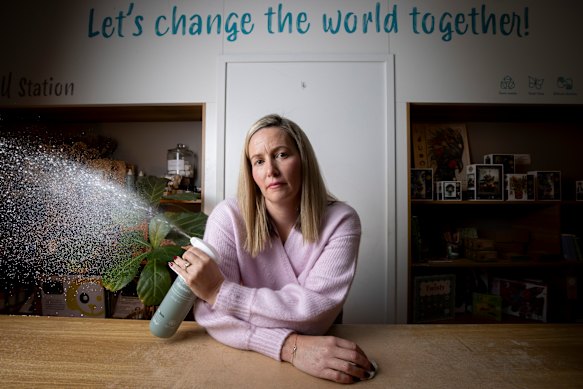
Melbourne mum Amelia Davatzis limits her family’s exposure to “environmental toxins”.Credit: Arsineh Houspian
Among them is parent Amelia Davatzis. When the Melbourne mother was pregnant with her first child, she started looking into the effect of chemicals in common personal and household products on her and her unborn daughter’s wellbeing.
“Environmental toxins in children is one of my passion projects, and whilst I’m not qualified – I don’t have any degrees, I’m not a scientist – I’m literally just a mum on a mission doing research around how to make my environment, my home, a better place for like our family and for the kids,” she says.
Davatzis has turned her concerns into a business, offering consultations, including for new parents, on “low tox living”, while acknowledging she has no formal qualifications in the field.
But what do we know about human – and specifically children’s – exposure to microplastics? How concerned should parents be?
Microplastics
Microplastics have been found in human organs and blood, including the heart and brain and in places like our waterways.
Loading
“We definitely know that we’re continuously exposed to microplastics,” says Dr Cassandra Rauert, a senior research fellow at the University of Queensland who specialises in microplastics research and who has worked on projects funded by the Minderoo Foundation.
“Our current thinking is the two biggest ways we’re exposed to them is through what we’re breathing in and what we’re ingesting.”
Microplastics, which are made of petrochemicals, aren’t just of concern because of the plastics themselves, but because of the chemicals – like BPA – they contain.
What we know – and don’t know
While we know we are exposed to microplastics, consensus on exactly how they affect health is a little murkier.
Research has linked microplastics to a long list of health issues, including declining sperm count, cardiovascular issues like heart attack and stroke, cancer and dementia.
However, some experts like Rauert are cautious, mainly due to what she says are shortcomings in our current testing methods for microplastics and the quality of studies to date.
Professor Oliver Jones, a chemist at Royal Melbourne Institute of Technology, says microplastics studies can be contaminated and are often performed on animal subjects. He says plastic particles can also be confused under the microscope with fats.
Due to the ethical concerns around exposing human subjects to microplastics, it can be difficult to prove direct cause through controlled, clinical trials.
But Dr Nicholas Chartres, a senior research fellow at the University of Sydney who specialises in the commercial determinants of health, says, “there’s absolutely sufficient evidence to take action on all non-essential plastics and remove them from the environment.”
Loading
While he acknowledges the limitations surrounding the human evidence currently available, he says we know enough to be worried about the health risks of plastics and chemicals.
“When we see good consistent animal data, which was what we saw in our review, and also when we see cellular studies, you basically bring all these different types of data together. And if you see consistent effects, like markers or characteristics of cancer or such as oxidative stress, which is an inflammatory marker... that then gives you a pretty good indication there’s a good chance it’s going to happen in humans.”
Chartres, who also works on chemical policy and public health in the United States, says that in order to get chemicals on the market in America or Australia, industry often only needs one animal or cellular study to gain approval.
“They look at a really narrow set of outcomes, so they don’t look at all the different ways you and I could be harmed by them. And they’re normally done in a really healthy set of animals, and they’re done with one chemical at a time; not how we are exposed, which is to several thousand chemicals each day. And basically, they can bring out these chemicals without having to demonstrate they’re safe in humans.”
Conversely, “the burden of proof is always far greater on the public health and the environmental community to get these things off the market,” he says.
Mark Green, an associate professor in reproductive biology at the University of Melbourne, also believes the connection between the tiny plastic particles and ill health are well established.
“There’s evidence to support the potential damage from microplastics, but we should also not forget the fact that not only is it the physical properties of the microplastics, but also the fact that some of the chemicals that can leach from those microplastics, such as endocrine disrupting chemicals, could also be harmful.”
Are infants and children at greater risk?
Sydney mother Corrinne Sultana has been “investigating the impact of plastic and other harmful ingredients” on the health of her two boys, aged 6 and 9, since her eldest was born.
Sultana, whose business The Low Tox Project sells plastic-free products, has implemented measures like using water filters, air filters, limiting plastic consumption, and avoiding non-stick cookware and processed food.
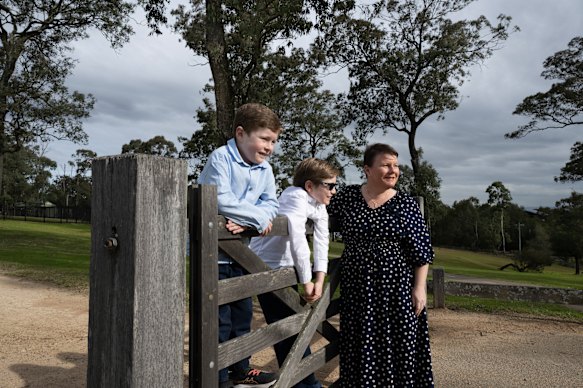
Sydney mum Corrinne Sultana with sons Benjamin, 6, and Harrison, 9.Credit: Louise Kennerely
So, what do we know about how these impact human health, particularly that of babies and children?
Rauert says it’s difficult to ascertain the effects of microplastics on kids since we don’t yet know the extent of their impact on humans generally, but theorises that “infants tend to ingest a lot more dust because they’re picking things up off the ground and putting them in their mouths... so they potentially are ingesting a lot of plastics, and the chemicals inside them, so they could be at greater risk.”
Green adds that “children tend to consume relatively more water and quantities of food and have a higher breathing rate and metabolic rate, so intake and absorption can be greater than adults.”
When it comes to the cumulative effects of microplastics, some studies suggest exposure may also occur through breastmilk and human placentas.
Prolonged exposure to environmental toxicants (including during the prenatal period) has been connected to declining human fertility over the past 50 years, polycystic ovarian syndrome, and female reproductive health, which may also impact children’s health.
Endocrine disruptors
While we don’t know enough about the effects of microplastic exposure, we know more about some of the chemical additives – including PFAS – inside and on top of these plastics, and how they affect human health.
These include bisphenol A (BPA), commonly found in soft plastic water bottles and the lining of receipts; phthalates, found in items like soft toys, carpet and packaging; and PFAS, used in things like Gore-Tex, Teflon and non-stick packaging.
One of the main concerns around these chemicals is they might act as endocrine disruptors (endocrine disrupting chemicals, or EDCs for short), which are natural or man-made chemicals that interfere with hormones.
Green explains that while endocrine disruptors have been present in our environment for millennia (like in plants), man-made chemicals have become far more prevalent in the past half-century.
“Since the end of World War II, close to 80,000 new synthetic chemicals have been released into the environment, a growing number of which are now being recognised as having unwanted side effects or impacts on humans and wildlife,” he says.
The precautionary principle
Like the experts, some peak health bodies are divided around the potential harms of microplastics.
Food Standards Australia and New Zealand says, “our current view is that plastic contamination of the food chain is unlikely to result in immediate health risks to consumers.”
This is echoed by the European Food Safety Authority, which this month published a review of 122 micro and nano-plastic studies, and found most were deficient, unreliable or corrupted.
In 2022, the World Health Organisation published a report that found evidence on the health effects of microplastics is insufficient, but highlighted this is not the same as saying microplastics are safe – just that more research is needed. The WHO has more recently adopted a more precautionary approach.
So, what should parents make of this conflicting information?
Loading
Chartres says “we should be applying what we call the precautionary principle, which is, let’s not wait 15 to 20 years to see if we all get cancer from these.”
While Rauert says more research is needed on the health effects of microplastics, “it can’t hurt to try and reduce our exposure”.
“I don’t think we’re at the stage where people should be panicking and scared, but I think there are simple things that we can all do,” she says.
For Chartres, it’s about “striking a balance between giving people agency and information,” while acknowledging not everyone can afford to eliminate plastics from their lives.
Sultana and Davatzis say their approach is not about fearmongering, and implement the 80/20 rule when it comes to their family’s lifestyles.
“We’ve got to live, right? We are confronted with so many choices every single day in our life, and you can only control what you can control. So it’s about us making more informed decisions where we are able to,” says Sultana.
“I have the approach that my home is my home. I control what I bring into it. So when they go to school, to other people’s homes, I can’t control that. I just have to put my hands up and accept the fact that it is what it is out there,” says Davatzis.
Simple ways to reduce your exposure to microplastics
- Avoid plastic toys where possible: “It is important to remember that as children generally like to put toys and items in their mouths, to avoid toys, especially teething toys, which are made with EDCs,” says Mark Green. He suggests children play with toys made of solid wood, natural rubber, silicone and metal, with less paint and fewer plastic parts compared to those with lots of soft or flexible plastic. Also, avoid any toys that have stronger chemical or plastic smells, as these are often associated with plasticisers, such as phthalates.”
- Avoid heating food in soft plastic containers in the microwave, or heating food covered in plastic wrap.
- Where possible, opt for metal or wood cooking equipment.
- Vacuum and dust as much as possible, since settled dust can contain plastics and chemicals, which babies can be more susceptible to.
- Where possible, avoid synthetic clothing and choose items made from natural fibres, like cotton or linen.
Make the most of your health, relationships, fitness and nutrition with our Live Well newsletter. Get it in your inbox every Monday.
Most Viewed in Lifestyle
Loading