3 months ago
52
3 months ago
52
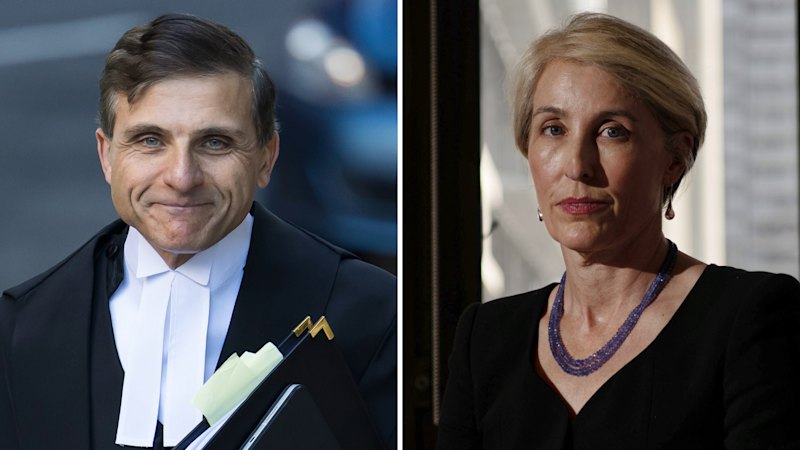
Peter McCallum and Harriet Cunningham
March 19, 2026 — 1:52pm
OPERA
Eugene Onegin
Opera Australia
Sydney Opera House, March 17
Reviewed by PETER McCALLUM
★★★★
Kasper Holten’s production of Tchaikovsky’s Eugene Onegin has the principal singers, Lauren Fagan as Tatyana and Andrei Bondarenko as Onegin, view the story through their younger selves portrayed by dancers Keeley Tennyson and Brayden Harry, as though reading old letters that kindle memories to life.
This makes the characterisation a shared responsibility in the crucial scenes, Fagan projecting serene clarity of musical line against the dancer’s coltish energy, and Bondarenko creating a vocal persona of rough-grained weariness against his doppelgänger’s darting insouciance.
Mia Stensgaard’s set, like the setting of so much 19th-century Russian literature, starts as a drab and alienating country estate, mutating to a drab and alienating ballroom, the perfect setting for self-loathing and disgust, while Katrina Lindsay’s costumes pick out the bright colours of youth against prevailing black.
The chorus singers needle Tatyana while singing bright peasant songs as though her paranoia has turned cheerfulness into an instrument of oppression. A sense of stylised detachment pervades the tone creating something of an analogue for the verse-novel format of Pushkin’s original poem on which the opera was based.
Fagan sang the extended letter-writing episode of Scene 2 with well-shaped clarity, the expressive range reserved at first and opening out in the final affirmative andante. She reserved her strongest moments of dramatic power for the final scene.
Similarly, Bondarenko sang the earlier scenes with laconic, unshaven ennui reserving any hint of impassioned feeling and ferocity for the latter part. As the ill-fated Lensky, Nicholas Jones, who strutted and fretted his first hour upon the stage and then lay on it for the second, sang the earlier scenes with attractive lightness, almost too light at times, and found a settled lyrical sound for his Scene 5 aria where Tatyana’s tune is transformed into minor-key pathos.
Sian Sharp’s Olga was effervescent, bright and true-toned. In the first quartet of these four singers, the balance was uneven, but the later ensembles found their tonal weight securely. As Gremin, Tatyana’s respectable husband after Onegin’s rejection, David Parkin sang with splendidly rich depth.
Angela Hogan gave the servant Filipyevna an affectionately worn dependability and Helen Sherman animated Larina with gentle warmth.
The Opera Australia Chorus were balanced and rounded, even when the placing at the back of the stage compromised projection. Tchaikovsky, a master of orchestral sonority, places a good part of the emotional and expressive burden on the orchestra, leaving the singers with well-crafted melodies and dialogues in Russian speech rhythms.
In the earlier scenes, the Opera Australia Orchestra seemed slightly separated from warmth and momentum at times, but conductor Anna Skryleva achieved points of colour and emphasis in the later scenes. One is left with the memory of haunting melody and the conviction that the stiff patriarchy of 19th-century Russian society, so oppressively restrictive for women, didn’t work for men either.
THEATRE
The Four Quartets
Old Fitz Theatre, March 17
Until March 20
Reviewed by HARRIET CUNNINGHAM
★★★
It’s late. Late in the day, late in life, and late on stage. As the audience files into the performance space at the Old Fitz, the sense of anticipation has a faint tinge of frustration. What’s taking so long? But, as this staged recitation of T. S. Eliot’s final meditations presented by independent theatre company The Wounded Surgeon demonstrates, sometimes you just have to wait.
Inspired by Ralph Fiennes’ 2021 solo performance, director Patrick Klavins and his four brave cast members take Eliot’s pungent and elliptical verse off the page and onto the stage. The achievement here is to make the words the real heroes.
Scholars have had a field day finding the tantalising references and clues unselfconsciously littered through the four poems. But this is not a stream of extravagant mind wanderings there for the literary code-breakers: the repetitions, the seemingly accidental rhymes, the gently insistent images which build across the four works call out for a voice, and for an audience sitting, listening in real time, rather than scanning the page for meaning.
All four performers bring a clarity and space to their performances, always seeking (and sometimes finding) the underlying rhythm behind the gnarly verse. In Burnt Norton Sandie Eldridge takes us for a walk in the garden – one that gradually crystallises into a memory palace revealing fragile shards of childhood voices around every corner.
Eldridge inhabits the words with a childlike wonder, letting them do their work without theatricality, but for a charming piece of shadow play (with help from lighting designer Topaz Marlay-Cole). Charles Mayer takes a more urgent, enquiring approach as he grapples with earthy, rugged imagery of East Coker.
Eldridge sets up the space for listening, but Mayer demands we hear, not through volume and bluster, but with some nicely done switches of perspective, from embodied character to curious onlooker. Kaivu Suvarna conjures up the world of water in The Dry Salvages with lightness of touch which sets us free from the claggy, brown river and the overwhelming ocean. Finally, Grace Stamnas burns with cool insight in Little Gidding.
Eldridge and Mayer both have scripts in hand, although Mayer rarely looks at his and, in an impressive feat, Suvarna and Stamnas are both off-book. Whether this is by chance or design, it feels like a dramatic progression from the page-bound text to speech to epiphany.
Eliot wrote The Four Quartets in the years leading up to and during the Second World War. East Coker and The Dry Salvages were written in London, against the backdrop of incessant and terrifying night-time air raids.
But there are no gestures towards history required: instead, phrases jump out as being frighteningly prescient. In a twittering world, and Distracted from distraction by distraction you could do worse than to spend an hour in the theatre as the wounded surgeon plies the steel.
Find out the next TV, streaming series and movies to add to your must-sees. Get The Watchlist delivered every Thursday.