3 months ago
21
3 months ago
21
By Peter McCallum
November 30, 2025 — 9.49am
MUSIC
Bernstein & Busoni
Endangered Productions
Eternity Playhouse, November 28
Reviewed by PETER McCALLUM
★★½
This double bill was an inspired pairing of two, imaginatively directed, energetically presented operatic rarities, Busoni’s sophisticated commedia dell’arte parody Arlecchino, and Bernstein’s melancholy fable of the cracks in the American Dream, Trouble in Tahiti.
The Bernstein work featured one of Australia’s great sopranos, Cheryl Barker and the equally accomplished Peter Coleman-Wright as the middle-class couple who have everything except each other.
Unfortunately, both works were marred musically by wholly unnecessary and poorly mixed amplification of voices and instruments so that very few of the sounds heard throughout the evening were beautiful or even pleasant.
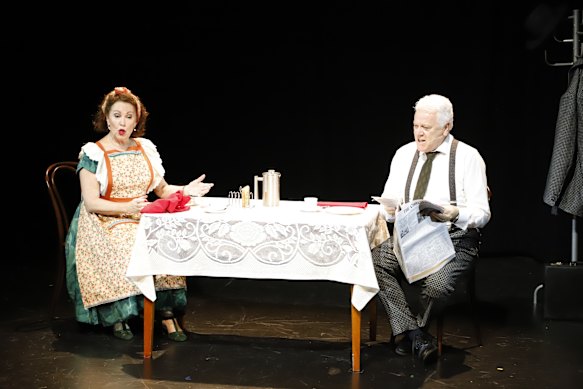
Cheryl Barker and Peter Coleman-Wright play a couple who have everything but each other. Credit: Marion Wheeler
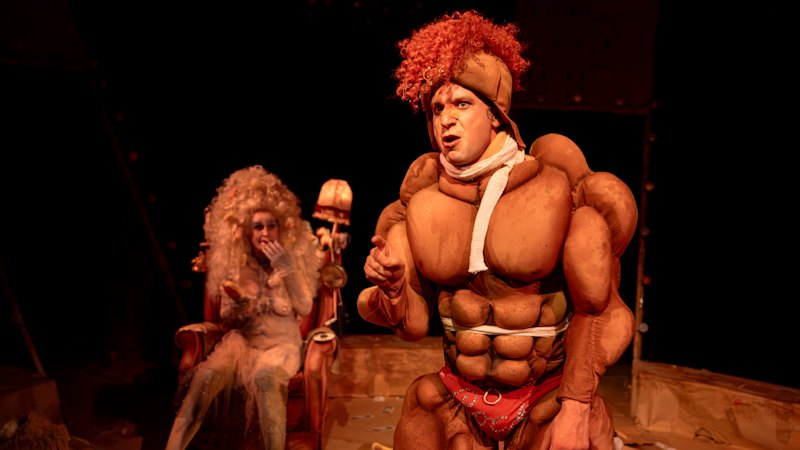
Arlecchino was written towards the end of World War I and its anarchic chaos and manic non-seriousness are in part a reaction to that catastrophe. In the non-singing role of Arlecchino, Andy Leopard was bold and cheeky, articulating an amoral philosophy of seduction (as in Don Giovanni, which is quoted).
Much of his dialogue is with the audience and he successfully recruited one audience member to a military unit (it would be wise to avoid the front row). However, his hectoring style was wearing, particularly when amplified, and the part could tolerate some moments of subtler nuance.
As counterpoint to his hyperactivity, Ed Suttle sang fretfully as the Dante-loving cuckold whose art worship achieves nothing. As Arlecchino’s betrayed wife Colombina, Brea Holland had strong acrobatic stage presence with promising voice if one was allowed to hear it.
Damien Hall sang the role of the strutting, electric-guitar playing knight who seduces Columbina, although any lyric qualities of his voice were obscured. Ziggy Harris as a drunken abbott sang with smooth well-arched lines and Matthew Avery’s voice as an incompetent doctor had an aptly abrasive edge.
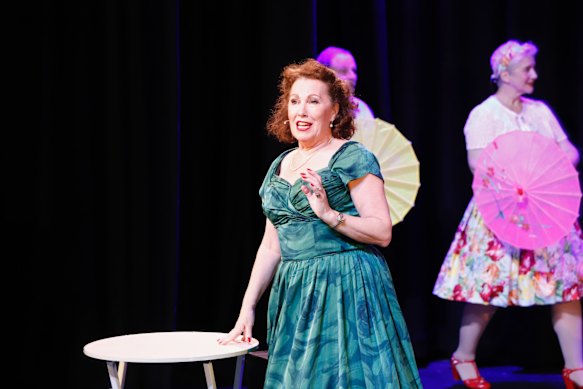
Cheryl Barker: One of Australia’s great sopranos. Credit: Marion Wheeler
Tenielle Thompson (also non-singing) as the tailor’s seduced wife proves more useful in the duel than her seducer and Kerwin Baya survived wardrobe malfunction as a donkey (this character’s role is not explained, which is presumably the point in this Dada-esque narrative).
Bianca de Nicolo’s colourful costumes created burlesque outrageousness and Christine Logan’s production pursued slapstick without quite achieving riotousness. Peter Alexander conducted with tenacious clarity but here, and in the Bernstein opera, this clarity did not flow through to the unbalanced sound of the amplified small orchestra as it emerged through the speakers.
As a real-life couple Barker and Coleman-Wright must surely communicate better than the alienated middle-class pair they portrayed in Trouble in Tahiti or they could not have created such a compelling portrait of the domestic dysfunction of the 1950s “perfect marriage”.
Bernstein completed the work just after his own marriage and juxtaposes musical styles to bring out the tension between appearance and reality (it also highlights the conflicts Bernstein felt between his Broadway and classical careers).
Lesley Braithwaite, Hall and Suttle formed a soft-shoe shuffle trio who sang with supple rhythm and groove, and crooned about how wonderful things are while the couple bicker over toast. Later, the perfect pair meet embarrassedly in the city and sing a duet (more like simultaneous soliloquies) about why they lied to each other about having a lunch appointment.
Coleman-Wright’s misogynistic There’s a Law was articulated with chilling confidence and vocal strength. Barker’s psychiatrist couch scene, sung with pure vowel, refined control and true line, was the musical highlight and her later showstopper What a Terrible Movie would have capped it if some mouse had chewed the speaker cables, which would be the quickest way to salvage this ambitious show.
Most Viewed in Culture
Loading