3 months ago
19
3 months ago
19
It started as a sweet cafe moment with a lovely lady. Then she followed me
Opinion
December 4, 2025 — 7.00pm
December 4, 2025 — 7.00pm
I was at a cafe in Melbourne with a friend on a quiet weekday afternoon when a lovely older woman with silver-speckled hair beside us smiled and complimented my friend’s baby. It felt good to be outside and off my phone for once, away from the algorithm’s usual spewing of vile political takes and feral outbursts that I doomscroll far too often.
As the conversation with my friend lulled, I heard what might have been the words “immigration ruining ...” from the woman’s phone.
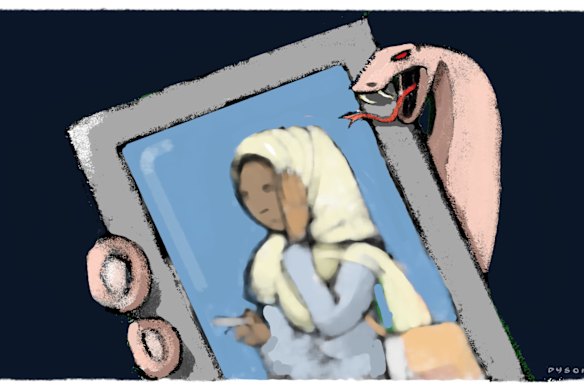
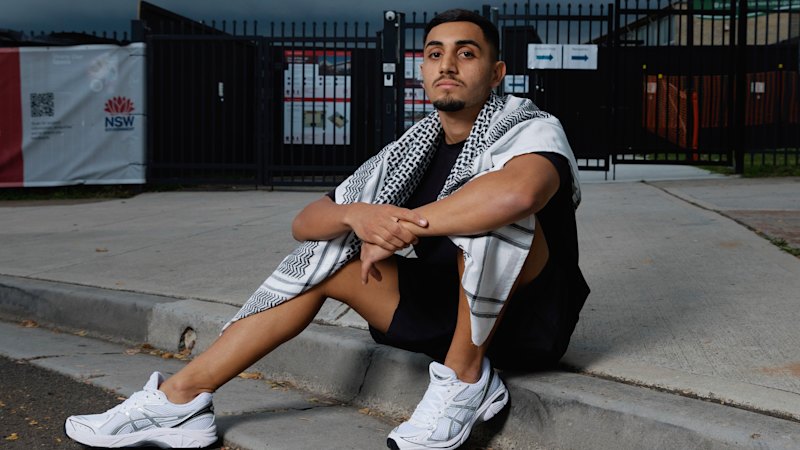
A violent rhetoric is spreading online and into the real world. Credit: Andrew Dyson
Terrible, I thought. I’m actually starting to hear things in real life based on what the algorithm keeps feeding me. That’s how deeply the online world seeps into your mind, you start anticipating negativity even in places where it hasn’t arrived yet. Well, not to worry, I told myself. I’m touching grass, the term young people use for getting away from screens.
But then a short while later, the same woman spotted us down the street, pram and baby in tow. She waved us down with an enthusiasm that felt out of place for someone we’d exchanged basic pleasantries with.
“Oh hello, thank god I saw you again – I was kicking myself for not finding you,” she said.
I smiled and instinctively gave her a hug. “That’s lovely.”
She glanced at my hijab and asked if I was Muslim. I said both of us were. She nodded earnestly.
“I’ve always thought well of Muslims, but lately I’ve had a really serious issue with Islam. Could I get your number so you can explain a few things to me?”
I was floored by the absurdity of what she’d just requested.
What are you supposed to say to a well-meaning but entirely inappropriate demand from a stranger who, 20 minutes earlier, was just a pleasant passerby in a sweet cafe moment?
Loading
It felt like something I’ve been noticing everywhere: the algorithm is leaking into real life.
After much insistence from the silver-speckled hair woman, I reluctantly gave her my email. To her credit, she did say, “Oh, I’m sorry, I’ve made you uncomfortable,” though that only made the whole thing more surreal given that she had recognised the discomfort and kept going anyway.
All through 2025, I’ve had moments like this with strangers, acquaintances, even lifelong family friends. I’ve received texts asking if I could confirm that Muslims were marching on St Patrick’s Cathedral. I’ve been pulled into heated debates about why my lived experience and race “matter”, or whether being Somali and Muslim in Australia puts me at any real disadvantage compared to my white counterparts.
These conversations aren’t new in my life, but something about them feels different now. There’s a sharper edge and a kind of defensiveness people didn’t use to have.
I lived through the worst of the backlash against Muslims growing up post 9/11 in mainly white Launceston, and then as a teen during the ISIS era, which culminated in the tragic Lindt Cafe siege. During that time I remember friends reaching out, making sure I knew they didn’t blame the actions of a deranged mad man hiding behind the cover of religion on me, a Muslim woman.
Loading
Every day, the hot-button issues of immigration and race dominate my feeds. It’s relentless. I stopped mid-scroll one day when I saw a guy I went to high school with suddenly reinventing himself as a right-wing content creator, full of anti-women dribble and distorted narratives about a Muslim takeover in Europe. I stared at his page wondering whether he even believed the things he was posting, or if he was just chasing the algorithm’s rewards.
It made me question whether traditional media was really the villain I thought it was growing up. Yes, it was biased. Yes, it set nasty agendas from the Cronulla riots to “African gangs” to the Voice referendum. But at least you could anticipate the storm. It didn’t shape-shift and follow you into every corner of your day. It didn’t recruit your friends and acquaintances into part-time culture-war commentators at rapid speed.
Now, the storm is personalised and constant. It’s crafted to provoke you, radicalise you or simply keep you scrolling. And now people feel emboldened to stop random Muslims in the street and ask them to explain and defend an entire religion.
A part of me wondered if I should help the woman with the silver-speckled hair. Maybe countering misinformation one person at a time is the price of existing while visibly Muslim. But the truth is: even if I had answered, she’s already being fed 20 new pieces of content telling her the opposite.
She never emailed me.
Worse is coming with the way social media is headed. People are lonely inside their phones. People are absorbing fear and mistaking it for fact. And, for the first time in a long time, I’m not sure if touching grass will help all that much.
Najma Sambul is a writer and former reporter for The Age and the ABC.
The Opinion newsletter is a weekly wrap of views that will challenge, champion and inform your own. Sign up here.
Most Viewed in National
Loading