3 months ago
7
3 months ago
7
Opinion
December 2, 2025 — 5.00am
December 2, 2025 — 5.00am
Just 50 years ago, our leaders thought it OK to flatten The Rocks, the original 1788 convict settlement on the rugged west side of Sydney Cove (Circular Quay). NSW’s highest powers planned to fill up The Rocks with high-rise; a folly even greater than the present wished-for housing towers in historic Victoria Barracks.
I wonder if the Sydney Harbour Federation Trust, the esteemed 25-year-old federal agency created to “protect, conserve and interpret” Australia’s heritage, has blundered in its current proposal to demolish the three large “former 111 anti-aircraft artillery battery barracks” on Middle Head/Gubbah Gubbah, to replace them with a “curated First Nations garden and walk”.
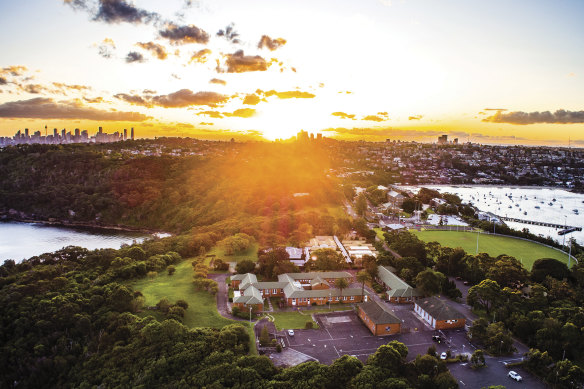
The Middle Head buildings, including the barracks, with the oval to the right and HMAS Penguin behind the oval.Credit: Sydney Harbour Federation Trust
The trust’s plans have been submitted to the federal government but need approval from Environment Minister Murray Watt. To enhance its chances of victory, the trust has shrewdly renamed the barracks the “three timber buildings”. The demolition is classed as “severe”.
The barracks are part of a rare, surviving “military village” dating from WWI – a “village” because it’s where soldiers trained, slept, socialised and had access to sport. The barracks are a large chunk of the village.
Two decades ago, the trust assessed the barracks as highly significant – “possibly the only surviving complex of post-WWII two-storey … timber barracks buildings in Australia” and observed they “form an exceptionally rare collection of such barracks at a national level”. But the trust’s present-day consultants have downgraded the barracks’ heritage significance, also saying that First Nations history “could be considered greater significance than that of the … timber buildings”. In short, Aboriginal heritage eclipses military at Middle Head.
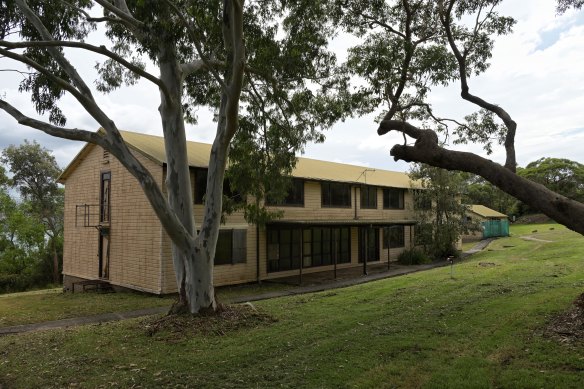
The barracks at Middle Head, built in the 1950s, are slated for demolition. Credit: Nick Moir
The demolished barracks would be replaced by a new “curated First Nations garden and walk”, the first stage of a larger plan to embed First Nations “interpretation” throughout the entire military village landscape, including 2.4-metre-wide curved walkways with motifs, text panels, artworks, statues, viewfinders, sensory plants and more, so that “Country is explored as a place of continual teaching and learning”. In short – a significant landscape adaptation of the military village to tell First Nations stories.
The trust admits that replacing the barracks with the garden “will alter the landscape and visual appearance” but its “considered view … informed by independent experts, is that specifically and cumulatively, the proposed action will not have a significant impact”.
The Harbour Trust has twiddled its thumbs at Middle Head for 30 years, giving priority to its other sites including Cockatoo Island and Georges Heights. Astonishingly, many of the buildings at Middle Head are still vacant after decades of inaction.
The trust has put not one cent into the barracks, allowing them to degrade into a dilapidated eyesore. It’s no wonder the public thinks they are “ugly” – but in fact they were beautiful when originally built. In a final humiliation, part of the barracks’ roof blew off last July.
Loading
Over these same 30 years the trust has done nothing to interpret the extremely important Aboriginal heritage values at Middle Head. Until recently, the trust had mistakenly located the famous Bungaree’s Farm on Georges Head instead of Middle Head.
Thankfully, the trust has now brought First Nations heritage to the forefront, but this plan has the potential to become divisive, pitting military against Indigenous. It will very likely confuse one’s interpretation of the military village, adding many disjointed and confusing built elements that were never originally there. Military villages were never “curvy”!
But there is a solution. One or more of the barracks could be saved, restored, and adapted for use by veterans, schools’ education, or better yet, for a more all-encompassing indoor Aboriginal interpretation centre.
The First Nations garden could still go ahead but could be moved elsewhere so as not to intrude on the fabric of the heritage military village.
Australians should not have to choose between history or be told by the trust which stories are important, and which are not.
The trust has a unique opportunity to create a park which tells all stories equally – instead they are creating a park which emphasises some at the expense of others.
The barracks should be saved – like The Rocks, future generations will be grateful for their preservation.
Linda Bergin is founder of Headland Preservation Group and a long-time advocate for the protection of heritage sites in Sydney.
Most Viewed in National
Loading