3 months ago
37
3 months ago
37

As typos go, the one issued on a land tax assessment to property investor and cattle baron Theo Onisforou was expensive.
A row of four terraces on Crown Street in Surry Hills, set on a 297 square metre block, was erroneously assessed by Value NSW as sitting on a 597 square metre lot. The wrong digit effectively doubled the land size on paper, if not the tax debt.
The fact that the error has been repeated in every annual assessment since 2001, when Onisforou purchased the Crown Street property as an investment for $1.91 million, has made things all the more costly.
But if Onisforou had hoped to simply be reimbursed the excess land tax, he was disappointed.
Instead, Onisforou has had to launch legal proceedings in the Land and Environment Court against the NSW valuer general in a bid to recoup his losses.
“This mistake wasn’t my doing, and yet I’m the one being forced into expensive legal action to defend myself against a statutory body that won’t even clarify just how much they’ve overcharged me,” Onisforou said. “I want my $1 million back.”
Land tax is levied on the unimproved land value of any second – or subsequent – property, such as an investment property or a holiday home, and it is charged at 1.6 per cent a year above a $1,075,000 threshold. The family home is exempt.
For Onisforou’s part, his claim to a $1 million debt is calculated on the sum of his excess land tax payments over the years and charged at 3.3 per cent compound interest.
“The tax office would charge a lot more interest than that, so I’m being overly generous,” Onisforou said.
Interest levied on outstanding tax debts by the Australian Taxation Office was set at 10.65 per cent in the March quarter.
The valuer-general has dismissed Onisforou’s percentage calculation, but it did revise the property’s land value from $5.29 million to $3.3 million for 2024, given the corrected size.
But even that land value was overstated, said Onisforou. He says the true land value is closer to $2.6 million. The dispute over the 2024 valuation is set for a hearing later this year.
Even if Onisforou is successful, that won’t necessarily open the way for him to be repaid for previous years.
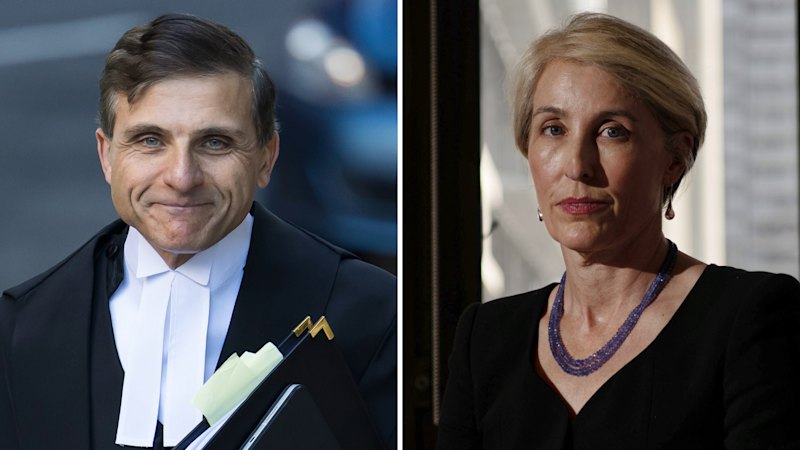
In correspondence seen by the Herald, a lawyer acting for Valuer-General Sally Dale said the court did not have the power to vary the land tax determinations for other years, and responsibility for the accuracy of land sizes was up to the owner.
For Onisforou, that might mean separate proceedings to claw back overpaid tax from previous years.
“This should be a warning to everyone not to presume that the land size stated in your annual valuation is correct,” Onisforou said.
Objecting to a land valuation is no easy task, and it is often limited to those with the deepest pockets and the most to gain.
Of an estimated 2.7 million valuations by Value NSW each year, about 110 are successfully challenged.
Billionaire Dial A Dump founder Ian Malouf is a vocal critic, slamming the state-based levy as no more than a “tax on the rich”.
He would know. “I had a $1 million land tax bill in one year on one street,” said Malouf.
Of those, one was the $40 million weekender on the Palm Beach beachfront up the road from two houses purchased for $18.6 million and $20 million each.
Malouf launched his own legal fight in 2024 over a $15.9 million land valuation of one of the houses, called Gidget. He succeeded in having its value revised to $14.8 million. “It was a small win,” he said. “It ultimately cost as much to fight it as the reduction, but it was worth it.”
More recently, a $95.5 million purchase by Singaporean tycoon Ho Whye Chung’s Ho-Group Australia of an office tower in North Sydney had its land value revised from $90 million in 2024 to $73 million. Then conciliation last year valued it at a base rate of $56 million.
Prestige valuer Scott Willoughby, of Knoxbridge, said while mainstream land valuations tended to be fairly conservative, that was often not the case in the trophy home market, where prices vary wildly and there are few comparable sales with which to benchmark values.
Former Seven commercial director Bruce McWilliam recently took to court to dispute the valuer general’s assessment of his Point Piper investment apartment (purchased in 2018 for $7.55 million) after the site was valued at $41.5 million.
In court documents, McWilliam argues that because the apartments have no view of the Harbour Bridge or the Opera House, the block is worth no more than $33.3 million.
The matter is slated for hearing later this year.
Another Point Piper local set to contest his land tax assessment in court later this year is troubled gold mining businessman John Changjin Li.
Li’s mansion, Edgewater, had its land tax value dropped from $90.2 million to $80 million in 2024, but Li is seeking to have that dropped again to $63.45 million.
One of the most notable land tax disputes was in 2008, when billionaire Meriton founder Harry Triguboff was slapped with a $149,556 land tax bill because a second residence on his Vaucluse estate was a separate dwelling with its own street number and street access.
But in the court proceedings that followed, Triguboff argued the dwelling was a “spare” house that shared the same grounds and was a better study for him to work from because it “had a better outlook”.
It was a win for Triguboff and a loss for state coffers.
Start the day with a summary of the day’s most important and interesting stories, analysis and insights. Sign up for our Morning Edition newsletter.