3 months ago
21
3 months ago
21
Charlotte Moore
December 24, 2025 — 5:00am
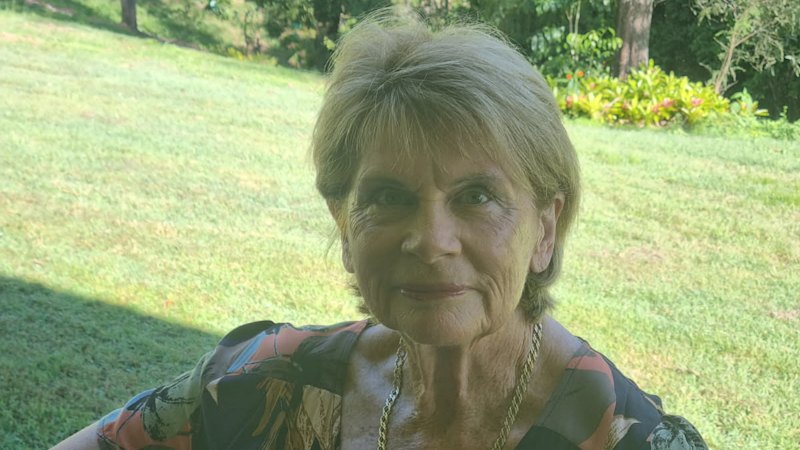
Every parent dreads their child deciding to move to another country. But when my 25-year-old daughter Delphi swapped Britain for Melbourne earlier this year – cheerful, penniless but determined to make a life out there – I did my best to encourage her.
After she’d found a flat, a job, and told us she was “super happy”, I realised Australia was now her home (hopefully for just a few years), and if I wanted to see her, a 22-hour flight was inevitable. I had to face up to the phobia that has plagued me for 30 years.
Flying terrifies me.
In the sky, my heart races, my legs twitch, I can’t stop talking, I need to rush to the loo and spend most of the time trying to work out how much it would cost to get home by land and sea (although I’m not that keen on boats either).
I’m not alone. Research shows that about 25 per cent of people have at least some fear of flying, while about one in 10 people have a full-on phobia. Loss of control, fear of having a panic attack and claustrophobia are all common reasons why people don’t step on a flight.
I’ve had to fly for work a lot. Sadly this has only made things worse. Being on the red-eye all by myself in the middle of the night with the sound of the rattling wings, a silent cabin and the inevitable turbulence, sends me into a frenzy of panic. With everyone snoring around me, I feel like the only mad woman in the air. Since COVID I’ve avoided long-haul flying completely.
So with a flight to Australia pending (but not quite booked), I needed help. I entered British Airways “Flying with Confidence” course, which claims a 98 per cent “success” rate. The course is divided into three main sessions: a presentation by British Airways pilots in the morning, a talk by a psychologist in the afternoon, before the dramatic conclusion: an actual flight on a BA aircraft.
I headed to Heathrow with a sense of dread. The first thing that struck me was the huge number of other people – I was amazed my problem is so common, and that so many are willing to give up the substantial sum of £399 ($807), and an entire Saturday, to fix it.
As we milled around drinking tea and coffee, I met Leila, a high-powered 35-year-old executive who used to happily fly to and from Texas every month until one day, over Ohio, she had a panic attack. She’d never had one before and was so floored by the whole experience that she dreads every business trip she’s forced to take.
Now pregnant, she was on the course to make sure she doesn’t pass down her fear to her child. “I understand, rationally, why I shouldn’t be scared – but then the panic sets in and there is nothing I can do to stop it,” she confided.
The fear of fear
It’s often described as an exaggerated form of your body’s natural response to danger, but unless you have experienced a full-blown panic attack it’s difficult to explain how truly horrible they are. They come out of the blue, often for no apparent reason, but once you’ve had one it’s easy to build up a phobia about having another.
Dr Simon Petrie, a chartered clinical psychologist and our therapist for the second half of the course, explained that “fear of fear” – or a metaphobia – is common when it comes to flying. Indeed when he asked all of my fellow scaredy cats what they’re most worried about, listing “heights”, “open spaces”, “suffocation”, “loss of control” and “fear of fear”, the majority raised their hands at the last option.
The solution, he said, “is to calm down your frightened brain”. Easy for you to say, I thought.
But before we could get into the nitty gritty of psychological brain training, we spent the morning meeting the pilots and learning more about how planes work. Now I have to admit that physics was never my strong point and the idea of sitting in a lecture theatre learning about aeronautical engineering made me feel extremely tired.
To the rescue was Captain Nigel, Captain Niven and their coterie of jolly cabin crew. Nigel was warm and funny as he guided us through the mechanics of flying. I was somehow gripped by all the facts, learning how much paint goes on a double-decker Airbus A380 (two tonnes), how much a full tank of fuel weighs (300 tonnes), and that, apparently, “babies love turbulence”.
Most reassuring was discovering how microscopically controlled the airline industry is. “We pilots are very, very boring,” explained Nigel. “No matter what the airline is, we fly our plane in exactly the same way.” I was also thrilled to discover that a commercial aircraft flying at 35,000ft can glide for up to 100 miles in the (extremely unlikely) event that all the engines fail.
Calm also descended as they told us about the 100,000 successful flights a day and the 1.2 million people who spend time in the air – and return to ground safely – on any one given day. I thought about all those people choosing their cabin meals and pulling on their in-flight socks, excited about impending adventures on the other side of the world.
At lunch I chatted to more fellow participants. Charlie, 25, from Hammersmith, revealed that he had never flown before, and that his sisters had enrolled him on the course for his birthday because “they just want to be able to go on holiday with me”.
A bumpy ride
The problem for most of us, it seems, is turbulence. Indeed, a number of articles published in the past year claim, thanks to climate change, flights are getting bumpier. In July, scientists from the University of Reading found that the chance of severe turbulence had risen by 55 per cent since 1979. The authors of the study warned that it could double or even triple by 2050. These sorts of news stories fuel an anxious brain like mine. The key, Dr Simon Petrie explained, is to manage unhelpful thoughts.
His afternoon session began with a breathing exercise. It was so relaxing that the twitchy Gen Z sitting next to me actually started to snore. Dr Petrie told us to approach a flight with a plan. ”To calm a frightened brain you need to distract it and focus on the coping tools,” he said. “Most importantly, remember this mantra: ‘Whenever I’m anxious, there’s always something I can do to reduce my symptoms’.”
The chief coping tool is to “breathe and squeeze” because, he explained, “breathing slowly will control the flow of hormones racing around your body. And a brief muscle squeeze will focus your mind”. This method sounded ridiculously simple but requires concentration, and when we tried it in the lecture theatre it really did seem to work.
Up in the air
Finally came the flight itself. As we trooped through customs at Heathrow (yes, they still make you do all this) and discussed what we had learnt on the day, most seemed excited to see whether the coping tactics would actually work in the air. Those who had never flown before appeared thrilled at the prospect of actually going through with it. I spoke to one 60-something gentleman from Nottingham who gave me the impression that his wife (in Venice at the time, on holiday with girlfriends) might ditch him if he doesn’t start travelling the world with her.
But when we actually took our seats my fellow passengers suddenly seemed terrified.
As Captain Nigel flew the plane, Niven gave us a running commentary, describing every rumble, shudder and rattle as we ascended. It was incredibly reassuring. The flight lasted a little over 20 minutes but seemed over in a flash.
I tried the “breath and squeeze” method when things got bumpy going through the clouds – and it worked. Unlike every other time I’ve flown, panic did not rise. By the time we touched the ground I felt utterly wiped out by all that concentration, but delighted that the course really has seemed to have made a difference.
As we exited the plane I bumped into an exhilarated 40-something, who was almost in tears. “I haven’t flown since my honeymoon in Ibiza was cut short after 9/11,” she said. “We were all so traumatised by that day that I became terrified of flying. After this, I can finally finish the honeymoon!“.
It’s an emotional moment for everyone, and all I could think was: Delphi, I’ll see you in Melbourne very soon.
Some names have been changed.
The Telegraph, London
Sign up for the Traveller newsletter
The latest travel news, tips and inspiration delivered to your inbox. Sign up now.