3 months ago
9
3 months ago
9
The owners of NSW’s grandest homes will no longer require formal approval to install solar panels under reforms that will make it easier to upgrade and repair ageing state heritage-listed properties.
The state government has expanded the list of activities, including maintenance works and sustainability measures, that can go ahead without the permission of the Heritage Council of NSW.
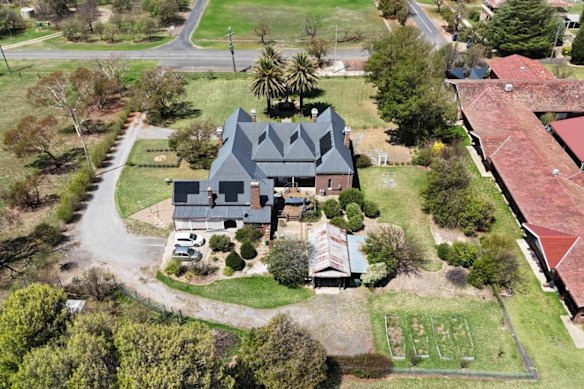
The changes aim to reduce conflict between owners and authorities over solar panels and preservation of heritage buildings, such as The Convent in Murrumburrah. The owners have installed solar panels on its roof. Credit: Mark Djukic
Environment and Heritage Minister Penny Sharpe said the changes aimed to protect heritage assets by making it easier for owners and managers to “maintain, modernise and activate” the properties.
“State heritage-listed buildings are not all museum pieces,” Sharpe said.
Loading
“These sensible changes mean heritage will be protected while allowing owners to install energy-saving measures and undertake important and necessary updates.”
They apply to an estimated 1810 sites on the State Heritage Register, 868 of which are government-owned.
The run-down state of heritage-listed buildings, including the Paragon Cafe in Katoomba and Cleveland House in Surry Hills, has underscored tensions between progress and preservation.
Under the reforms, property owners and managers will not require approval to install energy-saving and sustainable technology such as solar panels, batteries, insulation and draught proofing.
They also apply to security and fire suppression systems, accessibility measures including access ramps and bathroom fit-outs, replacing bricks and stone walls, and Aboriginal cultural practices.
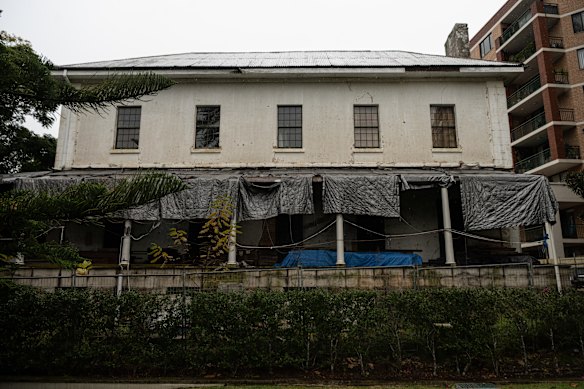
The sorry state of Cleveland House in Surry Hills partly prompted the government to make it easier for owners to fix dilapidated homes. Credit: Nick Moir
The government said the revised exemptions were subject to conditions that would “ensure the heritage values of the property were protected”. For example, solar panels are only exempt from requiring heritage approval if the system is under 10kW and the panels are not facing the street.
Alterations to relevant properties must also be carried out by people with “appropriate skills”.
Property owners and managers will also no longer need heritage approval to hold low-impact temporary events for up to 90 days per year, compared to 30 days per year under the previous rules.
Loading
Filming will also be allowed at state heritage-listed properties for 90 days per year, also up from 30 days per year, before heritage approval is required. The government said changes were aimed at supporting the film industry by enabling new or longer film scheduling and production scheduling.
The exemptions for solar panels do not apply to local heritage items, which are covered by rules that vary between councils.
The City of Sydney prefers solar panels on rear roofs over street-facing panels because roofscapes in conservation areas were important to the area’s character, but it reviews applications for the latter on a case-by-case basis.
The Inner West Council is considering making it easier for home owners in conservation areas to install street-facing solar panels as part of a review of its planning rules.
Waverley, Woollahra, North Sydney, Randwick, Camden, Queanbeyan-Palerang and Newcastle local governments also have their own guidelines for installing solar panels on heritage-listed buildings.
Start the day with a summary of the day’s most important and interesting stories, analysis and insights. Sign up for our Morning Edition newsletter.
Most Viewed in National
Loading