3 months ago
13
3 months ago
13
A million new homes could be delivered across the nation’s five largest capital cities by allowing Australians to subdivide their properties, new research shows, in a move that would ease price pressures and give people more choice over where they live.
The Committee for the Economic Development of Australia (CEDA) will argue on Tuesday that allowing so-called “gentle density” – default approval for dual occupancies – would reduce pressure to build large towers of units across suburbs while maximising use of existing infrastructure.

Rather than multi-storey apartment blocks, CEDA has proposed property holders be allowed to subdivide their homes for dual occupancy.Credit: Dan Peled
The federal government is already 60,000 homes behind its target to build 1.2 million properties by 2029, while house price growth has accelerated since the Reserve Bank started cutting official interest rates in February.
Figures released on Monday confirmed the median house value in Sydney has reached a record $1.584 million, while in both Canberra and Brisbane the median value is now above $1 million.
CEDA’s research examined how planning reforms put in place last decade in Auckland, New Zealand’s largest city, have increased affordability and boosted supply. The key element was to allow property holders to subdivide their home with few, if any, restrictions.
Loading
Senior CEDA economist Danika Adams, a co-author of the report, said if just one-in-four standalone lots were developed into dual occupancies, total housing supply would jump by 9 per cent – or about 1 million homes.
Housing supply in Sydney would climb by 12 per cent while in Melbourne it would rise by 15 per cent if the plan was implemented, with many of the new homes close to jobs or transport hubs.
Adams said that too often, housing supply solutions focused on extremes such as high-rise apartments or homes in sprawling outer suburbs.
“But gentle density can deliver more housing in middle-ring neighbourhoods where people want to live, while making better use of existing infrastructure and transport networks,” she said.
“We must make better use of the land, transport and services we already have, and give people more choice about where and how they want to live.”
When the planning reforms were introduced to Auckland, its property values were climbing as fast as those in Sydney and Melbourne.
The Auckland changes, CEDA argued, increased building consents by 50 per cent within five years. House prices were estimated to be 15 to 27 per cent lower than they would otherwise have been.
In Melbourne, the report estimates more than 1000 strata-titled sites within 15 kilometres of the CBD would deliver an additional 100,000 homes if redeveloped.
The proposal is similar to one suggested by the Grattan Institute last month under which three-storey apartments and townhouses could be built anywhere in the nation’s capital cities without special planning permission.
It estimated Melbourne could build an extra 431,000 homes within 15 kilometres of the city centre and in Sydney, up to an extra 1 million homes could be commercially feasible.
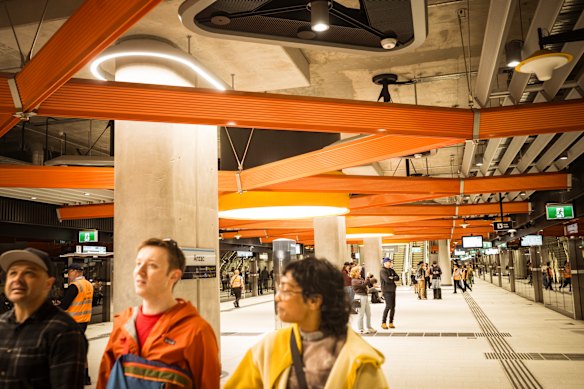
New infrastructure such as Melbourne’s Metro tunnel would be used more efficiently if more homes were allowed near transport hubs.Credit: Chris Hopkins
Adams said the NSW and Victorian governments were already introducing reforms, but the entire nation had to do far more, starting with planning reforms that allowed homes to be built quickly.
“We need sustained effort and an ongoing culture of ‘yes if’ that promotes speed and predictability and gets more people into homes in neighbourhoods already rich in amenities,” she said.
Apart from increasing the number of dwellings allowed per hectare, CEDA believes state governments should reward councils that meet housing targets and penalise those that fail to meet them.
Loading
The federal government is already offering $500 million to councils to help them provide necessary infrastructure for new homes. Most of that is already flowing to suburban and regional local governments.
Another $1 billion has gone to state governments to encourage them to provide infrastructure or planning reform to boost the number of housing projects underway.
An increase in housing is expected to temper a property market that is on track to experience a nationwide lift in prices of more than 8 per cent for the year.
AMP chief economist Shane Oliver on Monday said the increase in prices was likely to slow in 2026 due to affordability pressures, the chance of an interest rate increase and the Australian Prudential Regulation Authority’s plans to tighten lending standards from February.
“While some slowing in population growth and improving housing completions are bringing the property market into better balance on an annual basis, there is still an accumulated housing shortfall that has built up over the last few years of underbuilding,” he said.
Cut through the noise of federal politics with news, views and expert analysis. Subscribers can sign up to our weekly Inside Politics newsletter.
Most Viewed in Politics
Loading