3 months ago
18
3 months ago
18
Australian households will be hit with higher power prices over the next decade, officials warn, unless governments urgently speed up the delivery of enough new renewable energy, transmission lines and big batteries to compensate for an approaching wave of coal-fired power plant closures.
New figures from the Australian Energy Market Commission, to be released on Thursday, mark a major reversal from its earlier forecasts that prices were poised to sharply fall by 2035. They also add to an intensifying political debate as the Coalition argues Labor’s green energy targets will cause unaffordable costs for homes and businesses.
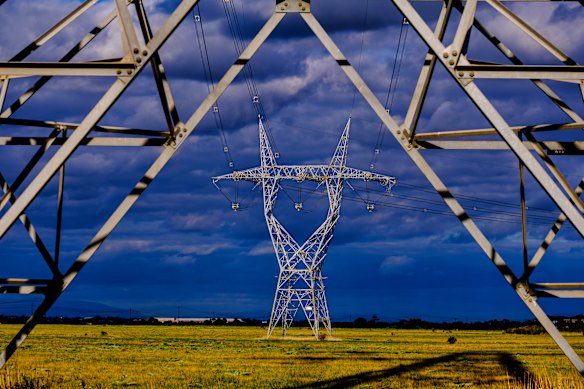
The rollout of renewable energy and thousands of kilometres of extra power lines to link them to major cities is running behind schedule.Credit: Luis Enrique Ascui
While the commission expects renewables and batteries to successfully cut power prices by 5 per cent between now and 2030, those savings risk being wiped out by a 13 per cent increase in the following five years because not enough projects are being built fast enough to cater for the exit of more coal.
Unless these delays are addressed, the consequences could be severe: energy reliability will come under pressure as the economy’s growing demand for electricity outpaces supply, while the grid will be forced to call on expensive gas-fired generation more frequently to plug gaps in the evenings after the sun sets and solar power recedes, sending wholesale prices higher.
Commission chair Anna Collyer warns the risk could translate to an average household power price increase of 0.8 per cent each year until 2035 – an 8 per cent rise.
“Our price outlook highlights a critical five-year window,” she said. “Residential electricity prices are projected to fall through 2030 as renewable generation and batteries ramp up, but then rise through 2035 if the pace of new investment doesn’t keep ahead of growing electricity demand and planned coal retirement.”
Australia is adding more clean energy than ever before, as billions of dollars pour into new wind and solar farms, rooftop solar panels, batteries and hydroelectric dams every year, boosting renewable energy to a 40 per cent share of the grid. Meanwhile, most of the giant coal-fired power stations that still supply the bulk of the nation’s electricity are nearing the end of their usable lives, facing spiralling maintenance costs and frequent breakdowns, prompting their operators to bring forward their closure dates. More than half of Australia’s remaining coal-fired generators are now scheduled to be retired by 2035.
The Albanese government follows the advice of the energy market operator and CSIRO that the best way to replace ageing coal plants and deliver lower bills is to develop a mostly renewable grid, backed up by storage, power lines and gas-fired generators.
However, the rollout is lagging the speed that authorities and experts say is necessary to ready the grid for a future with less coal, as developers face permitting delays, rising costs and opposition from rural and regional communities worried about impacts on farming practices, property values and the environment.
NSW and Victoria have cut deals with coal-fired generator owners to ensure some of their sites do not shut prematurely.
Loading
The Coalition last month dumped its support for Australia’s 2050 net zero target and vowed to extend taxpayer funds to support all energy technologies, including to keep coal-fired power stations running beyond their closure dates if it wins the next election.
It has repeatedly attacked the Albanese government for breaking a promise made in 2022 that its policies would cut power bills by $275 by 2025.
However, Energy Minister Chris Bowen pointed to the Australian Energy Market Commission’s finding that slowing the renewable rollout and prolonging the grid’s reliance on coal could drive electricity prices up another 5 per cent due the impact of more frequent breakdowns of ageing and increasingly failure-prone equipment.
“When coal breaks down your bills go up – that’s why we’ve got to keep rolling out reliable renewables, and help more households embrace solar and batteries,” Bowen said.
“The Coalition’s anti-renewables plan will cost Australians more.”
Opposition energy spokesman Dan Tehan said he questioned the credibility of the commission’s finding that electricity prices would fall in the next five years. “It’s hard to see how that’s possible – it’s hard to see anyone who is saying prices aren’t going to continue to rise,” he said.
“These figures are wholly based on Chris Bowen’s ideological approach to our energy transition.”
Collyer said it was not too late to avoid post-2030s price rises. “This is a timing challenge, not a technology cost issue,” she said.
The new report encourages policymakers to reduce barriers to building more renewables and power lines by designing programs to underpin investment in more projects and speeding up the planning and approval processes.
Loading
The report also underlines the growing potential to harness more of the stored in energy in the batteries in people’s homes and electric vehicles, which could soak up solar during the day and dispatch it in the evenings to reduce evening demand.
“With the right pace of investment, we can manage the energy transition while keeping prices stable,” Collyer said.
Although the commission’s outlook suggests an increase to the rates that retailers will charge for kilowatt-hour of electricity by 2035, it calculates that a household’s overall electricity bill will remain relatively stable, as more people install solar panels and batteries and become more energy-efficient.
A household’s total “energy costs”, including expenses on power, natural gas and petrol, meanwhile, could fall as much as 90 per cent for those that adopt electric vehicles and replace gas-powered stoves, heaters and hot water units with electric alternatives.
The Business Briefing newsletter delivers major stories, exclusive coverage and expert opinion. Sign up to get it every weekday morning.
Most Viewed in Business
Loading