3 months ago
26
3 months ago
26
The torpor that settles over a city during a heatwave is not just because of soaring daytime temperatures, but also the warm nights robbing people of sleep and serenity.
Melbourne hit a high of 42 degrees on Wednesday, while Sydney was 31 in the city and 37 in the west, with 60 per cent humidity making it feel hotter. In both cities, it will still be 23 degrees at midnight and minimum temperatures will not fall below 20.
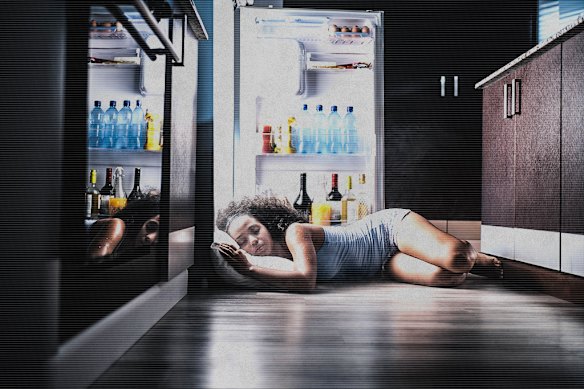
Hot overnight temperatures can cause insomnia.Credit: Adobe Stock
Melbourne will get cooler nights later in the week, while conditions will worsen in Sydney. By Saturday, both the city and western Sydney are expected to hit the low 40s during the day and overnight minimums will not fall below 24 degrees.
Senior meteorologist Dean Narramore said this was one of the hardest things about a heatwave, which the Bureau of Meteorology defines as at least three consecutive days in which both the maximum and minimum temperatures are significantly above average.
“When it’s hot during the day, but it’s cool during the night, people can recover,” Narramore said. “If you don’t have AC and your temperatures don’t drop, so it’s 25 or 26 at six in the morning, and then it quickly goes back to 40 again by maybe nine or 10 in the morning, and that goes on for three or four days in a row so you can’t cool yourself down – that causes a big problem.”
Ollie Jay, academic director of the Heat and Health Research Centre at the University of Sydney, said extreme heat cost the Australian economy more than $6 billion of lost productivity every year, increased rates of stillbirth or premature birth, triggered heart attacks and made it more difficult for schoolchildren to learn.
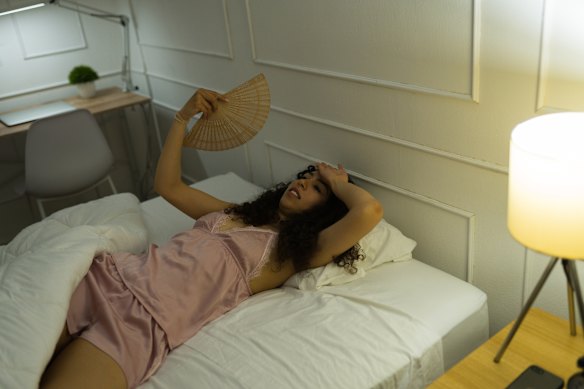
Lack of sleep can make it harder to deal with chronic illnesses.Credit: Getty Images
While specific heat-related illnesses such as heat exhaustion were more likely during the day when the temperatures peaked, Jay said hot nights could cause discomfort and sleeplessness.
“It would be worse if it’s humid and hot overnight, rather than dry and hot overnight,” Jay said. “The reason that matters is that the only way in which we can physiologically keep cool when temperatures are higher than, say, 35 degrees, is by getting our sweat to evaporate. The factor that determines how well the sweat evaporates is how much moisture is in the air.”
Jay’s colleague, Dr Harry Brown, is part of a team studying how well people sleep in chambers heated up to 35 degrees. The study is done both with and without a fan to test how well fans work to keep people comfortable overnight.
After monitoring 16 people so far, with plans to do 14 more, the team is finding that most people acclimatise to the heat, even without the fan, and eventually fall asleep – although it can take up to an hour. But not everyone.
“Unfortunately, there are some people who are awake every other hour, are just uncomfortable and turning around,” Brown said. “It’s just the profuse sweating because without the fan there, the sweat is just pooling on the bed, and that’s obviously not conducive for being really comfortable.”
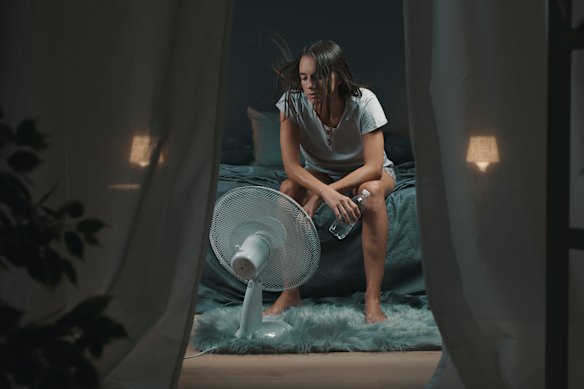
Credit: Getty Images/iStockphoto
Emma Bacon, executive director of Sweltering Cities, said her organisation heard from thousands of people around the country living in extremely hot homes who reported being unable to sleep at night and significant physical and mental health effects as a result. It was particularly bad for older people, people with disabilities and chronic illnesses, and people managing mental illness, she said.
“Physically it’s that sense of waking up dehydrated, of not sleeping, of your body not being able to recover overnight,” she said. “Then there’s also the mental health effects. If people can’t sleep for days at a time, or even just for one night, that can have really significant impacts on their anxiety and their state of mind.”
Bacon said she could feel the effect at population level.
“Personally, in those really hot weeks in the city, I feel like you can sometimes sense that a lot of people haven’t slept, and you get that tension of people feeling grumpy, exhausted and really unwell,” she said.
How to keep cool at night
Jay said households were advised to close all windows and doors and use blockout curtains or blinds during the day because the temperature was hotter outside than inside the house. At night when the temperature dropped outside, it was a good idea to open the windows if possible.
Loading
Using fans was a cost-effective way to keep cool, Bacon said, and even households with air-conditioning could save on power bills by having the thermostat set to a higher temperature and supplementing with a fan.
She also recommended dampening your skin with a wet or even frozen towel or sarong, and keeping water on hand to stay hydrated.
However, Bacon said renters were often unable to make commonsense improvements to their homes. “We can give people lots of advice but, fundamentally, we need better renting and housing standards so people can sleep at night,” she said.
The Insulation Council has over the past 12 months been calling for a national push to upgrade Australian homes with quality insulation, which would help keep them cool in summer and warm in winter.
Although many households will turn to air-conditioning during the heatwave, there are no warnings about grid capacity for this heatwave. The Australian Energy Market Operator said months of planning went into ensuring the grid was ready for summer demand.
Demand is generally higher in February when industry and businesses return full-time and school resumes.
Get to the heart of what’s happening with climate change and the environment. Sign up for our fortnightly Environment newsletter.
Most Viewed in Environment
Loading