
 5 months ago
79
5 months ago
79
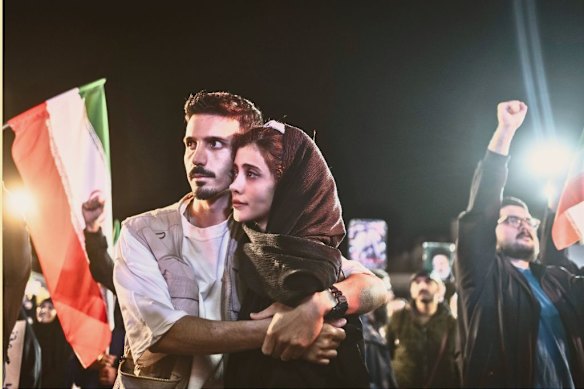
These have been extraordinary times in Iran, home to more than 90 million people. There’s now an eerie pause after wave upon wave of air attacks left plumes of smoke staining the air, black raindrops, apparently the result of strikes on oil facilities, leaving a slimy residue on streets and windscreens in Tehran. In the city of Isfahan, fragments of mirror shattered by shockwaves litter an ancient palace. The two-week ceasefire already looks fragile, however, a peaceful outcome still far from certain.
Donald Trump’s reasons for joining Israel in attacking Iran on February 28 have not been made entirely clear. But the allies’ aims appeared to include forcing regime change, presumably hoping for a moderate government friendlier to Western and Israeli interests, or weakening the incumbent regime so severely it might no longer be a regional threat.
As the conflict wore on commentators were even speculating that Iran, its leadership decapitated, its critical infrastructure decimated, could become a “failed state” – a term coined by Americans in the early 90s to describe a nebulous existence where government control collapses, leaving a population in chaos.
Trump’s rhetoric has seemed to support this outcome. He promised, before the ceasefire, to bomb Iran “back to the Stone Ages” and, as the deadline for negotiations approached, he threatened: “A whole civilisation will die tonight, never to be brought back again.”
Over the years, neighbours such as Syria, Lebanon and Iraq, riven by internal strife and foreign interventions, have found themselves teetering, or are still teetering, on the edge of institutional failure; nearby Yemen, home to the Iran-supported Houthi militia, remains imperilled by civil war.
If Iran, one of the Gulf’s biggest gorillas, modern-day successor to the once-mighty Persian empire and regional challenger to Saudi Arabia, somehow “failed”, what would that look like? What can we learn from the world’s failed or “fragile” states?
What qualifies as a failed state?
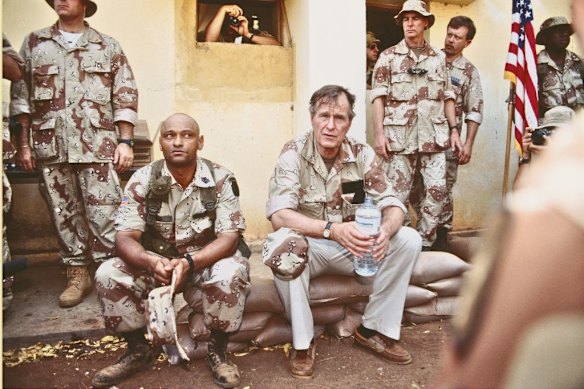
It was mid-afternoon on October 3, 1993, when US airborne forces, providing security to a broader UN operation delivering aid to war-torn Somalia, set out from Mogadishu International Airport on an ambitious snatch job. The targets were two high-ranking advisers to a powerful local warlord who was obstructing the distribution of food and had proven recalcitrant. There was a chance he would be grabbed too, forcing the issue.
Somalia had been riven by civil war for two years following the collapse of the last legitimate, albeit dodgy, government headed by the military dictator Siad Barre, who had fled overseas, leaving his people to suffer famine and chaos. Mogadishu, the capital, was now largely controlled by clan chiefs, policed by gunslingers armed with rocket-propelled grenades and AK-47 assault rifles.
This particular US mission was complicated. After an initial assault from helicopters, elite troops would shimmy down ropes to the ground to grab the bad guys then were to be scooped up by a convoy of armoured getaway vehicles – all in 30 minutes. What happened next was, for the US at least, a disaster, later recounted with fictional embellishment in the movie Black Hawk Down.
Militia fighters shot down two of the US helicopters with rockets and waged an overnight battle that cost 18 American lives, believed to be the most US fatalities in a single engagement since Vietnam (although Somali casualties were estimated to be much higher).
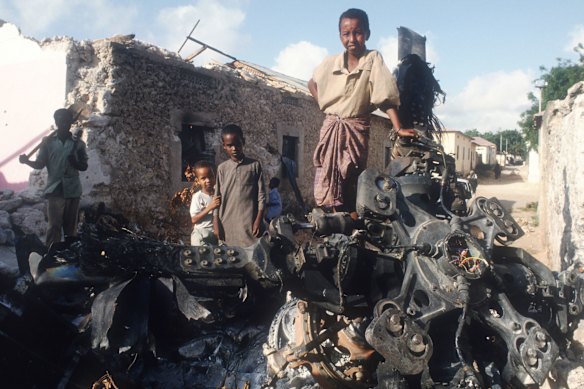
Not long after, under the weight of public disapproval back home, the US withdrew its forces, leaving the floundering nation and its warring factions to their own devices.
When The New Yorker’s Jon Lee Anderson visited Mogadishu much later, in 2009, to meet with the then-new and hopeful president, Sharif Sheikh Ahmed, things were still precarious (reflected in the title of his subsequent article, “The Most Failed State”). Peacekeeping troops (volunteers from other African nations) controlled the presidential compound, the airport and the port but not much else; fighters from a fearsome group of Islamist guerrillas called Al-Shabaab (“the youth”) roamed freely. “Somalia remains an open battlefield,” Anderson wrote. “Most buildings had either been wrecked, like the cathedral, or, like the old parliament, had vanished.”
‘A failed or failing state is one that … has weak or almost nil capacity to provide for the basic needs of its people.’
Lavina Lee, University of SydneySomalia, still yet to truly find its feet, is often held up as an archetype of a “failed” state, a term used to describe a nation where the central government is nonexistent, or has minimal control, and central authorities are unable to provide basic services. Says Lavina Lee, director of the Foreign Policy and Defence program at the University of Sydney: “A failed or failing state is one that doesn’t have control over the monopoly of the legitimate use of force, that has weak or almost nil capacity to provide for the basic needs of its people.”
While many states have, historically, “failed” for numerous reasons, the term in modern times refers to states that have typically struggled either because they have not been able to reconfigure robustly after years of colonial rule, instead sliding into internal power disputes; and/or because of external forces (more on which shortly); or because they have been abandoned by wealthier allies. “The Soviet Union stopped aiding client states after it ceased to exist,” noted The Economist in 2021. “America ceased propping up dictators solely for being anti-Soviet … Without patrons with deep pockets, several regimes were toppled, and some states slid into anarchy.”
In such a failed state, people are likely to live under the threat of criminal violence if not outright civil war. What government remains is often unable to maintain its borders. Much of the population is likely to be dispersed, either as refugees within the country or fleeing elsewhere.

As Robert I. Rotberg, a scholar of international affairs who worked on a five-year project on state failure for Harvard University and the World Peace Foundation, writes: “Once the downward spiral starts in earnftoughest … corrupt autocrats and their equally corrupt associates usually have few incentives to arrest their state’s slide, since they find clever ways to benefit from impoverishment and misery. They end judicial independence, block civil society, and suborn the security forces.
“The rulers demonstrate more and more contempt for their peoples … Many of these leaders drive grandly down their boulevards in motorcades, commandeer commercial aircraft for foreign excursions, and put their faces prominently on the local currency, on airports and ships, and on oversized photographs in public places.”
‘You have resilient states on one end, fragile states in the middle and failed states on the other end.’
Lavina Lee, University of SydneySome academics today prefer the term “fragile” to describe all struggling nations. “I see it as a spectrum of state strength and weakness,” says Lavina Lee. “You have resilient states on one end, fragile states in the middle and failed states on the other end.”
The opposite of a failing or fragile state is a stable state, not necessarily just affluent and peaceful but able to endure crises – such as fuel shocks or pandemics – without descending into disarray. “We [Australians] live in a strong state,” says Lee. “We have things like the monopoly on the legitimate use of force by the government. We have a state that has the strong capacity to provide for the basic needs of the people and to actually extract taxes in order to do that. And then you’ve got the monopoly on the creation and enforcement of rules and institutions, court systems, the law.”
Why are so-called failed states such a worry?
As Somalia collapsed into anarchy in 1991, failed states increasingly began to be seen as a risk to US interests. Instead of the spectre of aggressive governments challenging US hegemony, it was now the threats of terrorism and radicalism, flowering in largely uncontrolled territories, that came to be seen as paramount concerns.
The journal Foreign Policy was one of the first to use the term, in 1992-93 identifying what it said was “a disturbing new phenomenon … the failed nation-state, utterly incapable of sustaining itself as a member of the international community.” It cited as examples Somalia, Sudan, Liberia, Haiti and the “remnants” of Yugoslavia, which broke up between 1990 and 1992.
“It is becoming clear that something must be done,” wrote authors Gerard Helman and Steven Ratner, citing the “massive abuses” of human rights that tended to be seen as nations fell into anarchy but also noting “the need to help those states is made more critical by the evidence that their problems tend to spread”.
Not long after, Madeline Albright, a future US secretary of state who was then the US ambassador to the United Nations, also used “failed state” to describe Somalia, writing in The New York Times in defence of the ongoing UN action there. “Success is important not only for the Somalis,” she wrote, “but also because anarchy may produce refugees, uncontrolled arms peddling and targets of opportunity for terrorists and their state sponsors.”
‘It was probably the most important and consequential change in US national security strategy.’
Levi West, ANUThe CIA decided this was such a concern that in 1994 it funded a long-term research project at the University of Maryland called The State Failure Task Force, seeking to identify the causes of state failure, which it defined as “a relatively new label that encompasses a range of severe political conflicts and regime crises exemplified by events of the 1990s in Somalia, Bosnia, Liberia, Afghanistan and the Democratic Republic of Congo (Zaire).” A US national security strategy paper from 2002 subsequently argued that “America [was] now threatened less by conquering states than by failing ones.”
The administration of George W. Bush was heavily informed by this notion, says Levi West, an authority on terrorism and counter-terrorism at ANU: that states with what he calls “alternate governance arrangements” were likely to become breeding grounds for terrorists. “Therefore, we needed to go and ‘bring light to the dark corners of the world’, so to speak, to turn these into stable, functional governing arrangements so that there’s law enforcement capability to stop all of the terrorism. It was probably the most important and consequential change in US national security strategy.”
By then, the notion of “state failure” had become common in foreign policy discourse, observed the international affairs scholar Charles T. Call in Third World Quarterly in 2008; he criticised it as a vague catch-all that he considered counterproductive. The US Carnegie Endowment for International Peace also funded several research projects on the subject; in the UK, the Overseas Development Institute still focuses on researching aid delivery to what it calls “fragile states”.
What does it mean, in practice, to label a state failed?
Once identified as a risk the challenge for the US and others seeking to intervene in a “failed” state has been how to do so effectively, Somalia an object lesson. Says Levi West: “Are we trying to make it into a functioning, thriving liberal democracy? Or do we just need it to be stable enough and capable enough that it’s not going to result in terrorist attacks against our people, either in that part of the world or in the West? Or are we just getting it to a stable enough position where we can extract resources from it?”
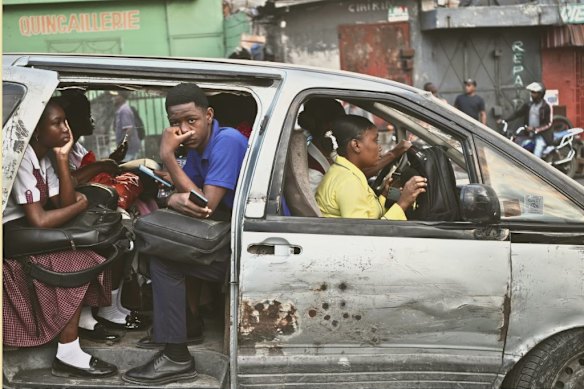
Of course, it can be argued that US “interventions” (and those by other powerful nations) have often been responsible for creating the conditions for failure to happen in the first place: the CIA’s backing of the successful coup-d’etat against Haiti’s first democratically elected president, Jean-Bertrand Aristide, in 2004, certainly contributed to decades of political instability that led, eventually, to today’s humanitarian crisis.
Sending a US-led coalition of forces into Afghanistan in 2001, after the attacks on September 11, 2001, to topple the Taliban – which was harbouring the terrorist organisation al-Qaeda – was initially successful. The Islamist regime was replaced with an interim administration. Yet the coalition was unsuccessful in eradicating the Taliban and al-Qaeda, whose fighters waged a destructive but ultimately successful 20-year guerilla war against Western forces. The US withdrew the last of its forces and ceded the now-shattered nation back to the Taliban, on August 30, 2021.
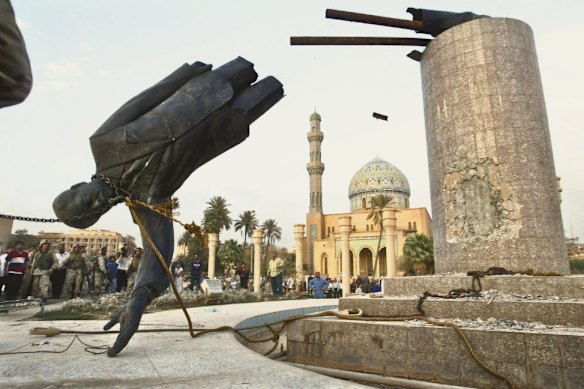
The US invasion of Iraq in 2003, sold to the public as a hunt for non-existent weapons of mass destruction, did topple the regime of the dictator Saddam Hussein but led, again, to decades of political instability that endure today.
‘Day-to-day life for many people in crisis-affected countries such as Haiti, Sudan and Afghanistan is an insanely tough mix of ingenuity to survive.’
James Elder, global spokesperson UNICEFTo wit: it is certainly possible for a mighty nation like the US to initially impose its will on a smaller one, but it’s significantly harder to implement and maintain a stable government in the aftermath. “There’s a lot of assumptions that it is a thing that can be resolved or fixed by a military intervention,” says West. “Afghanistan and Iraq have probably demonstrated that actually that’s not really true.”
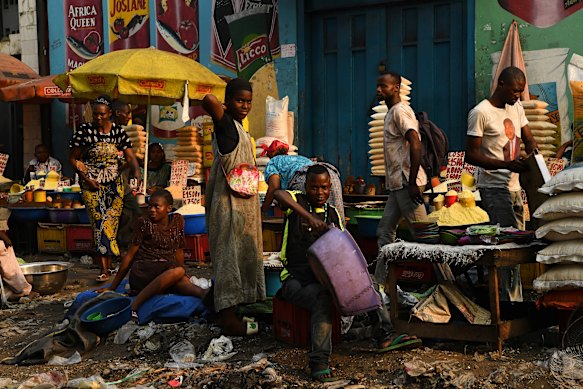
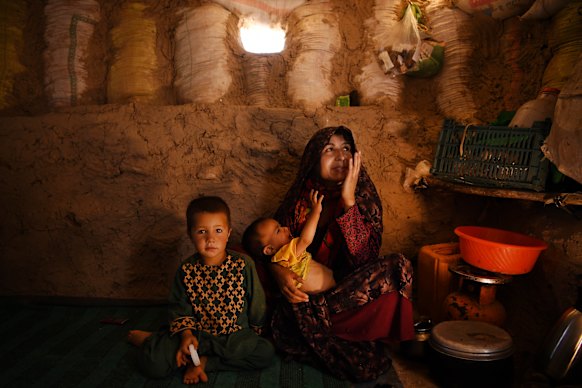
Terrorism and crime aside, failing states typically also trigger humanitarian catastrophes. “Day-to-day life for many people in crisis-affected countries such as Haiti, Sudan and Afghanistan is an insanely tough mix of ingenuity to survive,” says James Elder, global spokesperson for UNICEF, the United Nations agency dedicated to protecting the wellbeing of children.
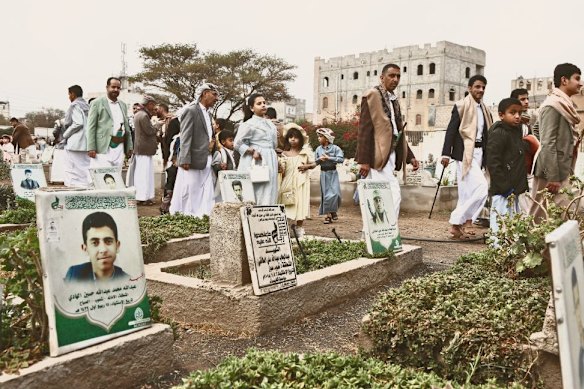
In war-torn Yemen, according to the aid group Oxfam, some 4 million people have been displaced by fighting, more than half of the population does not have enough to eat and diseases such as cholera are rampant. Some 2.5 million Syrians fled the 2011 civil war into Turkey with another 1.5 million into Lebanon – placing “enormous strain” on its public services, according to the UNHCR – while those left at home faced severe shortages of essential supplies. In Iran, in mid-March, 3.2 million people were estimated to have been temporarily displaced by the conflict. In fact, UNICEF says more than one in six children globally either live in a conflict zone or are fleeing from one.
‘There comes a point where trauma reaches a critical mass, where entire communities exist in a state of shock and awe.’
James Elder, UNICEFFailing states offer little or no safety net to populations who have lost their livelihoods or are displaced due to internal conflicts, famine or drought. “Families fall back on small trade, family-to-family agriculture, casual labour and remittance networks to meet basic needs,” says Elder. “Communities still have strong social cohesion, so they share limited resources. But the reality is many households are not able to ‘make do’.” Eventually, he says, “There comes a point where trauma reaches a critical mass, where entire communities exist in a state of shock and awe. There is only so much you can endure.”
Note, though, that some academics argue that a state’s “failure” can depend on a Western definition of success, such as a functioning democracy, which might trivialise the effectiveness of power structures outside the reach of more recognised authorities. In Lebanon, for example, in some areas the listed terrorist organisation Hezbollah and its members of parliament provide government-like services, such as funding health and education, where the actual government does not.
“Fragility is not shorthand for ‘chaotic poor countries’,” observes Bridi Rice, CEO of the Development Intelligence Lab, a Canberra-based think tank. “But it is true that some countries have more sources of fragility than others. In a fragile state, shocks hit harder and people suffer more because institutions, politics, economies or social cohesion are not strong enough to absorb them.”
Which states are “fragile” today?
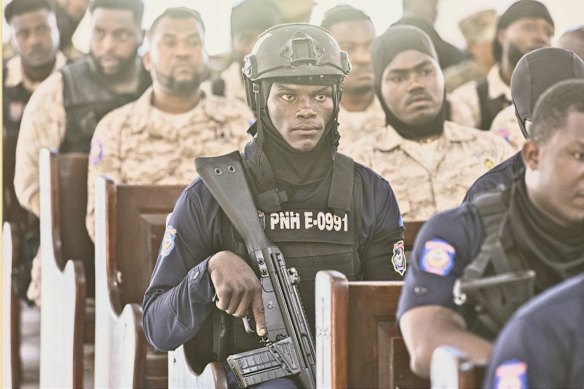
Certainly at risk of failing is Haiti, which has not had presidential elections for a decade and is slipping into anarchy, over-run by criminal gangs that threaten its sovereignty, its police forces beleaguered. It currently hangs on the success of a United Nations intervention, a “Gang Suppression Force” that will eventually number some 5500 troops to tackle the criminals, who control as much as 90 per cent of the capital, Port-au-Prince.
Yemen’s civil war, which began in 2014 when Houthi rebels took the capital, Sanaa, broadened into a regional crisis with Iran, the US, the United Arab Emirates and Saudi Arabia intervening. Sudan’s internal conflict has also at times morphed into a struggle for control by several outside nations with Egypt, Saudi Arabia, Qatar, the UAE and others linked to one or other of the two main warring factions, seeking to shore up their interests in the region.
Cuba, suffering an energy shock and the increasing inability of the state to provide essentials for much of its populace is in a precarious spot, in no small part thanks to decades of US trade embargoes and now Trump’s oil blockade.
‘That failure to control territory has enormous implications for regional stability.’
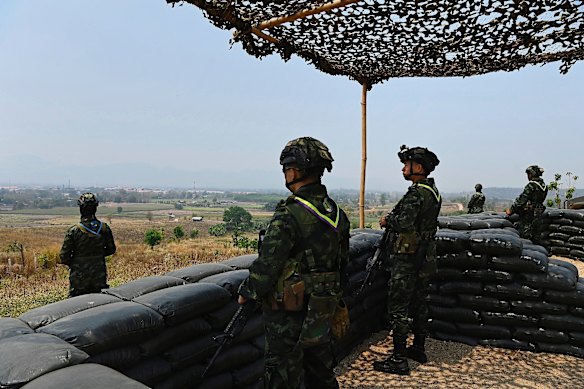
Dara Conduit, University of MelbourneSo too Myanmar, where the civil war endures, displacing millions, and opium production is booming after a decline in production in Afghanistan under the Taliban. Says Lavina Lee: “You’ve got parts of Myanmar on the Thailand border where organised crime syndicates have taken control over pockets of territory and trafficked people who are slaves to these scam syndicates.”
Colombia’s government, nominally stable, has at times been unable to control much of its territory, ceding it to guerillas and drug cartels; extremist Islamists, meanwhile, have flourished in contested territories – Somalia’s Al-Shabaab, al-Qaeda in Afghanistan and Pakistan, parts of Africa such as Mali, where the UNESCO-protected city of Timbuktu was briefly laid siege in 2023 by the al-Qaeda affiliate Jama’at Nasr al-Islam wal Muslimin.
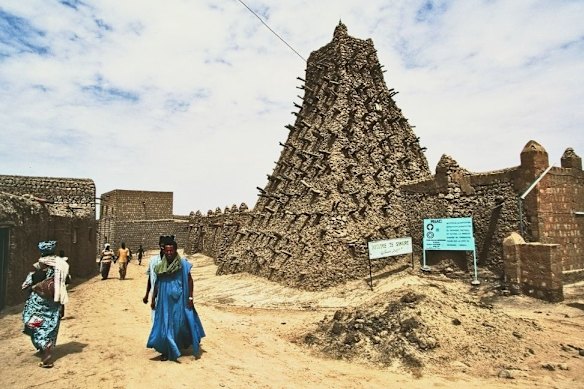
“That failure to control territory has enormous implications for regional stability,” says Dara Conduit, an expert on authoritarian regimes at the University of Melbourne. Syria’s civil war, in particular, “allowed groups such as the Islamic State to thrive.” Iraq also remains fragile, although “it’s not a failed state,” says Conduit. “There’s some extent of law and order there. But the situation in Iraq has had significant consequences for regional stability as well.”
Somalia’s new-ish federal government has made some progress towards re-establishing a coherent state but, according to Freedom House, is still handicapped by competing demands for control from semi-autonomous regional governments, an outright separatist government in Somaliland, and by the ever-present threat of attacks by Islamist militants. “Political affairs remain dominated by clan divisions,” it notes.
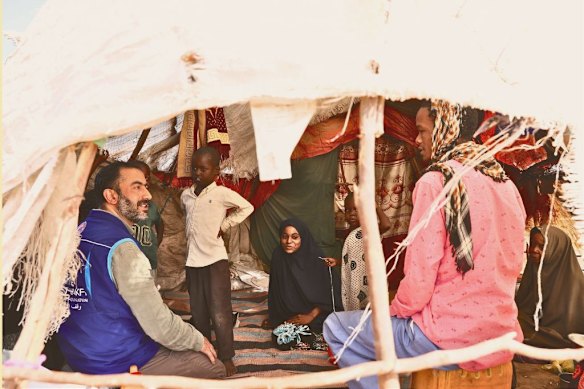
Consequently, Somalia tops the most recent annual ranking of “fragile” states compiled by the not-for-profit Fund for Peace, generally accepted as the most comprehensive index of its kind. It aggregates a dozen major indicators (such as violence, grievances between different groups, human rights, economic stability, refugees and provision of services such as sanitation and education) to rank 179 countries from most fragile to most secure. Joining Somalia in the top 10 most fragile (using data from 2024) were, in order, Sudan, South Sudan, Syria, The Democratic Republic of the Congo, Yemen, Afghanistan, Central African Republic, Haiti and Chad. Myanmar was 11th, Mali was 14th.
On the other side of the fund’s ledger, Australia ranked 11th-most stable behind the Netherlands, Luxembourg, Canada, Ireland, Switzerland, Denmark, New Zealand, Iceland, Finland and, least fragile of all, Norway. The UK was the 31st-most stable, seven spots ahead of the US.
‘Increased fragility in the Indo-Pacific is a direct threat to Australia’s national interests, both economically and in security terms.’
Bridi Rice, CEO Development Intelligence LabIn our immediate neighbourhood, Papua New Guinea stands out as the most “fragile” state, which is no surprise to Bridi Rice, who lived there for several years. “Whether you agree with the fragile state label or not, Papua New Guinea is facing a convergence of pressures including violence, insecurity, corruption and declining human development outcomes,” she says. “Increased fragility in the Indo-Pacific is a direct threat to Australia’s national interests, both economically and in security terms. Fragility should be read as a strategic warning light.”
At 43rd on the index, Iran, meanwhile, ranked as less fragile than Turkey (41st), though recent events may see that change, beginning with the economic stresses that sparked nationwide protests in January, which then triggered a brutal crackdown that saw many thousands killed.
There are few signs, though, that the regime is about to collapse. “The Iranians are doing a very good job of both weathering this [war] and imposing significant costs, not just on the US administration but on the rest of the world,” says Levi West. Lavina Lee concurs. “President Trump is very open about the fact that he has been surprised that the Iranian regime has been more resilient than they expected, that the security apparatus is still intact, that it might be severely degraded, but we don’t see any signs yet of significant defection within the regime,” she says. “But it’s not over. Even if there’s not a complete collapse of the regime, given that so many leaders have been assassinated, there’s a high degree of possibility there’s going to be an internal power struggle there, and we might not know what the outcome of that would be.”
Get fascinating insights and explanations on the world’s most perplexing topics. Sign up for our weekly Explainer newsletter.

















































