3 months ago
9
3 months ago
9
‘Everyone knows the hierarchy’: The selective school that attracts the most top-performing students
At the start of the decade, the NSW Department of Education stopped publishing cut-off scores for selective schools. It said they were confusing to students, while parents erroneously believed the scores reflected the academic excellence of the school.
Since scores were no longer published, education analysts observed tutoring companies exhibiting the “worst of behaviour”, using the information vacuum to prey on parents and spruik their services. Others said the traditional selective school hierarchy, with James Ruse Agricultural High School at the top, would be upended.
Five years later, 2025 NAPLAN scores released on Wednesday reveal James Ruse still has the smartest year 7 students, achieving the top combined score across NAPLAN tests for reading, writing, spelling, grammar and numeracy.
The tests were held in March this year, meaning year 7 students had been at high school for only about six weeks before sitting the exam.
While James Ruse and North Sydney Boys topped numeracy, single-sex schools Hornsby Girls and North Sydney Girls performed the best in the writing component of the test.
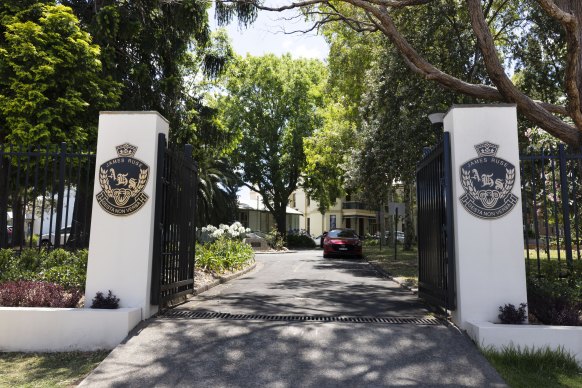
James Ruse Agricultural High School has the top-performing year 7 students.Credit: Jessica Hromas
University of Technology Sydney social scientist Christina Ho, who has studied selective school students and parents, said the popularity of top schools such as James Ruse was enduring because they consistently delivered results for students.
“It is so obvious,” she said. “Everyone knows the hierarchy – there’s a lot of media attention at the end of every year. Everyone knows the league tables reflect the cut-off points … the consistency is really powerful for parents who are looking for the best.”
School choice for parents, Ho said, was motivated by the prospect of a high ATAR when deciding on a selective school in a bid to get into what they perceived as a more prestigious university degree such as medicine or law.
“The percentage of students aiming for medicine is more than 50 per cent in some cases. Why? It is because it is hard.”
Loading
“The fact the year 7 NAPLAN results are so similar to the HSC leaderboards of the schools makes you wonder how much value add they’re providing to the students.”
Under the changes, parents were not told about specific cut-off marks for schools and were instead given broad “performance bands”. Tutoring companies triangulated performance bands and offers made to individual students to create their own league tables, albeit without precise scores.
The Australian Tutoring Association’s Mohan Dhall noted that North Sydney Boys placed fifth in year 7 NAPLAN despite placing first in the state for the HSC last year.
“Any school which is moving must be doing something different,” he said. “You can actually measure that North Sydney Boys has better added value.”
University of Sydney Professor Jim Tognolini, director of the Centre for Educational Measurement and Assessment, noted the selective schools test was designed to discern and rank the ability of gifted students and was fundamentally different to NAPLAN.
“The NAPLAN scores are designed for the total population and be able to describe what students can do at this stage on this day,” he said.
In October, the Department of Education revealed plans to radically overhaul selective school admissions by allocating an equal number of places for girls and boys from 2027 in a bid to boost the proportion of girls enrolled in the system. Girls make up just 20 per cent of students in some primary school opportunity classes.
It came after the department announced in 2022 it would set aside 20 per cent of selective school places for students from disadvantaged backgrounds.
The Morning Edition newsletter is our guide to the day’s most important and interesting stories, analysis and insights. Sign up here.
Most Viewed in National
Loading