3 months ago
21
3 months ago
21
Editorial
December 2, 2025 — 5.00am
December 2, 2025 — 5.00am
Nearly four years since taking office, the Albanese government is to end the Defence Department’s sorry history of procurements that turned multibillion-dollar cost blowouts and long delays on major projects into a kind of military tradition.
The Herald’s foreign affairs and national security correspondent, Matthew Knott, reports that the biggest reform in 50 years will strip the department of responsibility for delivering major projects, cut dozens of high-ranking positions and establish a Defence Delivery Agency that will report directly to ministers with control of the budget for major acquisitions.
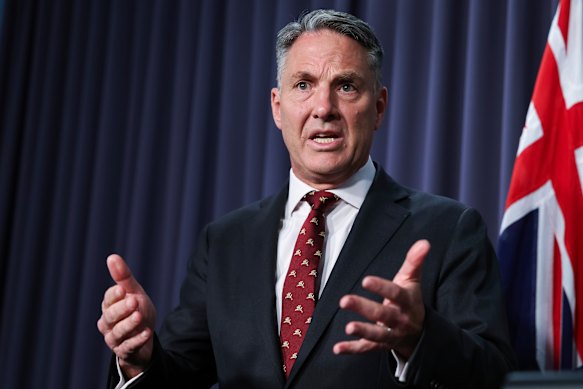
Defence Minister Richard Marles during a press conference in Canberra on Monday.Credit: Alex Ellinghausen
Defence Minister Richard Marles came under withering fire from the opposition and defence experts last year when a report documented huge program delays covering some of Australia’s most lucrative contracts. Former opposition defence minister Andrew Hastie called the Albanese government particularly weak on national security.
But the blowouts occurred mostly during Coalition governments and, foreshadowing the changes last June, Marles attacked his predecessors’ failures, saying when Labor came to government, there were 28 different projects running a combined 97 years over time.
Announcing the reforms, Marles said defence spending was the largest in Australia’s peace-time history. “What comes with that is an obligation to ensure that this money is spent well,” he said. “It will greatly improve the quality of the defence spend, and it will make sure that as we spend more money in the defence budget, we are doing so in a way which sees programs delivered on time and on budget.”
Loading
Despite long-standing concerns that the department was bloated, top-heavy and risk-averse, it escaped oversight almost as a tradition. Among some of the most egregious procurement scandals: during the early years of the Vietnam War, the late Herald journalist Alan Ramsey famously reported that the Menzies government had so run down defence spending that troops were kitted out with World War II issue clothing; the $3.5 billion MRH90 Taipan helicopter was such a lemon that the entire fleet was grounded and eventually scrapped in 2023; and last year the order for the troubled $45.6 billion Hunter-class frigates project was cut from nine to six following concerns about firepower.
Shortly after Labor won the 2022 election, the Defence Strategic Review warned that China’s claims of sovereignty over the South China Sea threatened the global rules-based order in the Indo-Pacific in a way that adversely impacted Australia’s national interests.
One consequence is that the Department of Defence’s current budget of $56 billion a year will rise to approximately $100 billion by 2034. In the four years since committing to spend up to $368 billion over 30 years on the AUKUS program, Australia has drifted into the orbit of the US military-industrial complex and the Trump administration has demanded we spend more on our own defence.
The Defence Strategic Review made 62 recommendations for defence acquisitions, prioritising nuclear-powered submarines and artificial intelligence, hypersonics and longer-range missiles.
In such circumstances, and given the Defence Department’s sorry history, surely getting a better bang for your defence buck is an imperative.
Get a weekly wrap of views that will challenge, champion and inform your own. Sign up for our Opinion newsletter.
Most Viewed in Politics
Loading