3 months ago
16
3 months ago
16
Two decades after algal blooms choked Moreton Bay, burning the skin of fishermen who tried to clean it from nets, and rotting in huge sulfurous knots on beaches, experts say another bloom is imminent.
A huge surge in sediment and nutrients dumped in the bay over the past decade has provided the perfect food for algae. All that’s needed now is a hot dry summer.
In the early 2000s, a toxic algae called Lyngbya spread in blankets up to 40 kilometres across, doubling in size every five days. It closed beaches and befuddled scientists. Its capacity to burn skin earned it the nickname fireweed.
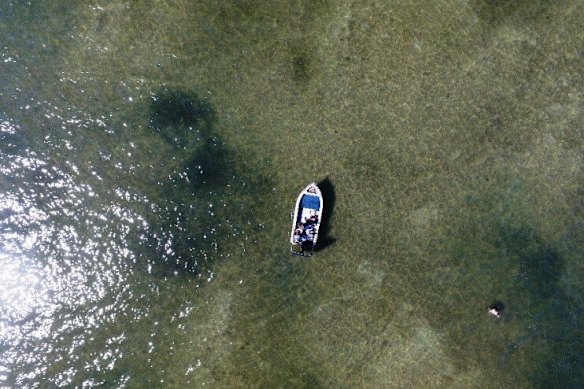
Remnants of blooms past — black clumps of Lyngbya in Moreton Bay.Credit: The Moreton Bay Foundation: Stephen Faggotter
To better understand how it happened a body was established to monitor water quality around south-east Queensland.
Twenty-five years later, a report from that body carries a warning.
“We are starting to see our nutrient levels increase again across most of the catchments but especially the bigger ones,” Healthy Land & Water chief executive Julie McLellan said.
“Definitely, the risk has increased.”
Professor Fran Sheldon, head of Griffith University’s School of Environment and Science, said the more sediment ends up in the bay the more likely a bloom becomes when conditions change.
“If it’s not this year it could well be next year,” she said.
These days, the bloom annihilating marine ecosystems off the South Australia coast has people talking about the phenomena, but McClellan said many people don’t remember a similar event that took hold of in south-east Queensland.
“I was talking to a couple of journalists, and they were asking: could it happen here? And I said, it did happen here,” she said.
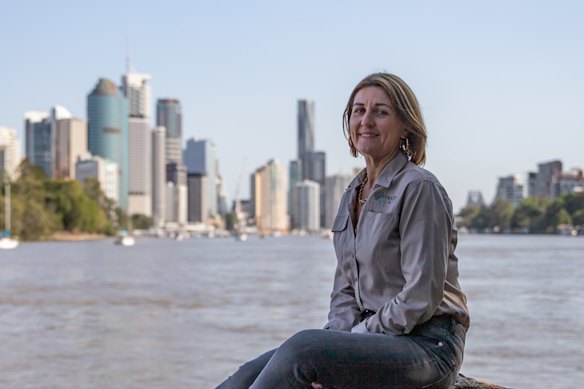
Healthy Land & Water CEO Julie McLellan.Credit: Healthy Land & Water
Today, Healthy Land & Water reports capture the health of waterways from the upper-reaches of the Lockyer near Toowoomba, as far north as Noosa all the way down to the New South Wales border.
Sheldon said it means Queensland was well-equipped to see the next bloom coming, but it would be what it does with that warning that matters.
“The next question is: What do we do about it? If it is mainly triggered by all the sediment that’s washing in on these big rain events like Cyclone Alfred and the 2022 rain dump, how do we switch that off quickly?” she asked.
“Well, the answer is, we probably don’t.”
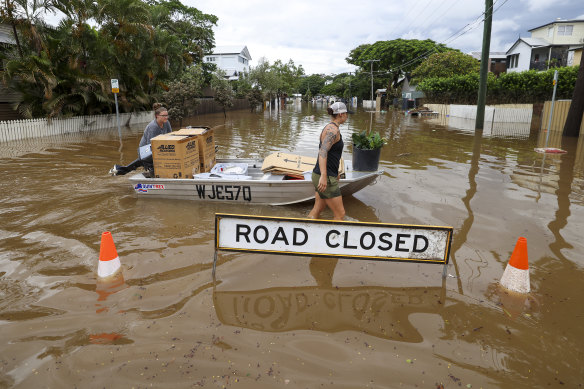
Major floods carry sediment and nutrients from all over the catchments into the region’s waterways. Credit: Peter Wallis
Lyngbya and many other algae are natural parts of the bay’s ecosystem – there is no telling which one, toxic or non-toxic, could bloom.
Experts say damage from housing developments and agriculture to riverbanks all over the catchments, quickens the flow of rivers during floods. While this mud actually limits the risk of an algal bloom while it hangs in the water, stopping light from getting to the algae, it carries nutrients the algae can feed off when conditions improve.
The Coomera, Logan and Nerang catchments were three of the hardest hit by Cyclone Alfred in March, as well as three of the most developed. All three recorded massive jumps in the amount of sediment they carried.
The Nerang River was the worst, jumping from 207 kilograms of mud per hectare of water in 2023 to 3734 kilograms in 2025.
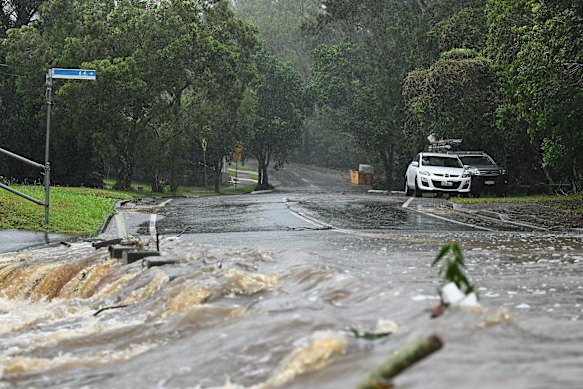
Ex-Tropical Cyclone Alfred was the latest storm to pump sediment into the bay.Credit: Getty Images
Sheldon said stopping these repeat hits to the bay will be much harder than stopping the nutrient issues illuminated by early Healthy Land & Water report cards, which were mostly sewage.
McLellan agreed, and said despite good policy and a genuine interest from all levels of government to repair riverbanks, not enough was being done.
“We’re putting it back, but not as quickly as we’re destroying it,” she said.
Start the day with a summary of the day’s most important and interesting stories, analysis and insights. Sign up for our Morning Edition newsletter.
Most Viewed in National
Loading