3 months ago
24
3 months ago
24
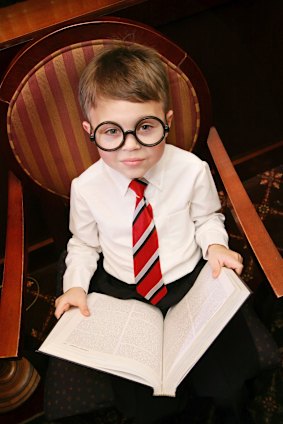
The judging panel for the new Children’s Booker Prize will include three children.
“Let the yelling commence,” says Frank Cottrell-Boyce, anticipating a wild rumpus in the judges’ room. And yes, there might well be a bit of yelling when three adults and three kids get together to judge the first Booker prize for children’s literature.
About time. This initiative, wonderful as it is, should have happened 54 years ago when British children’s publisher Judy Taylor first proposed it. “It is essential that the best writers should be encouraged to write for children,” she wrote. “A Booker prize might well achieve that.”
I don’t know why her proposal never got anywhere, but hey, better late than never. And the aim now is subtly different. Maybe the best writers no longer need encouragement to write for children (that distinction has never bothered authors such as Salman Rushdie or Philip Pullman), but children need encouragement to read more than ever before. This is a time when their reading for pleasure is at the lowest level for 20 years.
There’s a cute video on the Booker website showing young children in dress-up costume reading from adult books that have won the prize: it’s a reminder that many kids can read adult literature, at least in part, and are more than ready to tackle books for their own age group.
Of course there are already many awards for children’s books, but none carry quite the same prestige or attract the same hype as the Booker. This new prize, to be launched in 2026 and awarded every year from 2027, will offer £50,000 ($100,375) for the best fiction written for children aged eight to 12. As with the adult prize, it will be open to anyone with books published in the UK, so quite a few Australian writers will be eligible. Already it’s being hailed by children’s authors and publishers as an exciting and necessary venture.
Frank Cottrell-Boyce, the current children’s laureate in the UK, will join two other adult judges, and three child judges will also be recruited to judge the shortlist and choose the winner. He says working with child judges is “a terrifying prospect”, but the prize can “make a real difference to the lives of thousands of children”.
We don’t yet know what kind of world we are sending our children into, he says. “But we do know that they will need to know how to be happy. Reading – especially shared reading – really helps build the apparatus of happiness inside a child.” And perhaps best of all, the prize will tell kids that they matter.
There’s more to the Children’s Booker than just rewards for the winner and shortlisted writers: it’s part of a movement. Funding for the first three years will come from the AKO Foundation, which supports charities to improve education and the wellbeing of young people. Children will receive at least 30,000 copies of the winning and shortlisted books as gifts, and children will be consulted in further development of the prize.
Loading
I like Cottrell-Boyce’s story about how he became a writer for children. When he met the Swiss author and activist Mariella Mehr, who’d been brought up in brutal institutions, he asked her how she knew that she deserved better. Her answer was simple: “I read Heidi.”
As a child, I too read Johanna Spyri’s classic novel about a girl who lives with her grandfather in an alpine paradise. But then her strict aunt drags her off to a miserable town existence. With great spirit, she determines to get back to the mountains.
Books like these stay with us and can change our lives. Children deserve to get the best of them.
Most Viewed in Culture
Loading