3 months ago
10
3 months ago
10
Australian teenagers will wake to a new digital reality on Thursday when Meta begins systematically locking them out of Facebook and Instagram, marking the first wave of enforcement for the nation’s unprecedented social media ban.
Meta will block new accounts for those under 16 and revoke existing access from December 4, with all known underage users expected to be removed by December 10 when the law officially takes effect. Around 350,000 Instagram users aged 13-15 and 150,000 Facebook users will be affected, according to government figures.
The tech giant has already begun sending notifications to affected users. “Soon, you’ll no longer be able to use Facebook and your profile won’t be visible to you or others,” reads the message being delivered to accounts Meta believes belong to under-16s. Users are being urged to download their photos, videos and messages before permanent lockout.
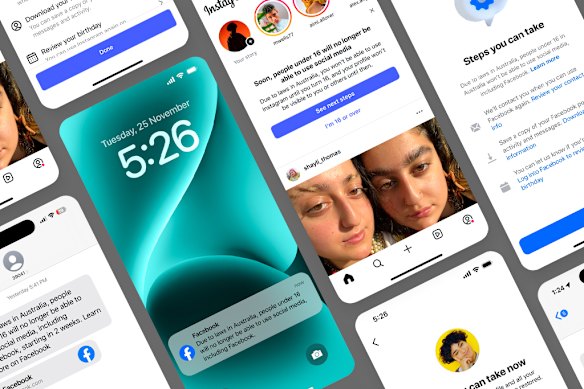
Messages Meta will send to account holders it suspects are under 16 before the social media ban starts on December 10.Credit: Matt Davidson
On Wednesday, YouTube also finally confirmed it would comply with the ban, though the platform made clear its frustration with the legislation. “We deeply care about the safety of kids and teens on our platform,” YouTube Australia’s public policy senior manager Rachel Lord said, calling it “a disappointing update to share”.
YouTube will automatically sign out all users detected to be under 16, though they’ll still be able to watch content without logging in. This means children lose access to subscriptions, playlists and wellbeing features such as break and bedtime reminders.
Loading
Lord criticised the government, saying the ban “won’t keep teens safer online” and describing it as “rushed regulation” that “misunderstands our platform and the way young Australians use it”.
Despite the imminent deadline, eSafety Commissioner Julie Inman Grant has set realistic expectations about what December 10 will look like. “I don’t expect that every single under 16 social media account will magically disappear,” she said in an interview for the Tech Policy Design Institute’s ‘Tech Mirror’ podcast.
Implementation will vary significantly across platforms depending on how effectively each company deactivates or removes underage accounts, she said. The eSafety Commission has launched an online hub with resources including fact sheets, action plans and practical guides on how to download Instagram, TikTok and Snapchat archives before accounts are deleted.
Communications Minister Anika Wells used a National Press Club address on Wednesday to warn there will probably be children under 16 with social media accounts for “some time” after December 10. With almost 86 per cent of Australian children aged between eight and 15 on social media, Wells said it would take time for the age assurance “sieve” to “filter out the existing accounts and stop new accounts from being created”.
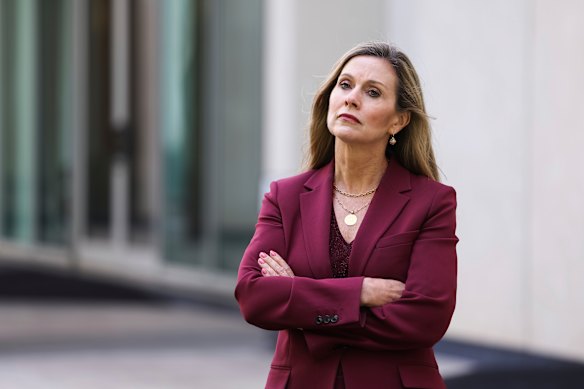
eSafety Commissioner Julie Inman GrantCredit: Alex Ellinghausen
“But our expectation is clear: any company that allows this is breaking the law,” she said.
Child rights advocate Amanda Third, who will serve on an independent academic panel evaluating the ban’s impacts, warned that many teenagers and their parents will be “a bit nervous about what lies ahead”.
“I think there’s a lot of unknowns,” Third told the Tech Mirror podcast. “One of the best things that people can do to prepare is to begin to have conversations at home about what it will mean to give up social media for those children and young people who are already on social media.”
There are no penalties or fines for parents or young people who find ways to continue using social media after the law takes effect. The onus is entirely on platforms to prevent access.
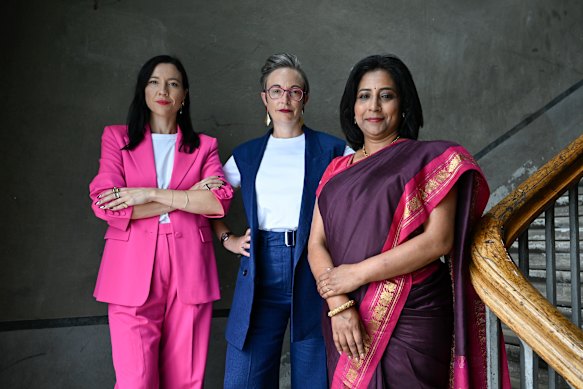
Zoe Hawkins, Johanna Weaver and Sunita Kumar launched the Tech Policy Design Centre.Credit: Martin Ollman
However, significant concerns remain about vulnerable young people who depend on social media for connection and support. Outgoing children’s commissioner Anne Hollonds has warned the ban could adversely affect children who already struggle to find belonging.
“The fear is that it might push them to darker places of the internet that have absolutely no protections for young people,” Third said. “If these young people perceive that what they are doing is illegal, they may be even less likely to seek help if they find trouble online.”
An independent evaluation panel of 12 academics will assess whether the ban achieves its intended outcomes, examining questions such as whether kids are sleeping better and interacting more with friends, as well as potential unintended consequences.
Already, alternative platforms are surging in popularity. The eSafety Commission has written to Lemon8 (owned by TikTok parent ByteDance) and photo-sharing app Yope, recommending they assess whether they fall under the ban after both apps shot to the top of app store charts.
Lemon8 has been running paid ads on TikTok promoting itself as an alternative, with one user post stating they “love lemon 8” because “it’s not affected by the social media ban and you can cross-post to TikTok”.
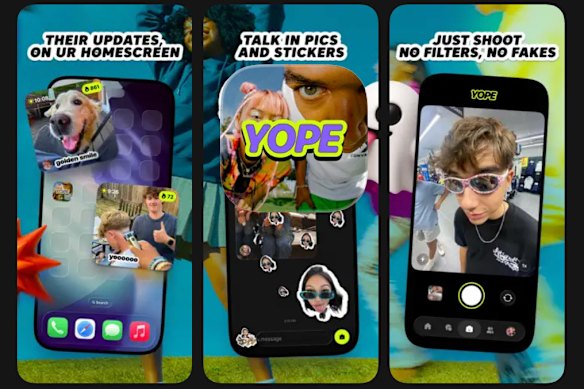
Yope has been around for a few years, and is a bit like Instagram except with private chatrooms instead of public posts and feeds.
The social media ban targets 10 major platforms: TikTok, Instagram, Facebook, Threads, X, Snapchat, Twitch, Kick, Reddit and YouTube. Companies face fines up to $49.5 million if they fail to take reasonable steps to prevent under-16s from accessing their platforms.
The law has also sparked a High Court challenge from the Digital Freedom Project, which argues it’s a “blatant attack” on young Australians’ constitutional rights to political speech.
On Thursday, Australia’s grand experiment in age-gating social media begins in earnest with the world watching to see if the strictest online restrictions for minors can actually work.
The Market Recap newsletter is a wrap of the day’s trading. Get it each weekday afternoon.
Most Viewed in Technology
Loading