3 months ago
17
3 months ago
17
The American military has offered to bring the Australian women and children of Islamic State back home from Syria, but the Australian government has blocked the move by refusing to issue them passports.
For six years, Liberal and Labor governments have refused to repatriate the bulk of the Australian citizens from camps in Syria, saying it would be too dangerous for public servants to travel there.
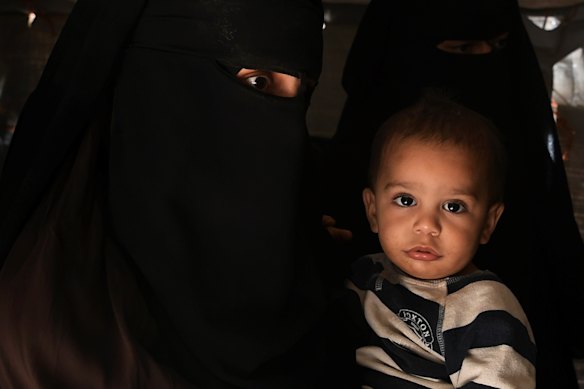
Australian Zahra Ahmed with her son Ibrahim in the al-Hawl camp in north-east Syria in 2019. Credit: Kate Geraghty
Documents released in estimates late on Tuesday now demonstrate that the 37 remaining women and children could be extracted by the American military without Australians having to set foot in the country.
An August letter to Home Affairs Minister Tony Burke, written by the representative of the families, Kamalle Dabboussy, and the head of Save the Children Australia, Mat Tinkler, says the families were prepared to “take control of their own destiny”.
“The US government has offered to provide support for repatriations … The support will be provided by Combined Joint Task Force Operation Inherent Resolve, Syria TCN Repatriations Team – a unit specifically designed to facilitate the repatriation of foreign nationals and with a track record of doing so safely and securely,” the letter said.
The Americans have long urged other countries to bring their own citizens home, with US Admiral Brad Cooper saying it was an issue of global security. He said in September that “repatriation reduces opportunity for extremist influence”.
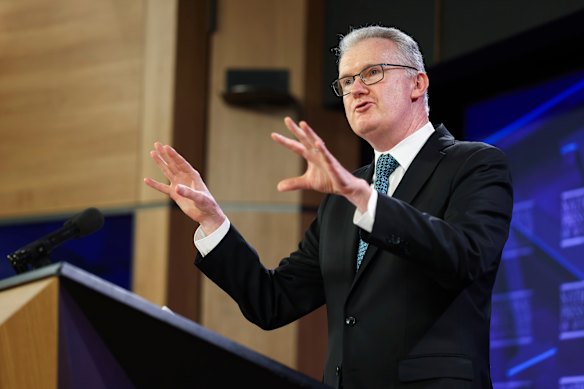
Tony Burke, minister for home affairs, immigration and citizenship.Credit: Alex Ellinghausen
“Repatriating vulnerable populations before they are radicalised is not just compassion – it is a decisive blow against ISIS’ ability to regenerate,” Cooper said. “The United States will continue supporting ... all nations committed to bringing their citizens home.”
However, a pre-condition of any US military repatriation of the Australians would be that they have current passports, and the Australian government has consistently refused to issue them.
The August letter from advocates to the government suggested a number of ways this could happen, including having the documents issued from an Australian consular point in Iraq and taken by the Americans, or that they be issued in Australia and then conveyed by a lawyer or family representative to Syria.
Dabboussy, one of the authors of the letter and the father of a woman brought back to Australia in 2022, told this masthead the government had not responded to their letter.
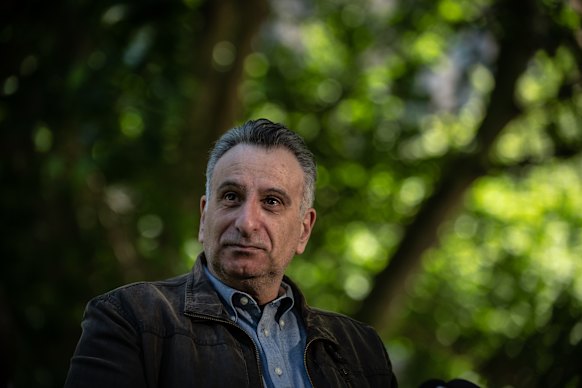
Kamalle Dabboussy speaking after his daughter, Mariam, was brought back by the government in 2022.Credit: Flavio Brancaleone
The letter was sent as a follow-up to a meeting in June between Dabboussy, Tinkler and the minister. The notes of that meeting, released to parliament, show Burke refusing direct requests to help the women and children return home.
“Government doesn’t have a plan to get people out of the camps at this time. If people are able to get out [themselves], there are no blockages to them returning,” he is recorded as saying.
This is a reference to long-held government policy that if people can pay people smugglers and get themselves out of the camps and to an Australian embassy, the government will have no choice but to issue passports.
Loading
In September, a group of six women and children managed to do this, escaping the Al Roj camp and finding their way to the Australian embassy in Lebanon. The government is legally obliged to provide passports to Australian citizens who validly apply for them.
The documents reveal another meeting between Burke and the advocates in August last year – before the federal election. Again at that meeting, he declined any help to the women and children.
Hand-written notes from that meeting, which in some respects are cryptic, indicate it was too difficult politically.
“Politics harder at this end of term,” says one note attributed to “TB” – or Tony Burke. “Public pressure makes it harder. Don’t want govt [sic] to rule it out.”
The note suggests Burke is personally sympathetic to calls to bring the women and children home, but that it would be too politically unpopular to do so, and that if the advocates seek to put pressure on the government through public advocacy, it would damage their cause.
The opposition has alleged since the six returned to Australia in September that the government had conspired to secretly return them.
They seized on Wednesday on another line of the hand-written notes released to estimates that reads: “c’ment to [unreadable] find a way”. A government source, who was not authorised to speak publicly on this matter, said it could not be read as Burke offering a “commitment to find a way”.
However, opposition home affairs spokesman Jonathon Duniam told The Australian they “clearly suggest” a promise to help bring the women and children home.
In a statement, Burke said the notes “confirm what the government has always said. There was a request from Save the Children to conduct a repatriation operation. It was refused.”
Cut through the noise of federal politics with news, views and expert analysis. Subscribers can sign up to our weekly Inside Politics newsletter.
Most Viewed in Politics
Loading