3 months ago
9
3 months ago
9
England’s bowlers were cooked after one. And some tee times had been booked, so you can forget about more cricket.
McKenna made the radical point that the thousands of fans who had travelled to Perth in hopes of seeing cricket might have deserved more respect. In 1970-71, a washed-out Melbourne Test was replaced by what turned out to be the first one-day international.

Usman Khawaja and Steve Smith on the way to the course in January last year.Credit: Getty Images
More than 46,000 spectators got to see some cricket, and in a speech at the end of the one-dayer Sir Donald Bradman said: “You have seen history made.”
He wasn’t wrong. The lesser-known story was that England’s captain Ray Illingworth was furious the match was scheduled without consultation and angry that a seventh Test was added to the series.
He was less furious when England, by winning that seventh game, recovered the Ashes in Australia for the first time since Bodyline.
In December 1978, I was at a World Series Cricket day-night game in Sydney that was over before the dinner break. The West Indies were all out for 66 in 33.4 overs, and Australia knocked off the target in the 19th. Instead of going home without having seen the new SCG lights come on, we were treated to a second match.
The teams came out in coloured uniforms for the first time: Australia in canary yellow, the West Indies in coral pink.
Three weeks later, the coloured clothing was worn in a scheduled match. Nobody remembers the result of the extra game, but that wasn’t the point. The Packer organisation put the fans first. And the players seemed happy enough to play more cricket.
The implausibility of this happening in Perth, or even being seriously considered, says a lot about today’s approach to the game. Workloads, or their lack of, have to be micromanaged.
Superb golf courses have to be played. Fans have to be ignored. There are probably contractual prohibitions on anything spontaneous taking place after the rigours of a Test lasting 141 overs – not two days, but a day and a half.
I’m reluctant to join the pile-on against England, who, until the last quarter in Perth, appeared likely to win. If they turn around and win in Brisbane, or win the Ashes, there will be enough egg on enough distinguished faces to go around.
But it’s hard to get around the absence of cricket in their preparation and what it says about how they view the game.
They have scheduled extra net sessions in Brisbane, which is all very well if efficiency comes first: have a bowl, have a hit, get away for 18 holes.
It leaves out the rhythmic demands of playing actual games of actual cricket: the hours spent waiting to bat or ruing what you’ve done to get out; the hours in the field; the hours of doing
nothing.
England – and Australia too – are preparing for a game that swings on sudden bursts of energy, wickets falling in clumps, one explosive innings, a match decided in a session or even a few overs. It’s exciting to watch if you have a short attention span.
It also looks like a self-fulfilling system of shortcuts. We shouldn’t be surprised at the frankly atrocious standard of batting in Perth: it was what the teams practised for. And England practised much more intently for it than Australia did.
So we go on to Brisbane, where fans will hope they aren’t dudded like those in Perth. You really worry for those English tourists who have booked tickets for both.
Much focus has been placed, rightly, on England’s batting, but presumably they will be able to catch lightning in a bottle at some point and pile up a match-winning total in quick time or, better still, no time.
I thought their bowling should cause them real worry. Mark Wood, who had not played a game since February, was spent after eight overs in the first innings.
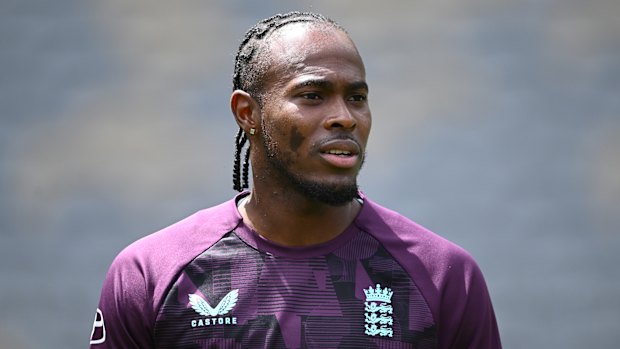
Jofra Archer and the England attack fatigued quickly in Perth.Credit: Getty Images
Jofra Archer was good for a Twenty20 spell with the new ball on the Friday, but that pretty much did it for him.
The lack of endurance should come as no surprise when the preparation consists of eliminating endurance in favour of efficient little bursts.
After the match, Wood considered driving from Perth to Brisbane until he found out that it might last five days.
Loading
If we get another abbreviated Test in Brisbane, whichever way it goes, the question must be asked more directly: do these players owe their fans more than lip service?
Ought a limited-overs match be staged on the missing day three or four? Nervous players and management tend only to see potential downsides: injuries, giving away their secrets, more damned cricket.
But as the 1971 and 1978 experiences showed, impromptu games delivered long-suffering spectators a measure of respect. A contract between players and fans existed.
And they might have just been a hit-around at the time, but both of those games created history. It’s a heretical proposal for sportspeople whose time is managed down to the minute, but sometimes a little more cricket can produce unexpected benefits.