3 months ago
20
3 months ago
20
By Tom Ryan
November 12, 2025 — 12.00pm
CINEMA
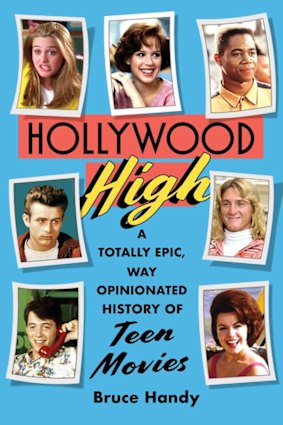
Hollywood High – A Totally Epic, Way Opinionated History of Teen Movies
Bruce Handy
Simon & Schuster, $61.99
Bruce Handy is a gifted writer, well-equipped to draw subtexts to the surface. Here he is on The Hunger Games: “When you create a futuristic dystopia organised around a televised blood sport in which teenage gladiators are forced to fight to the death, you have either wittingly or unwittingly created a pretty nifty metaphor for high school – the battlefields of The Breakfast Club and Mean Girls made literal.”
And on Twilight’s sexual politics, building on Bitch magazine’s description of it as “abstinence porn”: “The books and the films … create a kind of fantasy safe space where sexual desire, especially female desire, is acknowledged and even tacitly celebrated, yet also held in check for the good of all – with the twist here that it’s the boy who hits the brakes, acting as guardian of virtue rather than, per usual, the girl.”
It’s observations like these that lend Handy’s wryly titled Hollywood High – A Totally Epic, Way Opinionated History of Teen Movies its special spark. Tracking the genre’s evolution across eight decades, he proposes that it has much in common with the western, noting how “both deal with the struggle to establish order and fairness in an indifferent world, whether the prairie or the high school hallway, where the law, if not absent altogether, is only what whoever has seized power says it is”.
With this astute insight, a winning sense of humour, and a prose style graced by an impressive fluency, he persuasively steers us towards an appreciation of how teen movies need to be seen in the context of their times. On the one hand, as reflections of the social priorities and value-laden preoccupations of the culture that has spawned them; on the other, as models for their followers.
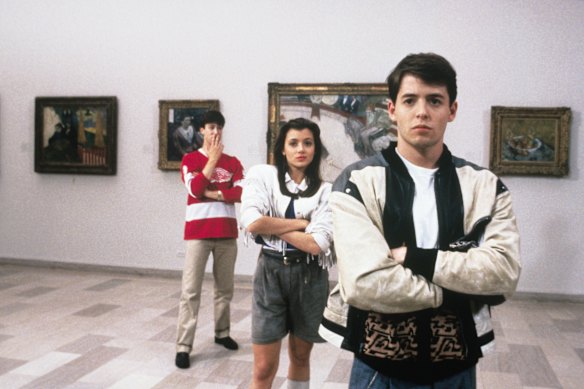
Allan Ruck, Mia Sara and Matthew Broderick in teen classic Ferris Bueller’s Day Off.Credit: Paramount
Handy begins with an exposition of the father-knows-best doctrine that rules the small-town roost in the “cheerfully mediocre” Andy Hardy films of the late 1930s and early ’40s. Starring Mickey Rooney, the 12-film series earned MGM a Special Academy Award in 1943 “for its achievement in representing the American way of life”.
But then came World War II and its aftermath, a time when media reports had kids vying with communists over who posed the greater threat to the state of the nation. Rooney’s Andy Hardy gave way to James Dean’s Jim Stark in Rebel Without a Cause, his cry of anguish to his parents – “You’re tearing me apart!” – reverberating across the 1950s. And with it, and other “troubled-youth” films (such as Blackboard Jungle), a threatening shadow was cast across the previously endorsed (not to mention illusory) American way of life.
Handypoints to the ways in which the films featuring teenage protagonists gradually evolved into teen movies as we’ve come to know them: populated by teenage girls and boys banding together tribe-like “to navigate the perils and insecurities of adolescence”, immersed in teen mores, and largely excluding authority figures. He also identifies the ways in which the genre has gone from being about kids who can’t wait to become adults to teenagers who’d prefer “to stay 17 forever”, as Ron Howard’s character puts it in American Graffiti.
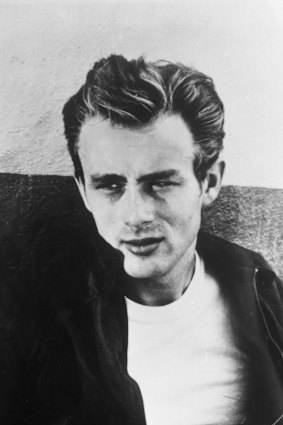
Original angst teenager James Dean.Credit: Hulton Archive
Handy is especially sharp about key filmmakers in the genre and the different approaches they’ve taken to their topics. “Nicholas Ray excavated teen angst [in Rebel Without a Cause] and George Lucas nailed high school social rituals [in American Graffiti],” he writes, “but both did so looking down from adult attitude. [Amy] Heckerling and [Cameron] Crowe observed their characters’ needs, moods and foibles [in Fast Times at Ridgemont High]. [John] Hughes plunges headlong into the muck [in films such as Pretty in Pink and Ferris Bueller’s Day Off].”
Extended commentaries about the films provide solid support for the conclusions he draws about each of their creators. And there’s also an abundance of fascinating background information: Ava Gardner, the first of Mickey Rooney’s eight wives, explaining why Lana Turner, who co-starred in Love Finds Andy Hardy, bestowed upon Rooney the nickname of “Andy Hard-On”; David Lynch confessing why he turned down Universal’s offer to direct American Graffiti; Francis Ford Coppola originally wanting to call that film Rock Around the Block; Molly Ringwald and Anthony Michael Hall retrospectively adjusting their view of their collaborations with John Hughes; John Singleton getting to make Boyz n the Hood against the odds…
Handy, who’s worked at Vanity Fair and for Saturday Night Live, says in the acknowledgements at the end of his book that it “was a pleasure to research and write (mostly)″, and the way he’s approached his material endorses this. Oozing enjoyment, his writing is affectionate and empathetic.
For anyone interested in the evolution of the teen movie or, for that matter, in savvy writing about the cinema, Hollywood High is a must-read. Smart, economical, entertaining and illuminating, it’s the best film book I’ve come across in ages.
Most Viewed in Culture
Loading