
 4 months ago
48
4 months ago
48
Melanie Lynskey has been Hollywood-based for so long that it takes something special to get her back to New Zealand, where it all started. When she read the screenplay for Pike River, a drama about a real-life mining disaster that claimed the lives of 29 men in the South Island in 2010, she knew she’d found it.
There was one scene in particular that spoke to her, in which grieving mum Sonya Rockhouse (Robyn Malcolm) describes Lynskey’s Anna Osborne, who has lost her husband in the explosion, as being soft on the outside but hard as rock on the inside.
“That’s one of my favourite lines,” she says. “I know what it feels like to be a soft-spoken feminine woman who people dismiss a little bit, and you’re like, ‘Well, I’m actually very strong and a little bit dangerous, you know’.”
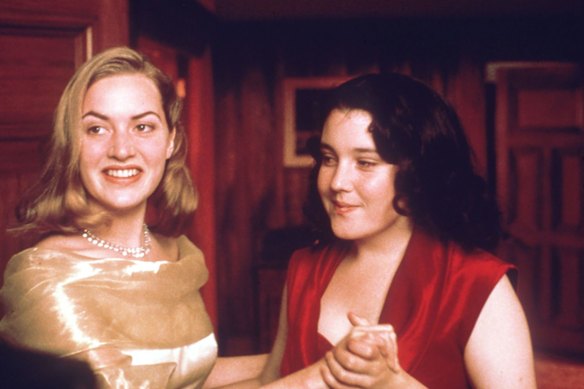
That description shouldn’t come as too much of a surprise to anyone who has followed Lynskey’s career since she and Kate Winslet made their film debuts in Peter Jackson’s Heavenly Creatures in 1994, playing a pair of murderous schoolgirls.
Teddy Roosevelt’s maxim “speak quietly and carry a big stick” kind of sums up the screen persona of the almost 49-year-old actor. Think of her in The Last of Us, in which she played homicidal gang leader Kathleen Coghlan, or as Shauna in Yellowjackets, carrying the psychological and emotional scars of what she did to survive after a plane crash in Alaska 25 years earlier, and what she’ll do to keep it secret.
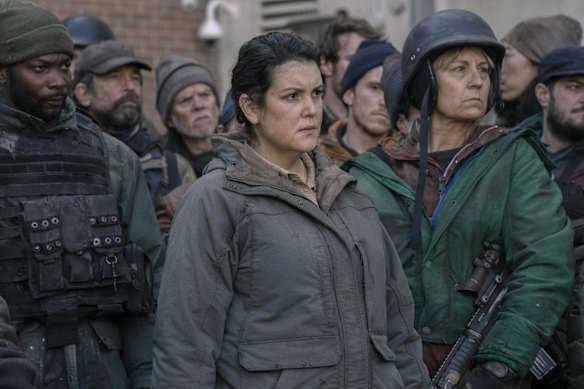
But for the real-life Anna Osborne, none of that made an impression. “She had only ever seen me in Two and a Half Men,” says Lynskey, who played Rose, a one-night stand turned stalker of Charlie Sheen’s character in 63 episodes of the long-running sitcom. “She was like, ‘Can you do drama because it’s quite a dramatic story?’ I was like, ‘I’ve done some drama’. It was really sweet.”
While she didn’t have any concerns about playing straight, Lynskey did feel the pressure of getting it right.
Osborne “was not interested in someone doing an impression of her, so that gave me a little bit of freedom”, she says. But still, “Anna being happy became my sole purpose in the making of the film”.
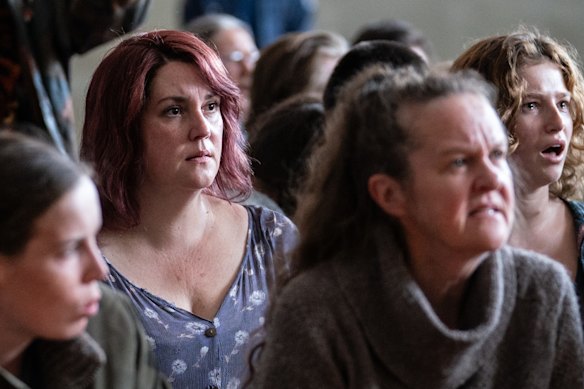
She had ample opportunity to take stock of her happiness, as Osborne and Rockhouse were on set every day. “We spent so much time with them that just by osmosis their cadences and their personalities really crept into the performances,” Lynskey says. “The only thing Robyn and I asked was that they not be directly in our eye line when we were acting.”
Pike River is a slow burn of a movie. Director Rob Sarkies (he made Two Little Boys, with Hamish Blake and Bret McKenzie of Flight of the Conchords, in 2012), takes his time to build a portrait of a small regional community before blowing it apart and then following the journey through grief and anger towards healing and some kind of accountability. It’s a powerful piece of filmmaking that both demands and rewards patience.
The real-world Osborne and Rockhouse became reluctant flag bearers of a campaign for justice after the tragedy, fighting to have the bodies of the victims excavated from the collapsed mine, and demanding that the company that operated it admit culpability over unsafe work practices, face prosecution, pay compensation and appropriately honour the victims.
That campaign is ongoing, and it turned the media-shy women into figures of national prominence; in the film’s telling, it even made them political powerbrokers of sorts, playing a role in the rise of Jacinda Ardern to the prime ministership in 2017.
Ardern has a small but crucial cameo in the movie, playing herself in a recreation of her meeting with the women shortly before the election, when she pledged to do all she could to reopen the mine and retrieve the bodies.
That day was a highlight of the shoot for Lynskey. “She’s such an incredible person,” she says of the former PM. “She has a star quality that’s George Clooney-level. It’s crazy. She just has that magical thing, but she’s also very down to earth, very open, funny.
“I was like, ‘Can we be friends? Our daughters are the same age. Do you want to be my buddy’,” she jokes, adding quickly: “I didn’t literally ask that.”
You sense from talking to Lynskey that down to earth is how most people would describe her too. But it wasn’t always that way.
She’s still haunted, she admits, by the memory of coming back to high school after touring the world’s film festivals with Heavenly Creatures, which she started filming aged 15 and which came out when she was 17.
“I was a shy kid, and acting was a way for me to come out of my shell, but the attention around it was too much, and I was not good at dealing with it. I would come back to school and kids would be like, ‘Oh, she thinks she’s so fancy’. People in my hometown [New Plymouth] as well.”
She recounts the story of buying fish and chips with her first bank card, and asking the girl who served her “do you need me to sign anything?”
“And she’s like, ‘Oh, f--- off, we don’t want your autograph’. And I was like, ‘I mean do you need me to sign the credit card receipt’, and she was like, ‘Oh, actually I do because the card’s foreign’. She thought I was just in the fish and chip shop asking ‘does anyone want my autograph?’ Like, it’s so crazy.”
Though it’s a drama drawn from history – albeit relatively recent – Lynskey feels the themes of Pike River are of the moment. “A group of people who are often forgotten, working-class people, fighting against the government and trying to get answers and fighting a big corporation – I think it’s a pretty timely story,” she says.
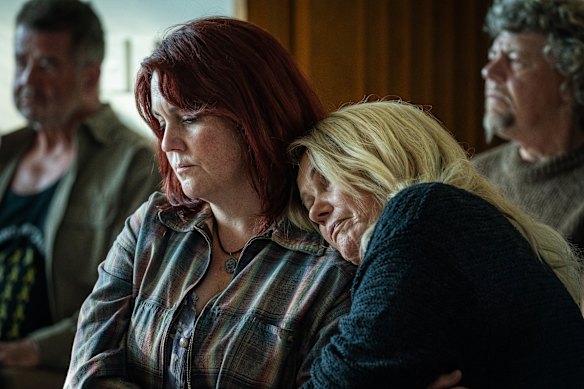
But it wasn’t so much the political messaging that drew her to the project. It was what she calls “the central love story, which is this friendship” between the two women.
The film’s Osborne and Rockhouse start out bristling at each other’s presence, but grow so close that they end up sharing a room as they travel around the countryside campaigning. And the real women still do.
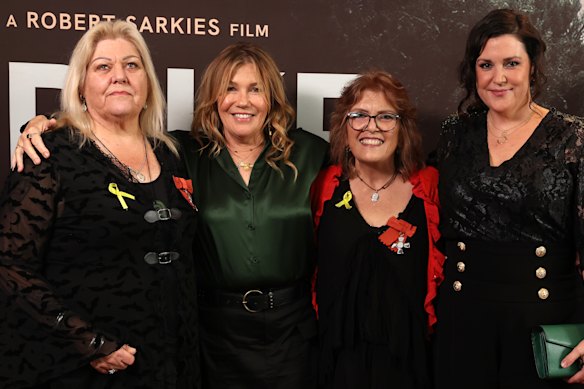
“They came on the whole promotional tour [of New Zealand in 2025] with us,” Lynskey says. “Initially, [the distributors] would get them each a hotel room. And then they were like, ‘Oh, we’ll just stay with each other’. They share a bed. They’re like sisters. They finish each other’s sentences. Best, best, best friends.”
That’s something Lynskey can relate to, absolutely.
“My female friendships are the most important thing in the world to me,” she says. “So I think a film that’s showing what it’s like to have a female friendship like that felt very interesting for me to explore because not everybody has a husband, not everybody has a partner, and those relationships can, especially in midlife, be the strongest ones you have.
“We all think about how we would go on if we lost the most important person in the world, what would happen,” she adds. “And these two women have found a way to support each other through this and somehow get to the other side. It’s pretty incredible to witness.”
Pike River is in cinemas from May 14.
Must-see movies, interviews and all the latest from the world of film delivered to your inbox. Sign up for our Screening Room newsletter.

















































