3 months ago
6
3 months ago
6
London: A foolish briefing to the media has dragged Keir Starmer into a pit of political quicksand after his own allies thought they could help their boss by bad-mouthing his colleagues.
In a move of incredible idiocy, the prime minister’s stated friends tried to defend him to journalists by declaring he would fight any moves to replace him as Labour leader.
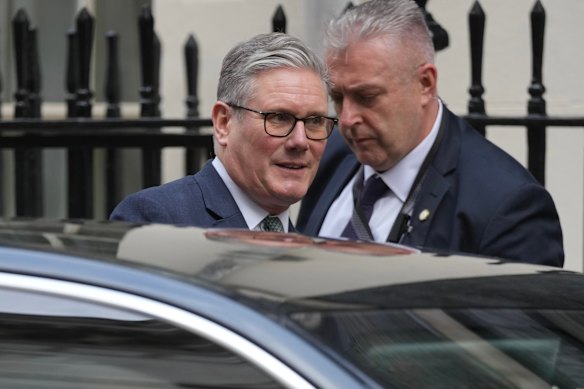
On the way out? Starmer leaves 10 Downing Street for parliament on Wednesday.Credit: AP
Their clumsy ploy tripped up their leader instead by exposing him to ridicule in parliament – and deepening the doubts about his authority, his office and his basic political skill.
Australian observers would struggle to believe how dunderheaded the Labour team can be in Westminster, given there are so many lessons from Australian politics about leadership spills and how to avoid them.
Despite those lessons the Labour crew in London unwittingly copied from Labor in Canberra by dreaming up ways to keep Starmer safe from challengers.
Several of his supporters took aim at a promising cabinet member, Health Minister Wes Streeting, in briefings to journalists about the danger of trying to change prime minister. Their claims made front-page news at The Times and The Telegraph and led the BBC news on Wednesday morning, local time.
The Starmer support squad had a fair point. “He is one of only two people alive who have won a general election for Labour,” one anonymous source told the BBC. “It’d be madness to run against him after 17 months.”
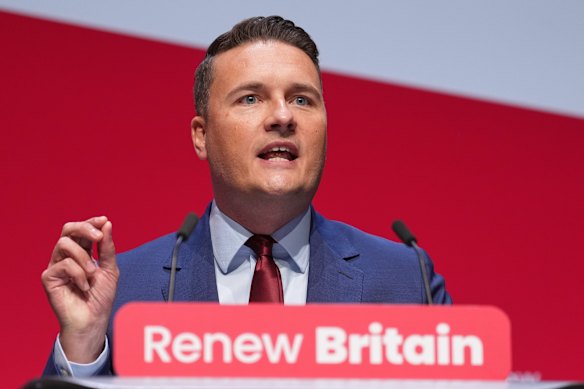
Health Secretary Wes Streeting addresses the Labour Party conference in September.Credit: AP
Labour has a comfortable majority and the next election is not due until August 2029. The last Labour leader to take the party out of opposition and into government was Tony Blair in 1997.
With their plan to defend their boss, the Starmer allies echoed the mistake that Kevin Rudd’s office made in June 2010 when the then-prime minister’s advisers called Labor MPs to test their loyalty in a potential contest with Julia Gillard, the deputy prime minister at the time.
When The Sydney Morning Herald revealed those calls on its front page, Gillard reacted by interpreting the briefings as an act of disloyalty by Rudd. History was written by the minute that day. Gillard challenged and Rudd admitted defeat that night.
The blundering in Westminster is different: Starmer’s allies were on a mission to brief journalists about the leadership, not canvass MPs about a vote. The common factor was the needless provocation of a potential challenger.
Streeting responded carefully in television interviews on Wednesday morning. He declared his loyalty to Starmer. But he also suggested the advisers who were briefing journalists should be driven out of the prime minister’s office.
Starmer declared his support for Streeting and said he did not authorise the attacks on cabinet ministers. But the briefings were anonymous, of course, and were described in the media as coming from Downing Street. This will only spread suspicion and bad blood.
While the government tried to show unity, the astonishing day highlighted three broad questions about its future.
Loading
The first is about Starmer’s political judgment. The prime minister has shuffled advisers in and out of Downing Street since winning power last year but his office never seems to stabilise. Is he unlucky with staff? Or is he the problem?
The second is about Starmer’s replacement. No Labour cabinet minister has emerged with a claim to lead Labour out of its slump in the opinion polls and give it a new sense of mission. Only 27 per cent of voters have a positive view of Starmer, according to polling firm YouGov. One Labour figure, Manchester Mayor Andy Burnham, is on 34 per cent but he is inexperienced and not in parliament. None of the others are popular. This alone means Starmer probably stays.
Streeting, with his adroit response to this storm, may end up building his national profile and gaining support among Labour MPs for the future.
The third question is about whether this government can actually achieve what Starmer claims to be his mission: national renewal. Britain is becalmed and waiting for leadership. Labour, meanwhile, is riven by conflict. Too many of its MPs look panicked and too many of its advisers look inept.
In turning the spotlight on themselves they only highlight the doubts about whether they deserve their jobs.
Get a note directly from our foreign correspondents on what’s making headlines around the world. Sign up for our weekly What in the World newsletter.
Most Viewed in World
Loading