3 months ago
31
3 months ago
31
Opinion
January 12, 2026 — 5.01am
January 12, 2026 — 5.01am
Anyone fretting about how fragile global financial markets might be in 2026 got an early and robust response from investors who have lost none of their giddiness.
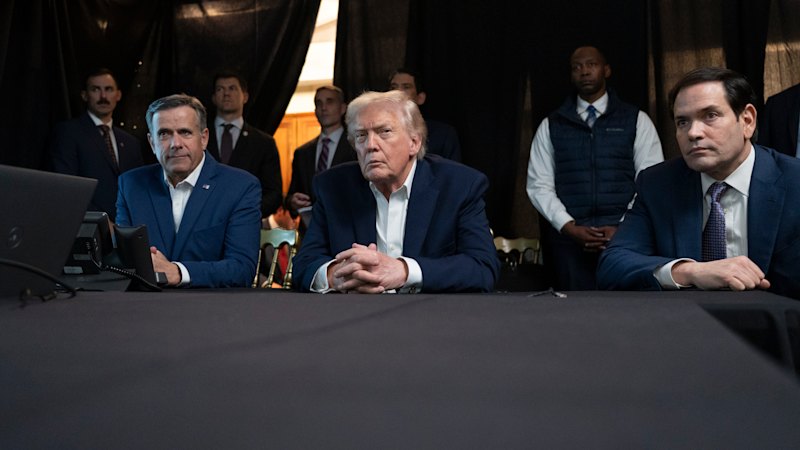
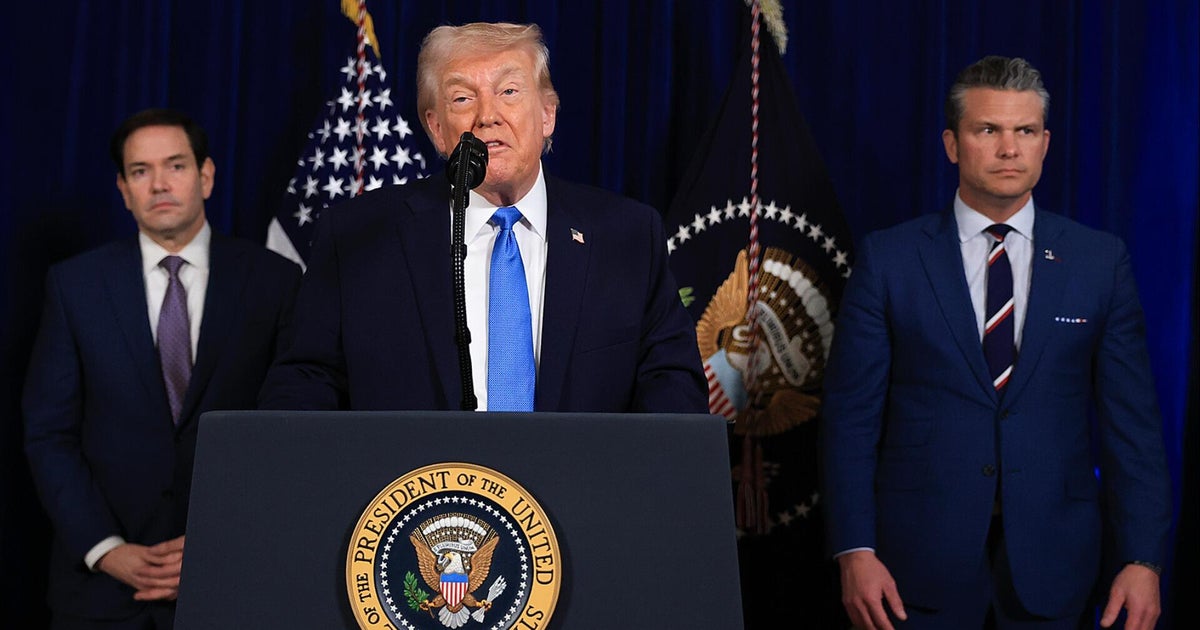
Just days into the new year, US President Donald Trump staged a de facto coup by sending his forces to capture Venezuela’s president in a lightning military strike.

A protester outside the US embassy in Madrid holds a caricature of President Donald Trump drinking Venezuelan oil.Credit: AFP
The military action promises to transform the security of America’s oil supplies, but risks have multiplied after Trump gleefully opened this geopolitical Pandora’s box.
Not even Trump’s threat to seize control of Greenland, potentially unravelling NATO and the rules-based order that has maintained global stability since World War II, could prevent US sharemarkets from hitting record highs last week.
The VIX index, a widely watched measure of expected market volatility, remains low.
Part of the reason investors are happy to shrug off events that would normally send markets into meltdown is their fascination with AI’s overwhelming dominance of any investment conversation across the globe.
AI will need a lot more than hot air – and soaring chip sales – to sustain its insane 2025 run into this year.
With this in mind, the next big test was the appearance of Nvidia founder Jensen Huang at the CES convention in Las Vegas – the biggest name at the biggest event on the tech calendar. He came up with the right words to allay fears that the trillion-dollar-plus bet on AI might not pay off.
AI’s high priest had suitably big numbers to assure everyone. Every layer of the computing world’s architecture – which has had $US10 trillion invested in it over the past decade, according to Huang – is being re-invented by AI.
But the potential is much bigger than this, he says.
“A couple of hundred billion dollars in [venture capital] funding each year is going into modernising and inventing this new world. What it means is a hundred trillion dollars of industry, several per cent of which is [research and development] budget, is shifting over to artificial intelligence,” he says.
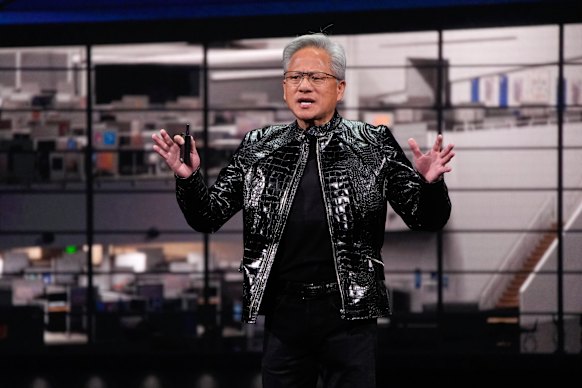
Nvidia founder and CEO Jensen Huang at the CES tech show in Las Vegas last Monday.Credit: AP
“People ask, ‘Where is the money coming from?’. That’s where the money’s coming from.”
But for all of Huang’s chutzpah, AI will need a lot more than this hot air – and soaring chip sales – to sustain its insane 2025 run into this year.
There is a growing worry that the AI giants, which have helped pump Nvidia to a $US5 trillion giant, need to start demonstrating an actual return from their massive AI investment plans, or risk a brutal market backlash.
Loading
Not that crazy market optimism has not been confined to AI, or the US market.
ASX-listed defence tech group DroneShield has now doubled from its market nadir late last year when investors erupted at the news that both its CEO and chairman had dumped all of their stock with no warning.
The company will need to almost double again to regain its $6 billion valuation.
But if the board keeps its promise to improve operations, and the sales contracts keep coming in, a company that reported revenue of less than $60 million for the 2024 calendar year could once again be worth more than $6 billion.
It might not be the only ASX-listed stock to leave AI euphoria in the dust in 2026.
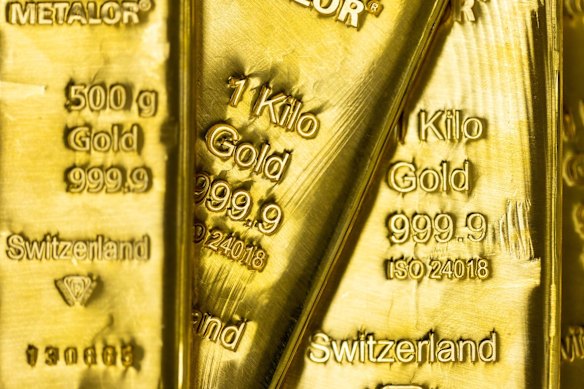
Gold reserves have surpassed the euro to become the second-largest global reserve asset.Credit: Bloomberg
We are already seeing geopolitics ramping up interest in green metals like lithium and rare earths, as Lynas amply demonstrated last week with a massive jump on the news that China was again restricting rare earth shipments to Japan.
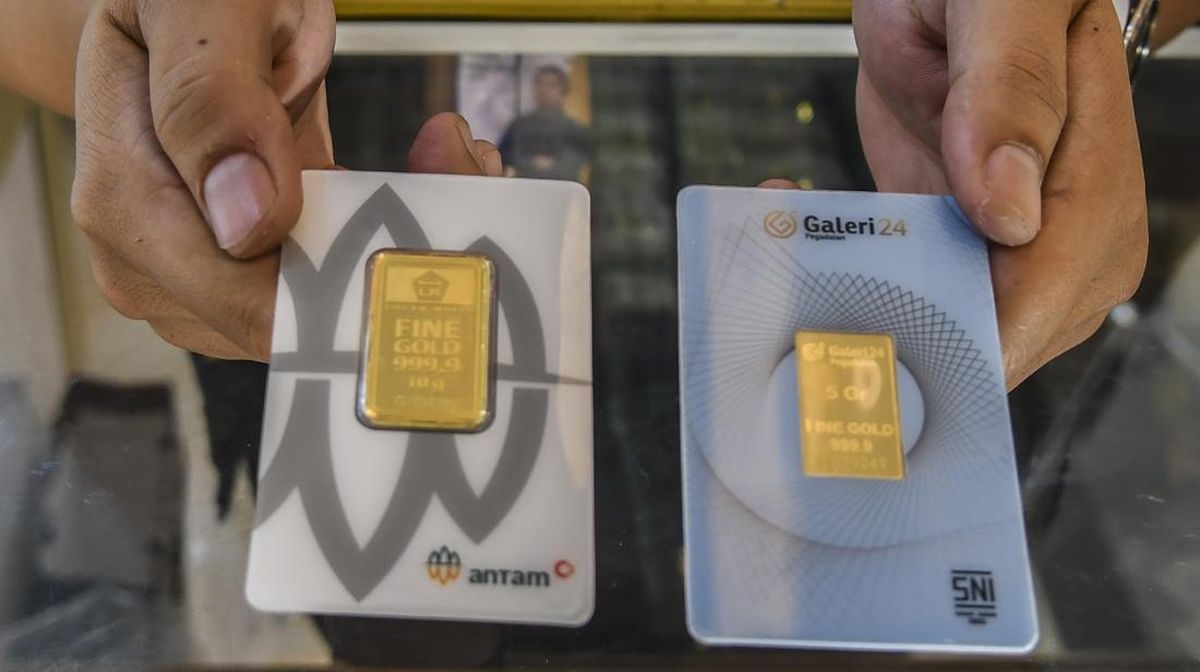
For many market professionals, the closest thing to a sure bet this year is the soaring gold price, which is just short of its $US4500-plus record high.
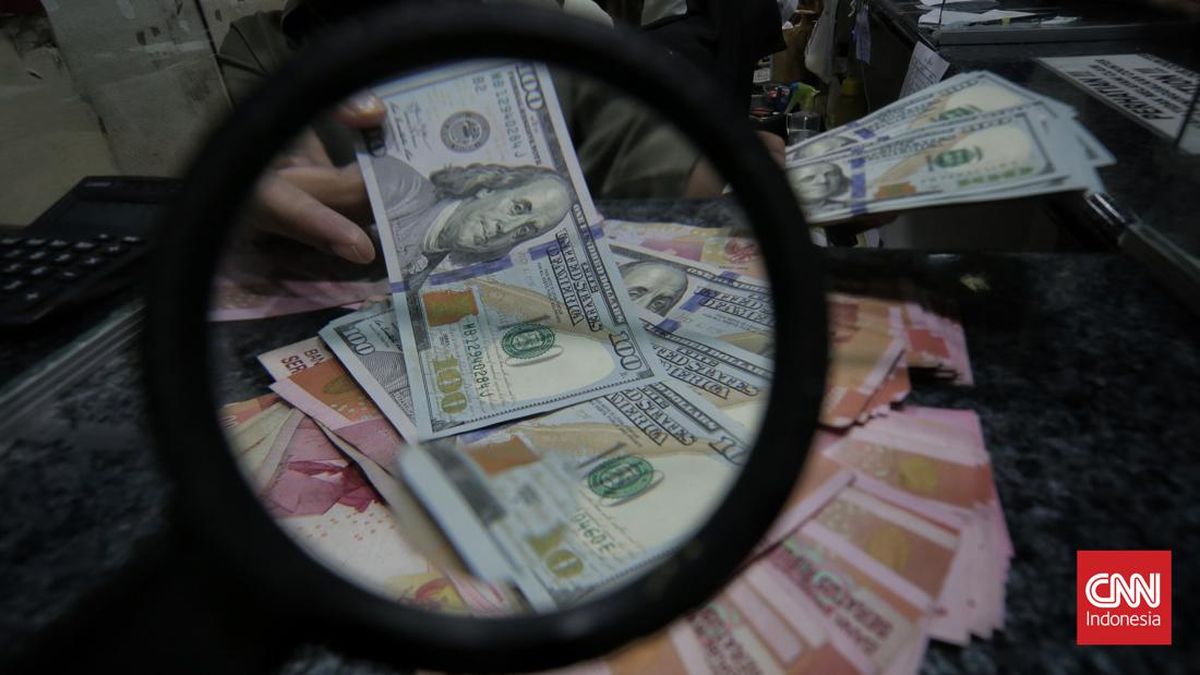
Analysts predict gold could top $US5000 per ounce as a hedge against government bonds and the US dollar, which risk having their value eroded by massive government spending and rising debt levels.
Loading
But if you don’t trust analyst forecasts, how about global reserve banks? According to a European Central Bank study last year, the gold reserves of central banks now exceed their holding of US Treasuries for the first time in more than three decades.
Gold reserves have also surpassed the euro to become the second-largest global reserve asset after the US dollar.
SPI Asset Management managing partner Stephen Innes says it is a reflection of the growing uncertainty, and this industrial-grade demand for a precious metal shows that its record run won’t be shaken easily.
“That is not cyclical buying. It is balance sheet re-engineering,” Innes says. “Reserve managers are diversifying away from concentration risk in a system that feels increasingly political and less predictable. That kind of demand does not retreat on pullbacks. It adds.”
The Business Briefing newsletter delivers major stories, exclusive coverage and expert opinion. Sign up to get it every weekday morning.
Most Viewed in Business
Loading