3 months ago
42
3 months ago
42
Jo PalmerBBC South Investigations
Where have weekend jobs for teenagers gone?
Hannah Walsh,BBC South Investigationsand Ema Sabljak,England Data Unit
Most of us remember the excitement of our first teenage pay packet but, for many 16 and 17-year-olds today, finding a part-time job feels out of reach.
Megan has spent months looking for work to earn money while studying at a sixth form college.
"It's so hard," said the 17-year-old. "I've tried applying on websites but they don't accept you if you don't have work experience.
"But how are you going to get that work experience if nobody lets you get it? It makes me feel like I'm not wanted… It's just horrible."


Megan says trying to find a part-time job has been "horrible"
Megan is not alone. Elsebeth, 17, said she had applied for multiple jobs online.
"It's sort of impossible to be honest," she said.
"You apply for loads of them but you don't even hear anything back. Because you're a younger person, they don't want to actually give you any job, usually they just want full-time people."
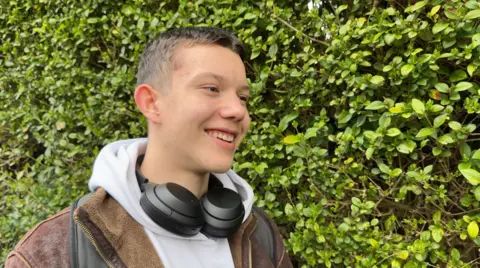
Mavi says he was "lucky" to get a job at 16 through his dad's friend
Mavi said he felt "lucky" because he was able to find work at 16 through someone his dad knew, adding that most of his friends had not been so fortunate.
"I think employers have an image in their head that you're young, you're not really going to take it seriously but, in the case of my friend group, I don't think that holds up at all," he said.
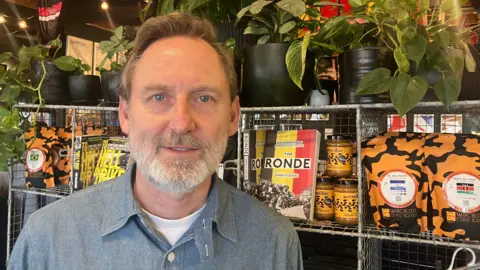
Cafe owner Neil Wyatt says young people "bring a different energy"
However, one business owner told the BBC he believed it was important to hire young people.
The South Downs Social cafe in Winchester, which has been running for five years, has employed many teenagers, said owner Neil Wyatt.
"We've always found young people to be super hard-working, super committed and they just bring a different energy on a busy Saturday or Sunday when we're full," he said.
"They learn skills that will be with them for the rest of their life. They have to deal with customers, they learn how to build relationships with people.
"I think it's really important we find a way to bring people into the world of work as young as possible."
But taking on a young person can come at a cost for the business, he added.
"You are taking on perhaps a little more risk than someone who is already established in the job market.
"They're going to need a bit more time and attention than someone who has already been there and done the job."
The current economic climate is also having an impact, said Neil.
"In the last three years, we've seen the average cost of the price for food go up by 25%, we've seen our energy costs go up 35%, the national living wage has gone up by just under 40%.
"All those things are leaving ever smaller margins… and, therefore, we're less likely to take a risk on a young person when we can go for someone more established and who can work full time."
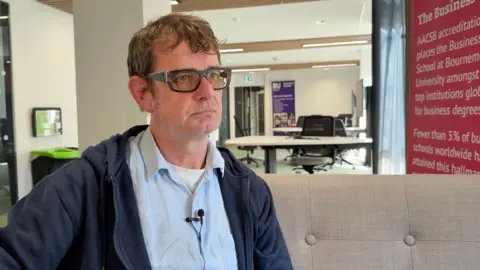
Dr Conor O'Kane says 16 and 17-year-olds face more competition
Younger teenagers are also being affected by higher unemployment rates among 18 to 24-year-old jobseekers.
Dr Conor O'Kane, economics professor at Bournemouth University, said: "We've seen a lot of stuff in the news about graduates struggling to get jobs."
With youth unemployment (classified as someone aged between 18 and 24) at 16%, there is "just much more competition" for 16 and 17-year-olds in "traditional jobs they would have taken in hospitality, catering and that type of work", he added.
From next month, the National Minimum Wage for under-18s will be £8.
It has risen by 73% in the past five years, from £4.62 in the financial year starting April 2021.
But just around a fifth of 16 to 17-year-olds were employed from November 2025 to January 2026, according to data from the UK Labour Force Survey.
Unemployment rates, which stood at 29% for 16 to 17-year-olds during the period, include people actively looking for work, unlike the number of economically inactive.
Those aged 16 to 17 are more likely to be in full-time education, resulting in a lower employment rate and a higher economic inactivity rate than for 18 to 24-year-olds.
For the latter group, 30% were economically inactive and 14.5% were unemployed.
Across both groups in the quarter up to January this year, 45% were in full-time education and 30% of those were also working.
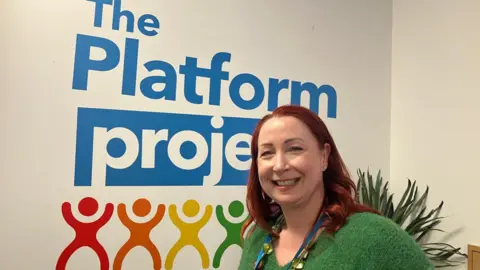
Sadie Sharp is CEO of The Platform Project, a non-profit organisation that helps young people develop skills to enter the workplace
Sadie Sharp is chief executive of The Platform Project, a non-profit organisation in Swindon that has been helping young people develop the skills they need to enter the workplace for 10 years.
There are three things she suggests young people can do to help their job search.
First, "building micro experiences" on your CV, such as running a community project or getting a day's work experience, she says.
"The second one would be to try and put yourself in front of those employers - record a mini-video, personally drop your CV in, do an introduction email with your CV so you stand out as a person."
Third, she says: "You're not going to be in unless you actually apply so, even if you think you're not quite qualified, put your CV in and see what happens."