3 months ago
25
3 months ago
25
But these were challenged throughout 2025 by lower rainfall and higher usage, with dams and reservoirs currently sitting at 75.1 per cent capacity for the city.
In the last financial year, Melbourne’s four major storage facilities received 305 billion litres, well below the 30-year average, but the city’s customers used 500 billion litres.
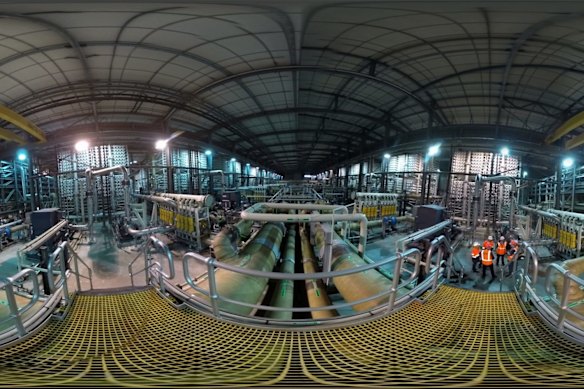
Inside the Wonthaggi desalination plant.Credit: Tim Young
Daily water usage rose, with 169 litres used per person compared with 163 litres the year before. The city’s water authorities have encouraged Melburnians to target usage of 150 litres per person, per day.
To offset these challenges, the government ordered 50 billion litres of desalinated water which has been successfully delivered.
No restrictions are expected over summer, but Yarra Valley Water managing director Natalie Foeng said conserving water now was vital to slow the current rate of decline.
“Melburnians have always adapted in dry times, and we need to do that again now,” she said, speaking on behalf of all Melbourne water corporations.
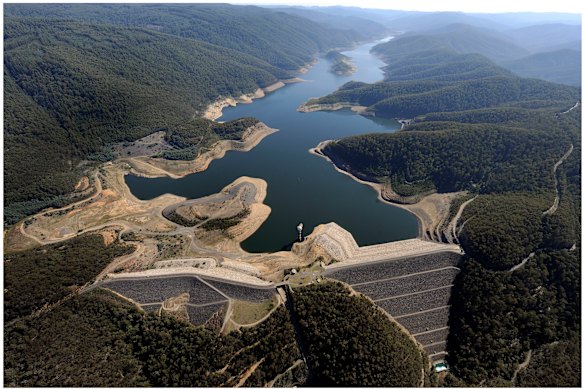
The Thomson Dam in 2008.Credit: Craig Abraham
“Our storages are secure today, but this year’s sharp fall shows how quickly they can drop in dry conditions and when rainfall is low.
“By using water wisely now, we can avoid or delay restrictions and protect supplies for our growing city.”
A public “make every drop count” campaign will run over summer with households encouraged to keep to four-minute showers, only use dishwashers and washing machines when full and check taps and hoses for leaks.
Loading
Permanent water saving rules already dictate that sprinklers and watering systems can only run between 6pm and 10am and hard surfaces such as driveways must not be hosed.
In a separate outlook prepared for the entire state, Water Minister Gayle Tierney said there had been welcome late rain in November, but Victoria had entered summer with lower dam levels than previous years.
This has increased the likelihood of urban water restrictions in 2026.
“Without the 50 billion litres of desalinated water ordered from the Victorian Desalination Plant by the Victorian government, Melbourne’s water storages would have continued to fall as catchments received a low winter and spring harvest,” Tierney said in the document.
In regional Victoria, water levels are under more strain. Across the state, dams and reservoirs are at 57 per cent capacity, a fall of 21 percentage points on the year before.
Loading
“Due to prolonged below-average rainfall conditions experienced across most of Victoria for the second consecutive year, water restrictions are possible for some cities and towns during the December 2025 to November 2026 outlook period,” the report says.
“However, some regional towns could see restrictions sooner than others under ‘median’, ‘dry’ or ‘worst on record’ scenarios.”
Mansfield, in Victoria’s high country, is considered likely to have water restrictions, and these could be in place within three months under a “median” scenario, which is in the middle of the range of possible weather conditions.
Water restrictions around Bright are considered possible within the next 12 months, with North East Water looking to secure additional water entitlements in the upper Ovens River to manage demand.
Stage 1 water restrictions are already in place in Central Highland Water’s Forest Hill system and could move to stage 2 if conditions remain dry.
Government modelling says over the next decade Victoria will need an extra 95 billion litres of water each year, even with the current desalination plant running at full capacity.
Acknowledging that there are severe risks on the horizon as Victoria’s population grows, the Allan government has asked a Water Security Taskforce to find long-term solutions.
This includes examining the option of a second desalination plant, expanding the existing site at Wonthaggi, reviewing permanent water saving rules and increasing the use of recycled and storm water for waterways and rivers.
”It’s important all Victorians do what they can to make every drop of water count as we head into a hot and dry time of year,” Tierney said.
Loading
“We will continue to invest in projects that maintain high-quality, reliable and affordable drinking water supplies in Victoria.”
The Bureau of Meteorology’s seasonal outlook indicates much of Victoria is likely to receive below-average rainfall from now to February while maximum temperatures are also likely to be above average for most of the state.
Opposition Leader Jess Wilson said the government had mismanaged Victoria’s water assets, contributing to the state’s troubling position.
“Victorians will be deeply concerned by the prospect of new water restrictions within the next 12 months,” she said.
Start the day with a summary of the day’s most important and interesting stories, analysis and insights. Sign up for our Morning Edition newsletter.