President Trump is floating an idea that could appeal to millions of budget-strained households: using tariff revenue to reduce, or even eliminate, the federal individual income tax. But tax experts are skeptical that import taxes could completely replace income tax, and they say a reduction in income taxes would largely benefit the nation's top earners.
"I believe that at some point in the not-too-distant future, you won't even have income tax to pay because the money we're taking in is so great," Mr. Trump said at a Dec. 2 cabinet meeting, referring to the tariff revenues generated by the wide-ranging duties his administration has imposed on imports.
Mr. Trump's suggestion comes as the Supreme Court is weighing the constitutionality of his tariffs, which are import taxes paid by U.S. companies that are typically passed partly on to American consumers in the form of higher prices. The Treasury Department this year has significantly boosted the country's collection of tariffs, thanks to Mr. Trump's policies.
White House spokesman Kush Desai said in a statement that Mr. Trump "is set to raise trillions in revenue for the federal government in the coming years with his tariffs — whose costs will ultimately be paid by the foreign exporters who rely on the American economy, the world's biggest and best consumer market."
Despite the jump in tariff receipts, tax experts are skeptical that such revenue could ever replace individual income taxes.
"It is mechanically impossible to fully replace income tax revenues with tariffs," Erica York, vice president of federal tax policy at the Tax Foundation, a nonpartisan think tank, told CBS News. "Any real attempt to do so would harm working-class Americans, damage the U.S. economy and significantly increase the federal budget deficit."
York estimated the Trump administration's current tariff policy, assuming it remains in place, would generate about $2.1 trillion in revenue over the next decade. By comparison, federal individual income taxes would provide more than 10 times that amount, at $32 trillion over the same period, she said.
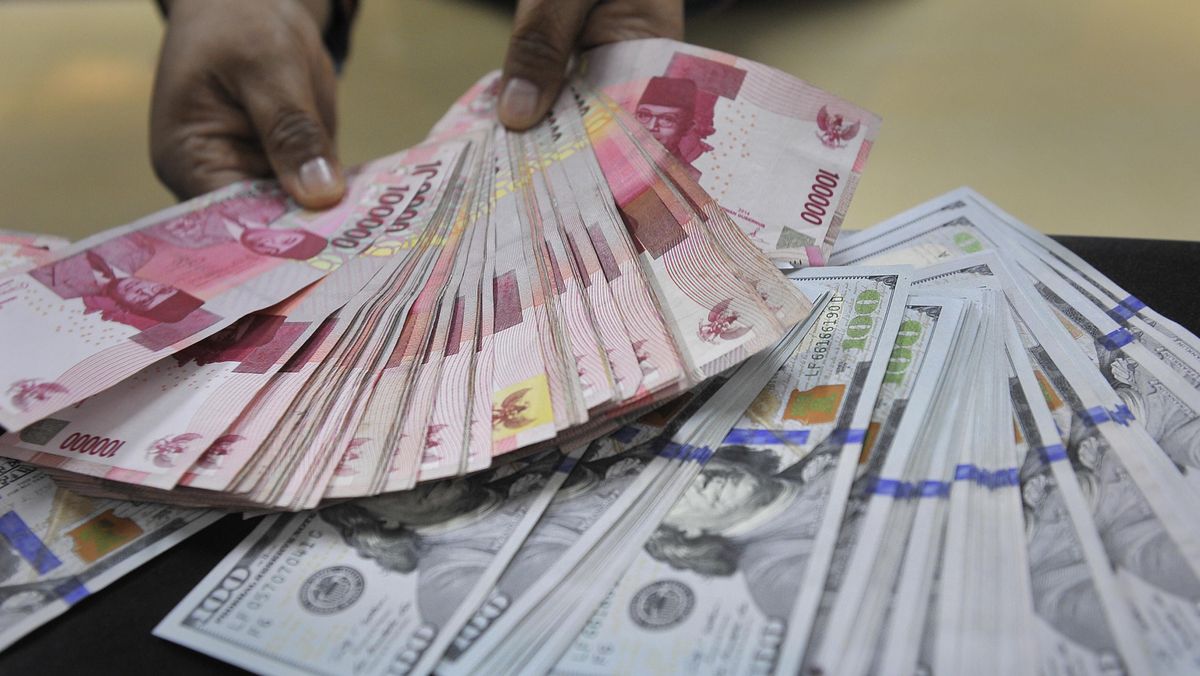
Personal taxes provide about $2.7 trillion annually in federal revenue, according to IRS data. For fiscal year 2025, the U.S. generated $195 billion in tariff revenue, Treasury data shows.
"Tariffs, even applied maximally, simply could not generate that level of revenue — imports are not a large enough tax base," York said.
To be sure, tariff revenue could be used to provide a tax cut, said Scott Lincicome, vice president of general economics at the nonpartisan Cato Institute. However, because low-income households already pay little to no income tax, it's unlikely to help the families most in need of a financial boost, he noted.
"If they did a flat 3% reduction in income tax, the only people who would really benefit are the top 10%" of income earners, Lincicome said.
The top 10% of earners pay about 72% of the nation's income taxes, according to Tax Foundation data.
What about a tariff dividend?
Mr. Trump has also discussed the possibility of sending Americans a $2,000 "tariff dividend" check, an idea he reiterated during the Dec. 2 cabinet meeting.
Yet that proposal also faces a troublesome math problem, Lincicome said. Sending a one-time $2,000 payment to U.S. households would cost between $300 billion and $600 billion — far more than the U.S. is currently collecting in tariffs, he pointed out.
Issuing a tariff payment or reducing income taxes also would require Congress to change the tax code — a tall legislative task given the ongoing partisanship in Congress. Some Republican lawmakers have already rebuffed the idea of a $2,000 payment, with Sen. Ron Johnson of Wisconsin recently saying the U.S. "can't afford" it.
Meanwhile, the U.S. is unlikely to raise enough tariff revenue to fund dividend checks or replace the individual income tax because that would require import taxes so high that Americans would stop buying most imported goods, causing tariff revenue to collapse, Lincicome explained.
"There is a hard cap on the amount of money you can raise with tariffs," he added. Economists "say you can maybe raise $700 billion a year, which would be a very high effective tax rate — an across-the-board 20% to 30% tariff rate — but if it's pushed above that, nobody would buy imports."
The overall average effective tariff rate facing U.S. consumers is now nearly 17%, the highest level since 1935, according to the Yale Budget Lab, a nonpartisan policy research center.
How do tariffs differ from income taxes?
Setting aside the difference in the scale of revenue collection, tariffs are structured differently from income taxes. U.S. companies that import products, parts and other goods from abroad pay a fee based on the country of origin — for instance, American firms pay a 15% tariff on imports from the European Union.
That means an American company importing a $5 Italian chocolate bar would pay the U.S. government an additional 75 cents, and then decide whether to pass that extra cost on to consumers or absorb it.
Because of their structure, tariffs are often compared with sales taxes, where sellers pay a percentage of an item's cost when they check out at a store.
By contrast, individual income taxes are progressive, meaning lower-income Americans pay a smaller tax rate than higher-earning households. The lowest bracket is 10%, while the top rate is 37%.
Replacing the graduated income tax with a flat tariff rate would likely leave low- and middle-income households shouldering a bigger share of the burden than higher-income earners, York said.
"Tariffs are relatively flat, and even slightly regressive, placing a larger burden on working-class households than on the rich," she said. "The income tax is the opposite — it is highly regressive and even provides negative income tax rates for the lowest income households."
She added, "Swapping a highly progressive income tax for a slightly regressive tariff scheme would harm the very households the president claims to be helping."
Edited by Alain Sherter
Are Americans buying affordability claims?
Are Americans buying Trump's affordability claims?
(04:21)