3 months ago
20
3 months ago
20
Opinion
January 20, 2026 — 11.56am
January 20, 2026 — 11.56am
The first year of Donald Trump’s second term as US president has been tumultuous and extraordinarily disruptive for American society, the US economy and the rest of the world, but has it been successful?
After only a year in office, it could be argued that it is too early to tell, but Trump promised successes from “Day One”.
Trump’s tariffs – his trade war on the rest of the world –, the investment pledges he extracted using them as leverage, his disengagement of the US from multilateralism and its institutions, his deregulation, changes to the US tax system, the assault on the US bureaucracy, science and higher education and his adventurism abroad will, like many of the multitude of executive orders he has issued from the first day of his return to the Oval Office, have longer-term consequences.
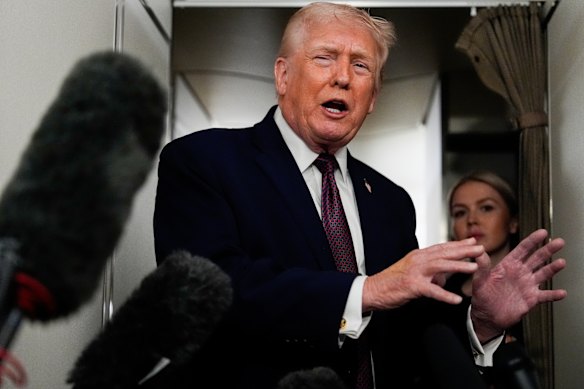
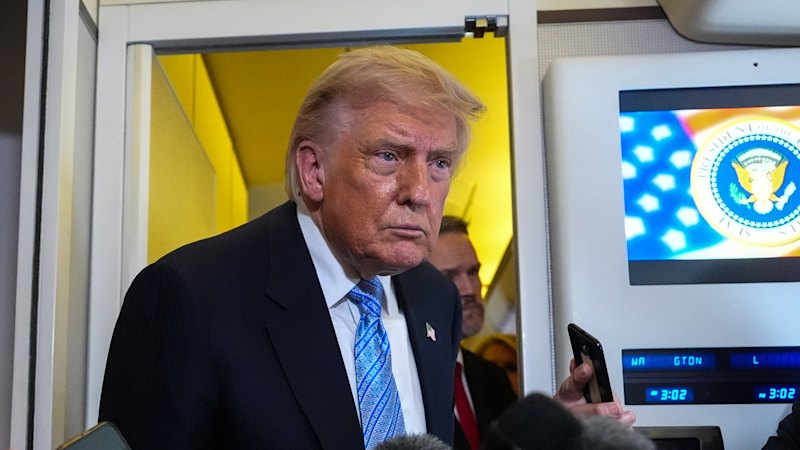
US President Donald Trump’s first year has been tumultuous for the economy, American society and the rest of the world.Credit: AP
He did, however, make numerous promises of near-immediate results during his successful 2024 campaign that have yet to be fulfilled.
Among them were pledges to close the border and deport illegal immigrants, end inflation, lower interest rates, revive US manufacturing, particularly the auto industry, unwind Biden’s green energy initiatives, reduce US deficits and debt, lower the US trade deficit, spark a boom in the oil and gas industry that would lead to lower petrol prices and end the “affordability” crisis that played a major role in discrediting the Biden administration, and in Kamala Harris’ loss.
Loading
He hasn’t conquered inflation, although it has declined, slightly. When Joe Biden left office the US inflation rate was 2.9 per cent. The most recent data says it is now 2.7 per cent.
Food inflation, however, has picked up and is now 3.1 per cent and rising, which feeds into the affordability issue that is front of mind for US households and voters and helps explain why Trump’s popularity has fallen over the year.
While his tariffs haven’t yet done what most economists expected and fed into inflation, that may be because their imposition was delayed, which gave importers time to build inventories and caused companies to absorb their cost until the regime settled.
Some tariffs were announced and then rolled back (as was the case with China) and there have been a raft of exemptions as the pain points in supply chains became more evident.
What could have been an average tariff rate in the mid-20 per cent range, or higher, had the rates initially announced held, is now an average rate of about 17 per cent – compared with about 2.5 per cent before Trump regained office.
The tariffs have been disruptive and bred uncertainty for businesses and households, leading to caution, inertia and lost investment and jobs even before their full effect on consumer prices and the economy is felt.
US manufacturing industry activity and job creation has been steadily shrinking. The unemployment rate, 4.1 per cent when Biden departed, is now 4.6 per cent. There is no sign of a Trump manufacturing jobs boom.
The auto industry, targeted by Trump for revival, has been hit by higher costs from his 50 per cent steel and aluminium tariffs, disruption to supply chains and his assault on Biden’s Inflation Reduction Act, with its massive spending on clean energy measures, including incentives for electric vehicles and restrictions on emissions. Ford has written $US19.5 billion ($29 billion) off the value of its EV investments and GM $US7.1 billion.
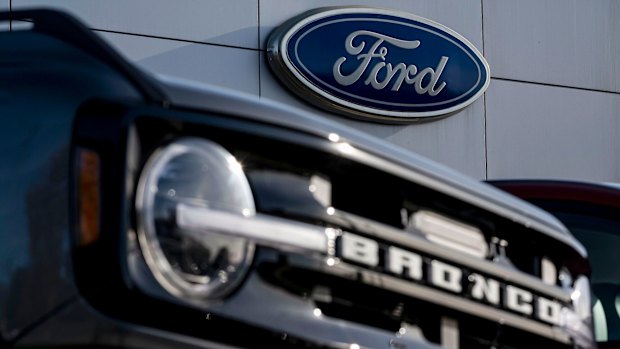
The auto industry has faced higher costs, with Ford announcing major write-downs.Credit: Bloomberg
Billions of dollars of investment in wind and solar energy plants have also been stranded (Trump hates wind turbines, which he calls windmills) even as the demand for electricity from the massive investments in data centres for artificial intelligence is ramping up and already feeding into energy prices.
Trump’s crackdown on illegal immigrants has been effective in closing the southern border, deporting non-citizens and deterring immigrants, but the brutal approach of his ICE teams to the rounding up of undocumented immigrants (and the odd US citizen) within the US is generating its own issues.
It’s also reducing the pool of labour, which might help explain why unemployment hasn’t increased even more sharply in a market where companies are either shrinking their employment bases or not hiring.
The question mark over the outlook for inflation while the jobs market is deteriorating has created a challenge for the US Federal Reserve Board, which has still cut rates three times in the past year, reducing the effective federal funds rate (akin to the Reserve Bank’s cash rate) from 4.48 per cent to about 3.72 per cent.
Trump has got lower rates, but that, of course, hasn’t satisfied him.
He wants something closer to 1 per cent and is determined to get his way by trying to mount a takeover of the Fed’s board of governors, targeting one governor (Lisa Cook) with allegation of mortgage fraud and, more recently, the Fed’s chair, Jerome Powell, with a flimsy allegation that he mislead Congress over renovations to the Fed’s Washington headquarters.
Loading
That could backfire, given that Powell’s term as chair expires in May and Trump can choose his successor. The usual protocol is that Fed chairs retire from the board once their term as chair ends, but Powell’s term as a governor doesn’t end until January 2028.
He might now be inclined to stay on, becoming a locus for opposition to any attempt to force rates lower than the econocrats within the Fed’s open market committee, which sets US monetary policy, believe they ought to be. Trump would then have to appoint an existing governor or displace his most recent appointee, White House insider Stephen Miran.
Trump’s energy policy – “drill, baby’ drill” – has produced some successes. US oil production has increased from Biden’s record levels of 13.3 million barrels a day to 13.6 million barrels a day and petrol prices have fallen from an average of just over $US3 a gallon at the end of Biden’s term to about $US2.84 a gallon.
The slump in global oil prices, as the OPEC+ cartel has returned millions of barrels a day of sidelined production to the market over the past year, has however driven oil prices down from about $US75 a barrel to about $US60 a barrel over the past year.
While that has helped lower petrol prices, it also places a question mark over the economics of onshore oil production in the US, where the breakeven price is about $US60 a barrel.
The one obvious success Trump can claim is the sharemarket, which has risen about 14 per cent over the past year, driven by a 20 per cent surge in the value of the “Magnificent Seven” big tech stocks and their exposure to AI. In Biden’s last year, however, the overall market rose 24 per cent – it is AI, not the White House, underpinning the market’s rise.

Wall Street has rallied in the past year, driven by a surge in big tech stocks.Credit: Bloomberg
Whether that AI-related surge is sustainable or not, the investment occurring in AI is staggering – about $US375 billion last year and likely to be at least $US450 billion this year.
That’s not only boosting stock prices but is also the major contributor to US economic growth.
US real GDP growth is running at about the same rate as the 2.8 per cent Biden presided over in 2024, although it was lifting towards the end of last year. The International Monetary Fund, however, this week forecast US growth of 2.4 per cent this year and only 2.1 per cent in 2027.
Whether Trump’s claims that he has negotiated more than $US20 trillion of investment pledges from other countries (using the tariffs as leverage) actually shows up as dollars on the ground – most analyses calculate the number in the mid-single-digit trillions, spread over years – might determine whether Trump’s promise to turbocharge growth eventuates.
What Trump hasn’t been able to do is reduce US government debt, indeed his “One Big Beautiful Bill Act” (OBBBA) has increased it.
While the budget deficit was roughly steady at $US1.8 trillion last financial year, US government debt has risen from $US36.1 trillion to more than $US38 trillion, even though revenue from tariffs soared by more than $US200 billion last year.
While the Congressional Budget Office has estimated that (if they survive the Supreme Court challenge) the tariffs will raise $US2.5 trillion over a decade, it has also said that the tax cuts in the OBBBA will cost $US3.4 trillion over the same period.
Loading
Trump has also promised to spend the tariff revenue, several times over, on $US2000 cheques to households, the abolition of income taxes, aid to farmers hurt by his trade wars, increased defence spending... and deficit and debt reduction.
The tariffs are, apparently, a magic pudding. The debt, however, is real and growing too quickly, a factor in a 9.3 per cent depreciation of the US dollar over the year as foreign investors decided to “Sell America” rather risk experiencing debasement of the debt via inflation and money printing.
Trump’s frenzied policymaking over the past year, an endless blitz of announcements and threats that is continuing, complicates effort to assess his performance and its impact on the US and global economies.
He would probably claim an A+ on his report card, but it is fair to say that an F remains a distinct possibility.
The Business Briefing newsletter delivers major stories, exclusive coverage and expert opinion. Sign up to get it every weekday morning.
Most Viewed in World
Loading