
 4 months ago
74
4 months ago
74
John Leslie knows the Liberals inside out. He’s a former member of the Young Liberals, grew up in a family of rusted-on Liberal voters and considers himself a centre-right voter.
And yet, he is very open to voting for Pauline Hanson’s One Nation at the next election. The way he sees it, the Liberals have “lost track of their values and ethos”.
“I think it’s time for change and I don’t think any other party – except maybe a teal candidate – could provide worthy competition in the local area. The Liberal party have taken my seat for granted and the current candidates, both state and federal, are complacent and doing little to drive effective policy that helps our area.
“I also, for what it’s worth, do like Pauline and how she calls it as she sees it,” he said.
Despite having never won a seat in Sydney, One Nation has set its sights on the city as it battles to maintain its momentum after winning in Farrer. High-profile MP Barnaby Joyce declared the party’s next stop was western Sydney and even said he had spoken to potential candidates. And it makes sense to seek out western Sydney first, a region where political trends are often born or tested.
These are politically ferocious battlegrounds, where locals have won the right to be bullish about their influence after witnessing generations of decisive electoral fights.
Typically, the far-right conservative party’s focus on the region has brought a mixed response from locals, with some dismissing the attention and the possibility of any orange wave as fantasy.
But others, such as Leslie, see a pathway forward for the party. Leslie comes from the Hills, a conservative slice of western Sydney and part of the north-western federal seat of Mitchell, held by Alex Hawke since 2007.
Leslie believes Hanson’s party can build on hardening resentment towards both major parties in the region.
“I certainly expect a significant number of protest votes to give One Nation a significant platform moving forward,” he said. “People are asking the same question I am: what have the Libs and our local member really done for us?”
On the streets on Penrith and Blacktown on Wednesday, two central pillars of any strategy to win the west, some voters expressed their support for the coming orange tide.
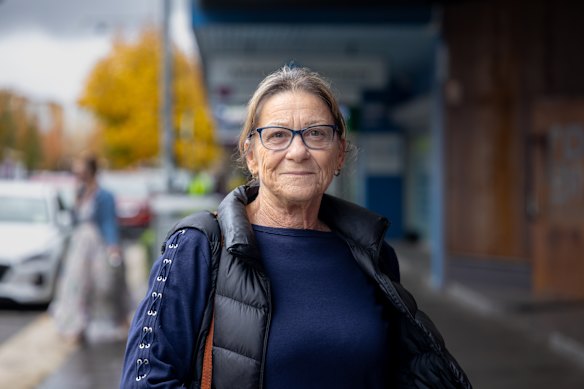
“I’m all for it [voting for One Nation],” said Katy O’Brien, an aged care nurse from Penrith, who said Labor had stopped delivering for her family.
“They’re not for us [the working class] any more. It’s always negative for us, we work, we pay taxes, and we just keep paying and paying.”
Despite significant population growth, the region continues to face infrastructure and economic challenges, driving the kind of political dissatisfaction that could result in people turning to protest votes to feel heard.
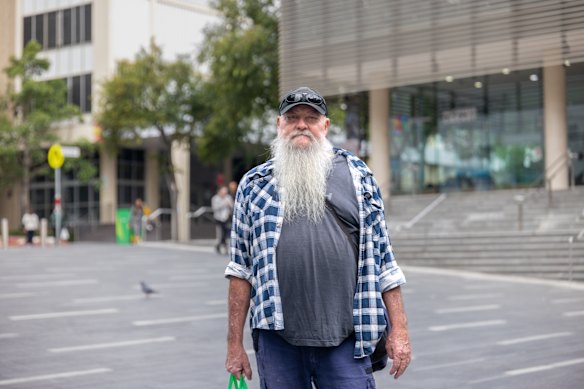
“I don’t trust either Labor or the Liberals,” said Greg Squires, who was adamant he would vote for One Nation at the next election. “I don’t trust the government now, they don’t treat us properly, they bullshit. You can’t believe what they say. You just know that they’re not listening to anyone.”
On the flip side, there remains adamant opposition to Hanson and her party, rooted in memories of her many controversial remarks on migrant and religious communities.
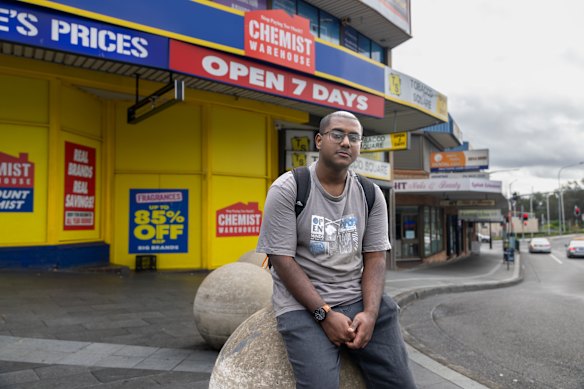
Faraazuddin Syed, 22, was sceptical of Hanson and her party’s chances in the region, and particularly in Blacktown.
“Not in Blacktown. It has such a high immigrant population. I’m pretty sure most politically active and politically literate people understand the play that she’s trying to make.
“She’s too polarising to garner any meaningful support,” he added, pointing to Hanson’s divisive rhetoric and recent controversies, including her recent remarks about owning a private plane.
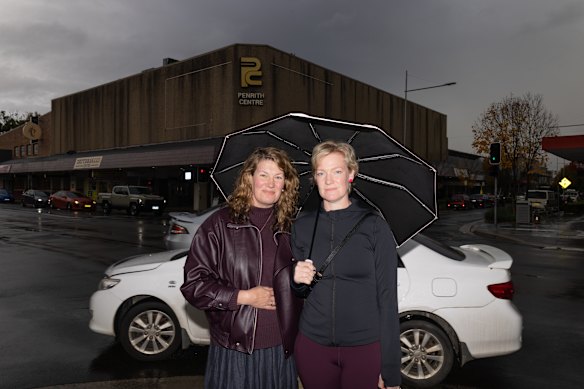
Sisters Alice Findlay and Kate Abel said they would never vote for One Nation, but feared the party could find success in western Sydney.
“Most people don’t like her and what she stands for, but what is the other party not doing that doesn’t make them a viable option to vote for?” Abel said.
“Because it feels like when you vote, it doesn’t get heard, and even when it is, they’re not actually listening to the voters anyway.”
Results at the last federal election indicate their concerns have some basis, with One Nation polling just enough to provide the party a base to work on.
While it failed to register above 10 per cent of the vote in any of the seats in the region, it did achieve more than 5 per cent in Liberal-held Lindsay and Hughes and Labor-held McMahon, Macarthur and Chifley. It received 4.27 per cent of the vote in Mitchell.
Demographics across these seats are varied, with some seats having larger migrant populations or greater educational attainment than others. Other variables, such as the many religious groups or the younger population of the region, present challenges to Hanson’s party, which attracts a demographic that usually skews older and less diverse.
But what unites these seats is a spike in informal voting in 2025, with some seats such as Hughes and Lindsay seeing close to double the informal votes cast in the 2022 federal election.
Dr Andy Marks, long-time commentator on culture and politics in western Sydney, and the executive director at Australian Technology Network of Universities, said any shift to One Nation in the region would be more about “rejecting mainstream parties” than anything else.
“This is happening in areas where the mainstream parties are struggling to engage with the things that voters need,” he said, pointing to transport and infrastructure challenges in the region that remain unaddressed.
Marks also pointed out that western Sydney acted as something of a frontier for federal politics, with broader trends often starting in the region before taking hold elsewhere.
“So what we’re seeing is a new phenomenon in Australian politics, and those things typically strike first in western Sydney,” he said.
“Western Sydney, for all of its virtues as a political battleground, it’s very much the first place where some of these trends play out.”
As this masthead was testing the temperature on the streets, One Nation’s newest MP paid a visit to the halls of power in Macquarie Street. At a press conference at NSW parliament on Thursday, Farrer MP David Farley stood beside a rural independent and declared the party was a threat at both the state and federal level.
“One Nation will definitely pick up state seats where people are disenfranchised with their representation, they’re looking for more, they’re looking for aspiration and confidence in the future – that’s where we’ll be picking up seats,” he said.
When asked if One Nation would form a coalition with the Liberals and Nationals, Farley said he was sure all parties would take any opportunity to assume power if the opportunity arose.
At one point, Greens MP Jenny Leong interrupted the press conference, yelling “shame One Nation” from her office balcony.
With Jessica McSweeney
Start the day with a summary of the day’s most important and interesting stories, analysis and insights. Sign up for our Morning Edition newsletter.

















































